

cookie

Translate

Visualizzazione post con etichetta USA. Mostra tutti i post

lunedì 21 novembre 2016

Marijuana Sector Remains One of Markets Hottest Industry Behind Newest Products and Services

PALM BEACH, Florida, November 16, 2016 /PRNewswire/ --

The exploding cannabis and legal marijuana industry, globally and within the United States, is calling for a significant expansion and improvement of both services and operations as marijuana stocks within the industry aim to capitalize on the unprecedented momentum. Active companies in the sector this week include: Vemanti Group, Inc. (OTC: VMNT), Medical Marijuana, Inc. (OTC: MJNA), Agritek Holdings, Inc. (OTC: AGTK), Cannabix Technologies Inc. (OTC: BLOZF) and Medical Cannabis Payment Solutions (OTC: REFG).


Vemanti Group, Inc. (OTC PINK: VMNT) a diversified holding corporation, announced today that its preparing to launch a new wholly-owned subsidiary, which will look to provide a comprehensive mobile commerce and payments service for the emerging cannabis industry. Through their smartphones, the service will enable retail customers to pay for goods at any participating dispensary without using physical cash. It will also present dispensaries, growers, and other legitimate participants of the industry with the opportunity of carrying out non-retail transactions among themselves in digital payments. 

Read the full Vemanti (VMNT) Press Release at: http://marketnewsupdates.com/news/vmnt.html

The Company believes that the emerging legal cannabis industry where retail and non-retail transactions, including vendor payments and payroll, are almost exclusively paid for with cash presents a real challenge for financial institutions. Concerned about the evolving conflict between federal and state laws, they are eager to avoid the inherent risks associated with this cash-intensive sector. It is widely acknowledged that many are unwilling to go to the expense of establishing and maintaining the type of thorough due diligence program for this emerging market at the present time in order to comply with growing demands of Know-Your-Customer (KYC) guidelines, anti-money laundering regulations, and the US Patriot Act. As the result, traditional banking and payment solutions have been out of reach for the vast majority of cannabis businesses.

"The cannabis industry needs access to digital payments in order to grow, and consumers want a safe and secure way to purchase marijuana products without always relying on cash. Our goal for the new subsidiary is to launch a service that alleviates the risk of cash transactions and helps dispensaries monitor and record data needed to address concerns about violating anti-money laundering laws, with the long-term goal of moving transactions away from cash altogether. It will comply with every relevant regulatory requirement and provide a sustainable solution for the cannabis industry", commented Tan Tran, CEO of Vemanti Group.

In other cannabis developments and happenings to watch this week in the markets:


StoneBridge Partners, LLC -- a global finance communication and consulting firm -- announces the release of an in-depth business analysis of Medical Marijuana, Inc. (OTC PINK: MJNA) presented in a comprehensive report. The report, which outlines the company's formation and current operations, also offers insight into the perceived opportunities in the explosive-growth market of cannabis. It explores the Company's diversified portfolio of cannabis organizations and brands that continue to flourish as new markets open and existing markets continue to develop


Agritek Holdings, Inc. (OTC: AGTK) closed down slightly on Tuesday on just over 6.88 Million shares traded by the market close. Agritek Holdings, Inc. offers various products and services to the medicinal marijuana sector in the United States. It distributes hemp-based nutritional products; and provides solutions for electronically processing merchant transactions.

Cannabix Technologies Inc. (OTC Pink: BLOZF) closed up over 24% on Tuesday at $0.59 on just under 1 Million shares traded by the market close. Cannabix Technologies, developer of the Cannabix Marijuana Breathalyzer for law enforcement and the workplace, recently released images of its Beta 2.0 Cannabix Marijuana Breathalyzer. New images of the device can be viewed at http://www.cannabixtechnologies.com.

Medical Cannabis Payment Solutions (OTC: Pink: REFG) works to solve the fragmentation problem by identifying tools that are important to dispensaries, and customizing those tools specifically catered to the industry. We strive to create awareness within the medicinal marijuana industry and to develop an environmentally friendly, economically sustainable business while increasing shareholder value.

DISCLAIMER: MarketNewsUpdates.com (MNU) is a third party publisher and news dissemination service provider, which disseminates electronic information through multiple online media channels. MNU is NOT affiliated in any manner with any company mentioned herein. MNU and its affiliated companies are a news dissemination solutions provider and are NOT a registered broker/dealer/analyst/adviser, holds no investment licenses and may NOT sell, offer to sell or offer to buy any security. MNU's market updates, news alerts and corporate profiles are NOT a solicitation or recommendation to buy, sell or hold securities. The material in this release is intended to be strictly informational and is NEVER to be construed or interpreted as research material. All readers are strongly urged to perform research and due diligence on their own and consult a licensed financial professional before considering any level of investing in stocks. All material included herein is republished content and details which were previously disseminated by the companies mentioned in this release. MNU is not liable for any investment decisions by its readers or subscribers. Investors are cautioned that they may lose all or a portion of their investment when investing in stocks. For current services performed MNU has been compensated three thousand nine hundred dollars for news coverage of the current press release issued by Vemanti Group, Inc.. by the company. MNU HOLDS NO SHARES OF ANY COMPANY NAMED IN THIS RELEASE.

This release contains "forward-looking statements" within the meaning of Section 27A of the Securities Act of 1933, as amended, and Section 21E the Securities Exchange Act of 1934, as amended and such forward-looking statements are made pursuant to the safe harbor provisions of the Private Securities Litigation Reform Act of 1995. "Forward-looking statements" describe future expectations, plans, results, or strategies and are generally preceded by words such as "may", "future", "plan" or "planned", "will" or "should", "expected," "anticipates", "draft", "eventually" or "projected". You are cautioned that such statements are subject to a multitude of risks and uncertainties that could cause future circumstances, events, or results to differ materially from those projected in the forward-looking statements, including the risks that actual results may differ materially from those projected in the forward-looking statements as a result of various factors, and other risks identified in a company's annual report on Form 10-K or 10-KSB and other filings made by such company with the Securities and Exchange Commission. You should consider these factors in evaluating the forward-looking statements included herein, and not place undue reliance on such statements. The forward-looking statements in this release are made as of the date hereof and MNU undertakes no obligation to update such statements.

Contact Information:
Media Contact email: info@marketnewsupdates.com - +1-(561)325-8757

SOURCE MarketNewsUpdates.com
Marijuana Sector Remains One of Markets Hottest Industry Behind Newest Products and Services

martedì 3 maggio 2016

Aphria Reports Results for Fiscal Q3 2016

Profitable quarter backed by approximately $2.7 million in revenue
Year-to-date cash break-even level achieved in quarter
LEAMINGTON, ONTARIO--(Marketwired - April 21, 2016) - Aphria Inc. ("Aphria" or the "Company") (TSX VENTURE:APH) today reported its financial results for the three and nine months ended February 29, 2016. All amounts are expressed in Canadian dollars, unless otherwise stated.

Business highlights
  • Closed bought deal financing, generating net proceeds of $10,485,264;
  • Completed Cannway Pharmaceuticals Inc. acquisition;
  • Received Health Canada approval for Part 1 expansion; and,
  • Reported profitability and year-to-date cash break-even.
Revenue for the three months ended February 29, 2016 was $2,679,898, representing a 32% increase over the previous quarter's revenue of $2,026,975. Revenue for the six months ended February 29, 2016 was $6,657,613.
Adjusted gross profit for the third quarter was $1,883,225, with an adjusted gross margin of 73.4%, generated from both retail and wholesale shipments of medical marijuana. Adjusted gross profit for the year-to-date was $3,871,034, with an adjusted gross margin of 69.2%.
Net income for the three months ended February 29, 2016 was $3,720 or $0.00 per share versus a loss of $431,098 or $0.01 in the previous quarter and $3,103,111 or $0.06 per share in the same period of the prior year. The net loss for the six months ended February 29, 2016 was $904,203 or $0.02 per share versus $6,062,064 or $0.14 in the same period of the prior year.
EBITDA for the third quarter was $423,350, compared to an EBITDA loss of $631,581 in the third quarter of the prior year. The EBITDA for the year-to-date was $52,203, compared to an EBITDA loss of $2,747,356 in the same period of the prior year.
"Remaining focused on our strategic plan, the third quarter provides evidence that the Aphria team is delivering or exceeding on all of our operational metrics," says Vic Neufeld, CEO. "The team is committed to the sustainability of operational profitability and operational free cash flow. As the market and our business continues to grow, we will continue to make long-term capital investments as required."
Stock Option Grant
The Company granted 50,000 stock options to an employee and a consultant of the Company with an exercise price of $1.67 for a term of three years.
The adjusted gross profit, adjusted gross margin and EBITDA are non-GAAP measures, which are explained in Management's Discussion & Analysis, a copy of which has been filed today under the Company's profile on www.sedar.com.
About Aphria
Aphria, a company continued under the laws of the Province of Ontario and based in Leamington, Ontario, is in the business of producing, supplying and selling medical marijuana pursuant to the Marihuana for Medical Purposes Regulations (the "MMPR"). Under the MMPR, Health Canada is responsible for the oversight of commercial medical marijuana growers such as Aphria. Aphria's common shares are listed on the TSX Venture Exchange under the ticker symbol "APH".
CAUTIONARY NOTE REGARDING FORWARD-LOOKING STATEMENTS: Certain information in this news release constitutes forward-looking statements under applicable securities laws. Any statements that are contained in this news release that are not statements of historical fact may be deemed to be forward-looking statements. Forward-looking statements are often identified by terms such as "will", "may", "should", "anticipate", "expect", "intend" and similar expressions. Forward-looking statements in this news release include, but are not limited to, statements with respect to patient growth, future long-term investments, estimated margins and expectations for future growing capacity. Forward-looking statements necessarily involve known and unknown risks, including, without limitation, risks associated with general economic conditions; adverse industry events; marketing costs; loss of markets; future legislative and regulatory developments involving medical marijuana; inability to access sufficient capital from internal and external sources, and/or inability to access sufficient capital on favourable terms; the medical marijuana industry in Canada generally, income tax and regulatory matters; the ability of Aphria to implement its business strategies; competition; crop failure; currency and interest rate fluctuations and other risks.
Readers are cautioned that the foregoing list is not exhaustive. Readers are further cautioned not to place undue reliance on forward-looking statements as there can be no assurance that the plans, intentions or expectations upon which they are placed will occur. Such information, although considered reasonable by management at the time of preparation, may prove to be incorrect and actual results may differ materially from those anticipated. Forward-looking statements contained in this news release are expressly qualified by this cautionary statement.
Neither the TSX Venture Exchange (the "Exchange") nor its Regulation Services Provider (as that term is defined in the policies of the Exchange) accepts responsibility for the adequacy or accuracy of this release.

CONTACT INFORMATION

  • Aphria Inc.
    Vic Neufeld
    President & CEO
    1-844-427-4742

sabato 1 agosto 2015

The marijuana effect

giovedì 30 luglio 2015

Oregon To Begin Recreational Marijuana Sales Early


Oregon adults will be able to legally purchase recreational marijuana beginning Oct. 1, about a year earlier than had been expected.

Gov. Kate Brown (D) signed a law on Tuesday allowing the sale of recreational marijuana in existing medical marijuana dispensaries, starting just three months after Oregon’s reformed marijuana law went into effect.

The measure “is a smart solution to a short-term logistical problem,” Kristen Grainger, Brown’s spokeswoman, told The Huffington Post. “Oregon’s new recreational marijuana law went into effect in July 2015, but Oregonians couldn’t lawfully buy it anywhere for another year or more. If marijuana is legal to use, it shouldn’t be illegal to buy.”


The new marijuana law allows adults 21 and older to buy up to one-fourth ounce of recreational marijuana per day at medical marijuana shops. Consumers also may buy seeds and up to four non-flowering cannabis plants. The 25 percent state tax on marijuana sales won’t begin until Jan. 4, so early shoppers can buy their newly legal weed tax-free for a few months.

The Oregon Liquor Control Commission, charged with regulating and monitoring the industry, will issue licenses to new recreational marijuana retailers later. Those shops, which will be allowed to sell up to one ounce per transaction, are likely to open before the end of 2016.

State voters in November approved Measure 91, which legalized the possession, use and sale of recreational marijuana for adults. The law took effect July 1, but sales hadn’t been expected to begin until late 2016, giving state authorities time to establish a regulatory framework and issue licenses to retailers.

“I think this is a step forward,” U.S. Rep. Earl Blumenauer (D) told HuffPost of the new law. “The state is doing a careful job of rolling this out in a thoughtful way, working to keep with the intent of the ballot measure.”

Blumenauer has been a vocal supporter of ending marijuana prohibition-style policies, offering several congressional bills aimed at reforming marijuana policy.

To date, four states, and the District of Columbia, have legalized marijuana for recreational purposes. Colorado and Washington state were the first to legalize the substance for adult use in 2012, with the first shops opening in both states in 2014. Twenty-three states, including Oregon in 1998, have legalized medical marijuana.


Despite more than half of all states forging their own way on marijuana policy, the federal government continues to ban the plant, classifying it as one of the “most dangerous” drugs alongside heroin and LSD.

Multiple recent polls have illustrated the dramatic shift in public opinion on the issue, finding record high percentages of Americans in support of legalization for recreational purposes.

In April, CBS News found 53 percent in support of legalization, the most since CBS began asking the question in 1979. That same month, Fox News found a record 51 percent in favor of legalization. In March, General Social Survey, widely regarded as the most authoritative source on public opinion research, found 52 percent in favor.

Source: Huffington Post


sabato 11 gennaio 2014

USA - Si allrga scandalo droga in basi Aeronautica

Si allarga lo scandalo della droga nelle basi dell'Aeronautica statunitense, con 10 ufficiali ora sotto inchiesta in sei diverse installazioni. Sono nove tenenti ed un capitano ad essere indagati per possesso illegale di sostanze stupefacenti. Tra questi i due ufficiali responsabili dei missili armati con testate nucleari dislocati nella base aerea di Malmstrom, in Montana, che, come riportano i media americani, sono stati sospesi dai loro incarichi. L'inchiesta ha all'inizio coinvolto due ufficiali della Edwards Air Force Base in California, la seconda base aerea piu' grande del Paese, e poi si e' estesa, sulla base dei contatti di questi ufficiali. Ed ora ha superato anche in confini nazionali, coinvolgendo anche militari americani dispiegati nella Royal Air Force Lakenheath in Inghilterra, si legge sul sito della Bbc.

USA - Si allrga scandalo droga in basi Aeronautica

giovedì 5 dicembre 2013

Proibizionismo. Gli Usa celebrano 80 anni dalla fine di quello sull'alcool... e le altre droghe il cui proibizionismo oggi fa danni maggiori?

Comunicato di Vincenzo Donvito 
5 dicembre 2013 12:39

 Il "National Constitution center" (Usa) ha dato vita ad una grande mostra itinerante dal titolo 'Spiriti americani: nascita e crollo del proibizionismo', per ricordare al Paese che nel 1933 fu approvato il 21mo emendamento alla Costituzione con cui si pose fino al proibizionismo sull'alcool che era stato istituito nel 1919. Venti anni durante i quali in Usa accadde di tutto: dalla criminalita' che gestiva i traffici (Al Capone e' per noi italiani il piu' noto, viste anche che era originario del nostro Paese) in lotta fra di loro e con le polizie, agli oltre 10.000 morti per la pessima qualita' di una bevanda che continuava ad essere diffusissima tant'e' che quasi ogni americano era un criminale in merito, alla corruzione, al deterioramento delle istituzioni, etc..
Viene spontanea una domanda. Ma questa lezione americana non e' servita a nulla? Cos'e' e come agisce oggi il proibizionismo sulle droghe che, tra l'altro, non riguarda solo gli Usa ma tutto il mondo? Quel proibizionismo che vede in prima fila la delinquenza organizzata italiana (mafia, 'ndrangheta, camorra, etc)? Quel proibizionismo che sta facendo molte piu' vittime di quelle per l'eccesso del consumo di droghe: 
- vittime per la guerra tra delinquenze per i controlli dei territori e dei mercati,
- vittime per la guerra delle delinquenze contro le forze dell'ordine,
- vittime per la corruzione che le delinquenze diramano in ogni istituzione, dalla piu' piccola alla piu' grande,
- vittime per il consumo di sostanze di cui non si nulla di certo sulla loro composizione,
e poi: tribunali intasati, carceri strabordanti, collusione di milioni di consumatori con i loro fornitori, degrado istituzionale, polizie sovraccaricate di lavoro, miliardi e miliardi di denaro per arginare una situazione che ad ogni cosiddetto successo delle autorita' vede raddoppiare nuove criminalita' connesse a questo business.
Su questo noi di Aduc cerchiamo quotidianamente di documentare la folle politica di quasi tutti i Paesi del mondo (Usa, Russia e Italia in prima fila) con un notiziario che e' anche luogo di approfondimento e dibattito fra lettori.
L'occasione che ci viene offerta oggi con i festeggiamenti Usa per ricordare la fine del proibizionismo sull'alcool in quel Paese, crediamo possa essere utile per una ampia riflessione e valutazione sulle attuali politiche. Che, a nostro avviso, sono una folle corsa che, per soddisfare le ideologie di chi reputa non sano il consumo di droghe, mentre ha alimentato danni maggiori di quelli che si volevano arginare, ha gia' compromesso gli equilibri e le stabilita' istituzionali di tutti i Paesi del mondo.


domenica 22 settembre 2013

FBI: One Marijuana Arrest Every 42 Seconds in U.S. in 2012; More Than for All Violent Crimes Combined

New York is the world's cannabis arrest capitol
Despite predictions that the war on pot will ratchet down after Colorado and Washington State voters legalized the forbidden flower last fall, FBI data show that over 750,000 cannabis smokers were arrested last year in the US, according to Law Enforcement Against Prohibition, a pro-pot police group.

Police arrest more people each year for weed than for all violent crimes. “Every time a police officer makes an arrest for drugs, that’s several hours out of his or her day not spent going after real criminals. As the country has been investing more and more of its resources into prosecuting drug ‘crime,’ the rate of unsolved violent crime has been steadily increasing. Where are our priorities here?” asked retired lieutenant commander Diane Goldstein, another LEAP speaker.

“Each one of those arrests is the story of someone who may suffer a variety of adverse effects from their interaction with the justice system,” said former cop and LEAP executive director Neill Franklin. It is also several hours of time that the officer will be processing paperwork and running the pothead through the legal system—policing time taxpapers will never recoup.

Citing recently-released FBI data, LEAP calculates that nearly 90% of all cannabis arrests are for possession, nabbing small-time recreational stoners and sticking them with court fines, fees, and criminal records. That means the war on pot preys upon the American poor.

The cannabis arrest numbers actually declined slightly from 2011, but are still a major concern to advocates who believe our limited law enforcement dollars can be better spent. “Where are our priorities here?” asked Diane Goldstein, a retired California cop. Goldstein says that the rate of unsolved crime is steadily increasing in the US, while law enforcement continue to engage in acostly war against domestic pot smokers.


FBI: One Marijuana Arrest Every 42 Seconds in U.S. in 2012; More Than for All Violent Crimes Combined

domenica 1 settembre 2013

USA - Legalizzazione cannabis. Governo Federale non ricorrera' contro leggi statali

A livello federale il consumo di marijuana resta un reato. Ma il dipartimento di Giustizia non ha alcuna intenzione di contrastare le legislazioni di Stati come Colorado e Washington che hanno invece permesso l'uso della cannabis, in quest'ultimi due casi anche a scopi ricreativi. E' questo l'approccio - ribattezzato "trust but verify", fidati ma verifica - che il ministro della Giustizia, Eric Holder, ha deciso di adottare rispetto ai 20 Stati americani che hanno legalizzato l'uso della marijuana per scopi medici. In un memo diffuso ai procuratori federali di tutto il Paese, sono state descritte otto priorità volte di fatto ad impedire la vendita della marijuana ai bambini, l'attività di cartelli del narcotraffico, la distribuzione della cannabis a livello interstatale e la violenza e gli incidenti che chiamano in causa la droga. Insomma, Holder vuole che i procuratori federali si concentrino su veri e propri crimini legati alla marijuana senza dunque perdere tempo sul suo semplice possesso. Il ministero della Giustizia si riserva però il diritto di rivedere la propria posizione se i singoli Stati non adotteranno misure adeguate per controllare l'uso e la distribuzione della cannabis.

 USA - Legalizzazione cannabis. Governo Federale non ricorrera' contro leggi statali

venerdì 21 giugno 2013

Washington Lawmakers To Eric Holder: 'Respect The Will Of The Voters' On Marijuana Policy

Seven Democrats from Washington's congressional delegation called on U.S. Attorney General Eric Holder this week to consider the results of last year's election as he determines how the Department of Justice will respond to the state's successful marijuana legalization effort.
"As federal representatives of these states we request that your Department's course of action in this matter respect the will of the voters, and that you announce this course of action as soon as possible to assure our citizens that they will not be penalized by the federal government for activities legal under state law," the letter, signed by the state's two senators and five of its congresspeople, read. "[W]e hope that you will exercise your significant discretionary authority by choosing not to purse preemption of these laws, or prosecute our residents and state employees acting in compliance with these laws."
In November, Washington voters passed I-502, an initiative that legalized marijuana for recreational use and began the process of setting up a system of taxation and regulation. Colorado also passed a similar measure, Amendment 64. Both were approved by a margin of more than 10 percent.
The moves have left Holder and the DOJ to make a decision about how the administration will treat these states that now openly flout federal law, which considers cannabis an illegal Schedule I substance. In February, Holder said an announcement was coming "soon." Nearly four months later, there has been no visible movement.
As HuffPost's Ryan Grim and Ryan J. Reilly reported earlier this year, some experts believe the DOJ will decide to treat the newer recreational marijuana laws differently than state medical marijuana laws. While medical marijuana laws are seen as a somewhat limited encroachment on federal policy, many officials within Holder's department and the Drug Enforcement Administration consider recreational marijuana laws to be a full-out assault on federal law:
The Justice Department may respond to the legalization of recreational marijuana in Washington and Colorado in several ways. One option would be to go after low-level marijuana users as scapegoats and seek a court ruling that would declare federal law trumps state law. One of the more extreme options, which officials acknowledge is currently being weighed by the department's Civil Division, would be to preempt the laws by suing the states in the same way the feds sued Arizona over its harsh immigration law. Federal authorities could sue Washington and Colorado on the basis that any effort to regulate marijuana would violate the federal Controlled Substances Act.
Perhaps aware of that possibility, the Washington Democrats touted the steps the state already had taken to ensure the legitimacy of the legal marijuana industry and urged restraint from Holder.
“During a time of constrained federal resources, we believe DOJ has higher priorities than the pursuit of legal action against persons in compliance with the laws of the states,” the letter read. “We expect and encourage your continued prosecution of activities that occur outside the bounds of state law.”
As the Seattle Times reports, the public statement by the federal lawmakers is likely to help shore up support from pot advocates who had expressed frustration at their general silence on the issue.
Read their entire letter here.

lunedì 25 marzo 2013

Legalizzare tutte le droghe. Intervista a Jeffrey Miron

Articolo di Redazione
Jeffrey Miron, 56 anni, si considera un liberale tenace. Ha studiato gli effetti della criminalizzazione delle droghe per 15 anni, e pensa che si sia esagerato sempre e che tutti i tipi di droghe debbano essere legalizzate. E' stato presidente del Dipartimento di Economia dell'Universita' di Boston tra il 1992 e il 1998. Oggi insegna al Dipartimento di Economia dell'Universita' di Harvard.

D. Perche' si dovrebbe legalizzare l'eroina, la cocaina e la marijuana?
R. La proibizione delle droghe e' la peggiore soluzione per prevenirne il consumo. In primo luogo c'e' la conseguenza di un mercato nero corrotto e che costa vite umane. In secondo luogo impone limitazioni alle persone che non possono consumare droghe. In terzo luogo, proibire le droghe e' costoso.
D. Perche' costoso?
R. Se legalizzassero le droghe, gli Usa potrebbero risparmiare tra 85.000 e 90.000 milioni di Usd all'anno. Oggi la meta' di questi importi finanzia le attuali politiche antidroga, e l'altra' meta' si perde in imposte con cui gli Usa potrebbero tassare le droghe legali.
D. Sul piatto della bilancia, pero', ci sono molte persone che diventerebbero dipendenti delle droghe.
R. Supponiamo che, in seguito alla legalizzazione, il consumo delle droghe aumentasse. Sarebbe un male? Se applichiamo le norme dell'economia questo e' (almeno in parte) qualcosa di buono. Qualunque politica che mi impedisce di avere cio' che desidero, impedisce la mia felicita'.
D. Le droghe portano alla dipendenza. Annebbiano la felicita' delle persone.
R. La dipendenza non e' il problema. Molte persone sono dipendenti dalla caffeina e nessuno si preoccupa. Molte persone sono dipendenti dello sport, della birra o del cibo. E questo non da' fastidio allo Stato.
D. Lo Stato dovrebbe trattare lo sport e la cocaina allo stesso modo?
R. Gli effetti della cocaina vengono presentati in un modo eccessivamente esagerato. Ci sono banchieri di Wall Street che sniffano cocaina: guadagnano molti soldi, usufruiscono di un buon sistema sanitario, hanno una famiglia e uno stabile trend di vita. Molti di loro smettono anche di consumare cocaina. Ho l'impressione che queste persone godono nel consumarla. E ci sono anche persone che fumano crack e conducono una vita molto diversa dagli agenti di Borsa; sono persone con pochi guadagni, senza lavoro e con una salute malmessa. Molte di esse fanno una brutta fine. Ma la cocaina non ha colpe in merito. La colpa e' della loro pessima vita.
D. Intende dire che il crack non fa male?
R. E' possibile consumare crack per molto tempo e poi smettere? Ci sono dati che lo confermano. Le lobby proibizioniste esagerano molto per raggiungere i propri obiettivi. Le droghe sono molto meno pericolose di quanto la gente pensi. Non e' chiaro che consumare marijuana o cocaina non ha effetti negativi considerevoli se il prodotto e' a prezzi accessibili, se non dobbiamo rischiare la vita per farlo e se il prodotto non e' diluito, senza saperlo, con sostanze piu' o meno pericolose.
D. Lei sostiene che non e' pericoloso iniettarsi eroina?
R. L'iniezione e' tanto diffusa perche', con la proibizione, l'eroina e' costosa e questo modo di consumarla consente di farlo spendendo meno soldi. Se le droghe fossero molto meno costose, la maggior parte delle persone probabilmente fumerebbe eroina invece di iniettarsela.
D. Ancora: pensa che sarebbe un fatto positivo che la legalizzazione portasse ad un aumento del consumo di droghe?
R. Se credi in tutto cio' che gli statunitensi dicono di credere -liberta', individualita', responsabilita' personale- occorre legalizzare le droghe. Il massimo dovrebbe essere che tutti possono fare quello che vogliono, fintanto che questo non sia nocivo per qualcun altro. Si presuppone che non si provochi danni a nessun altro quando si consuma droga, ma i dati scientifici non sostengono questa ipotesi.
D. La cocaina fa si' che la gente diventi aggressiva.
R. Le prove scientifiche di questo sono molto flebili. La maggior parte delle prove che indicano una relazione tra violenza e droghe, si riferisce all'alcool. Questo vuol dire che andrebbe proibito l'alcool? Per questo la legalizzazione di tutte le droghe ridurrebbe drasticamente la quantita' di violenza che c'e' in Usa.
D. Come?
R. La proibizione porta alla violenza. Rivolgersi al mercato nero e' inevitabile, si genera violenza perche' i conflitti tra le parti, impliciti nel traffico di droghe, non possono essere risolti con mezzi legali nell'ambito del sistema giudiziale. Si e' obbligati a vivere in un mondo in penombra in cui ci si ammazza gli uni con gli altri invee di avere a che fare con avvocati che affrontano i problemi nei tribunali.
D. Quindi lo Stato dovrebbe consentire ai cartelli di proseguire nel loro business se non di piu'?
R. Ci sono studi che dimostrano che il livello di violenza si riduce quando lo Stato smette di intervenire nel traffico di droghe, grazie al fatto che ci sono meno conflitti fra narcotrafficanti. Le ultime dimostrazioni a conferma vengono dal Messico. La violenza connessa alle droghe e' molto che esiste. Ma c'e' stato un aumento notevole ed una escalation di violenza da quando il presidente dell'epoca Felipe Calderon dichiaro' la guerra contro le droghe nel 2006. Abbiamo calcolato che la percentuale di omicidi in Usa potrebbe calare di circa il 25% se le droghe fossero legali.
D. Come varierebbero i prezzi delle droghe in conseguenza della legalizzazione?
R. I prezzi della marijuana varierebbero di poco. Se confrontiamo i prezzi del mercato nero con i prezzi di quello legale li' dove la marijuana e' oggi praticamente legale, per esempio in Olanda, sono molto simili. I prezzi che si pagano per la cocaina potrebbero invece diminuire in modo consistente.
D. Di conseguenza tutto il Paese snifferebbe cocaina.
R. Il consumo delle droghe piu' innocue probabilmente aumenterebbe. E ci sarebbe un maggior numero di persone che occasionalmente consumerebbe una qualche droga. Ma, finito il proibizionismo in Usa, quando il whisky di malto senza altri mescolii divenne legale, l'intero Paese non si ritrovo' dipendente dal whisky.
D. Come democrazia, non abbiamo il dovere di proteggere le persone da se stesse?
R. Credo che le persone che provocano danni a se stesse con le droghe continuerebbero a farlo, indipendentemente dal fatto che queste ultime siano legali o meno.
D. Non abbiamo una obbligo morale?
R. Se un amico fa qualcosa di stupido, crede che intervenendo la situazione migliorerebbe o peggiorerebbe? Credo che mettere il suo amico in carcere e obbligarlo a sottostare ad una terapia non sia la soluzione migliore. Credo sia meglio parlargli in modo tranquillo e sereno.
D. Parlare e' la soluzione per il problema delle droghe?
R. Certamente, la proibizione non e' la soluzione.

D. E quindi, perche' le droghe sono vietate?
R. Le persone ingenue credono che se qualcosa e' illegale, la gente non lo fara'. E' chiaro che non e' cosi'. Alcuni credono che se le manteniamo illegali, il prezzo aumentera' e ci saranno meno persone che consumano le droghe. Ma per alcuni il prezzo non e' un fattore determinante.
D. Come sarebbe un mondo in cui le droghe fossero legali?
R. Come il Portogallo. Li' sono diversi anni che il consumo e' legale e si sono avute variazioni minime nell'aumento del consumo di droghe. La legalizzazione non farebbe aumentare in gran quantita' la percentuale di consumo. E se la gente cominciasse a fumare marijuana, questo non avrebbe nessun peso. E' certo.
D. Sul serio chiede che le droghe si vendano nei supermercati?
R. Si'.
D. La prescrizione delle droghe sarebbe una possibilita'?
R. Una prescrizione molto larga come quella della California non ha provocato alcun danno, perche' chiunque ti da' una ricetta. Pero', facendo cosi', che vantaggio si ha? Se esiste una legge per la prescrizione molto restrittiva, di conseguenza si avra' un mercato nero.
D. Che succedera' nel mercato nero se si legalizzassero le droghe?
R. Ognuno potrebbe scegliere. Potrebbe comprare la cocaina nel supermercato o comprarsela da uno sconosciuto trafficante messicano in un angolo di strada dove potrebbe essere ammazzato. Il mercato nero scomparirebbe.
D. Che succedera' per i cartelli della droga?
R. Se le droghe si legalizzassero molti cartelli del Messico faranno tesoro della loro esperienza per creare subito delle imprese legali. Credo che sarebbero i primi e avrebbero buoni prodotti e una buona rete di distribuzione. Non e' per niente chiaro se i cartelli della droga vogliano la legalizzazione. El Chapo Guzman, a capo del cartello piu' grosso del mondo, ha un vantaggio di partenza perche' e' un criminale con molta esperienza; per questo e' tanto ricco. Se non ci fosse un mercato nero delle droga, Guzman perderebbe il suo vantaggio.
D. Le droghe dovrebbero essere tassate?
R. Una tassa alta e' una cattiva idea perche' sarebbe un incentivo alla creazione di un mercato nero.
D. Perche' nessuno sta mettendo in pratica le sue proposte?
R. Diverse migliaia di persone che ricoprono incarichi pubblici si ritroverebbero senza lavoro in seguito alla legalizzazione. I centri di riabilitazione perderebbero molti clienti perche' molte delle persone a cui prestano le cure ci vanno in quanto obbligate dal sistema giudiziale. Anche le persone che costruiscono carceri hanno interesse che ci sia un alto numero di detenuti. E nel contempo, alla Chiesa non piacciono le droghe e negli Usa la Chiesa e' potente.
D. Lei consuma droghe?
R. No. Ho fumato dell'erba quando ero studente, ma poi non ho continuato. Ma se domani si legalizzassero le droghe, sarebbe possibile che le provassi tutte. Dubito che le consumerei piu' di una volta, ma dopo che ho fatto varie ricerche in materia, provo curiosita'.

(intervista di Takis Wurger pubblicata sul settimanale Der Spiegel del 19/03/2013)

lunedì 18 marzo 2013

Still waiting for answers on pot


AG Eric Holder needs to fully explain the federal government's intentions regarding Colorado and Washington state's pot laws.
Posted:   03/16/2013 12:01:00 AM MDT

By The Denver Post Editorial Board

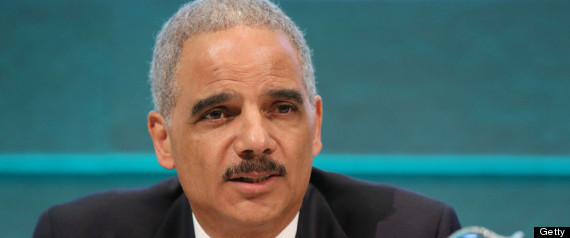
U.S. Attorney General Eric Holder. (Evan Vucci, The Associated Press)
It turns out that U.S. Attorney General Eric Holder hasn't been quite as mysterious about the future of recreational marijuana in Colorado and Washington state as his empty public pronouncements would suggest.
Behind the scenes with state officials, he's apparently been somewhat more forthright. Indeed, Gov. John Hickenlooper's top lawyer, Jack Finlaw, said this week that the federal government's future behavior — toward pot cultivation centers and retail outlets, for example — will be determined by the sort of regulatory framework that state lawmakers put in place.
As The Denver Post's John Ingold explained, "The state must show it can keep marijuana within its borders and away from children and also prove that its regulations are comprehensive enough and well-funded enough to work."
If they meet that standard, Finlaw added, "then [federal officials] will take the same stance on adult recreational use of marijuana as they've taken on medical marijuana."
As advocates of the federal government allowing Colorado and Washington to proceed with their important experiment in regulating marijuana, we consider this news encouraging. But it's also less than fully satisfying, for at least two reasons.
First of all, what does it mean precisely to adopt comprehensive regulations? The work from the governor's Amendment 64 Implementation Task Force, which went to the legislature this week, extends for 165 pages and involves 58 recommendations. By any reasonable standard, that's fairly comprehensive. But are those recommendations enough?
The proposals include everything from mandates for child-resistant packaging and prohibitions on advertising that children are likely to see to possibly limiting the amount of marijuana or marijuana-infused products that can be purchased by out-of-state customers — perhaps to one-eighth to one-quarter ounce of marijuana for non-residents.
But of course Colorado probably can't (and frankly shouldn't) prevent out-of-state residents from buying marijuana altogether, let alone seal state borders sufficiently to keep all home-grown pot here.
So how tight will the regulations have to be to trigger federal tolerance of Amendment 64?
The only person who can answer that question is Holder himself. More than four months after voters approved Amendment 64, it's time Holder stepped up and clearly explained, on the record, the Justice Department's intentions.


Still waiting for answers on pot - The Denver Post

sabato 19 gennaio 2013

Hemp legalization effort gathers steam

In the cannabis plant family, hemp is the good seed. Marijuana, the evil weed. Michael Bowman, a gregarious Colorado farmer who grows corn and wheat, has been working his contacts in Congress in an attempt to persuade lawmakers that hemp has been framed, unfairly lumped with the stuff people smoke to get high.
Somehow over time, as Bowman’s pitch goes, hemp, which is used to make paper, oils and a variety of useful products, was mistaken for its twin, marijuana — a.k.a pot, chronic, blunt and weed — a medicinal drug loaded with tetrahydrocannabinol that buzzes the mind. Hemp got caught up in the legendary crusade against pot popularized by the movie “Reefer Madness.” All varieties of cannabis ended up on the most-wanted list, outlawed by Congress as well as lawmakers in other nations, inspiring people to kill it on sight.
Bowman’s message is simple: Be sensible. “Can we just stop being stupid? Can we just talk about how things need to change?”
While the United States ranks as the world’s leading consumer of hemp products — with total sales of food and body-care products exceeding $43 million in 2011 — it is the only major industrialized country that bans growing it, even though 11 states have passed measures removing barriers to hemp production and research. Ninety percent of the U.S. supply comes from Canada.

Since Colorado and Washington legalized marijuana by ballot initiatives last fall, a group of farmers and activists have been pushing to revive a crop they say offers a solution to vexing environmental, health and economic challenges.
Proponents value hemp both for how it grows — quickly and in a wide geographic range, without requiring much in terms of water, pesticides and fertilizers — and what it can produce. Its seeds and oil are fodder for health and beauty products, while the strength of its natural fiber makes it a good candidate to be used as a building composite. Combine hemp with water and lime and you get “hempcrete,” which can help construct a house; process it differently and it can make up a BMW’s interior door panel.
But Bowman’s project to plant 100 acres of hemp on his 3,000-acre farm on April 30 — to coincide with the 80th birthday of his friend singer Willie Nelson, known for his support for hemp and marijuana legalization — could run afoul of the Agriculture Department’s farm program, which helps subsidize his corn and wheat. He also grows edible beans, alfalfa and, occasionally, sunflowers.
In a statement, Agriculture Department spokesman Justin DeJong said that since hemp is considered “a Schedule I controlled substance” under the Controlled Substances Act of 1970, it “cannot be grown on farmland” receiving federal commodity subsidies. If convicted of a violation, a farmer cannot get subsidies for five years.
Drug Enforcement Administration spokesman Rusty Payne said in a statement that the controlled-substance law refers “to all cannabis plants, regardless of their THC content,” and that only marijuana growers with a DEA permit can grow it.
It didn’t used to be this way. In the colonial era, Benjamin Franklin published an article touting hemp’s virtues, and Virginia farmers were allowed to pay their taxes in hemp. A USDA botanist grew a half-dozen varieties of hemp on federal property in the 1920s. The U.S. government urged farmers to grow “Hemp for Victory” during World War II to provide the raw material for ropes, sailors’ uniforms and other supplies.
But a couple of factors — the high taxes the federal government imposed on growing hemp in the late 1930s and again in the early ’50s, and then the DEA’s interpretation of the 1970 law — made producing hemp nearly impossible.
But starting in 1999, states began to pass legislation making it easier to either grow industrial hemp or conduct research on it. These measures, however, have had little practical effect. Since the DEA only grants permits in rare instances and demands costly, elaborate security precautions, large-scale hemp growing in the United States is not viable.
The Canadian government, meanwhile, recently announced it would invest nearly $100,000 in marketing hemp and researching which varieties would thrive in different regions of the country.
Canadian Embassy spokesman Chris Plunkett described industrial hemp as “an important crop” for Canada because it grows well in the northern prairie “where other crops, due to climate, cannot grow,” and can be rotated in to break disease cycles.
In the United States, its advocates describe hemp in glowing terms. It can be grown organically with relative ease, and its stalks not only store carbon but could potentially produce biomass energy. The oil is rich in protein and Omega-3 fats and can be eaten as well as be used in products such as Dr. Bronner’s Magic Soaps. Hemp seeds are sold as snacks, and it can be made into paper as well as a building composite to replace fiberglass and in some instances concrete.
Lynda Parker, a Denver-based citizen advocate, learned about hemp while tracking legislation for a political science class she took in 1996. Five years ago, after retiring, she decided to lobby full time for legalization.
“If we’re serious about climate change and the environment, there is no single thing we can do that is more impactful,” she said.
Parker and Bowman, introduced to each other by a Colorado Department of Agriculture official, pushed several efforts in the legislature aimed at reintroducing hemp.
They worked hard to distinguish hemp — which can actually make marijuana less potent when the two plants cross-fertilize — from pot, trying to overcome what they called “the giggle factor.”
“People would ask, ‘Does this mean I can smoke my drapes?’ It’s always the drapes,” Parker recalled.
Victory came Nov. 6, when Colorado voters approved Amendment 64, which not only legalized pot but required “the general assembly to enact legislation governing the cultivation, processing, and sale of industrial hemp.”
Those working on the federal law describe it as a simple matter of economics. Sen. Ron Wyden (D-Ore.) who introduced legislation last Congress with Sen. Rand Paul (R-Ky.) to decouple hemp from marijuana as a controlled substance and plans to push for the bill again this year, noticed the seeds sold as a snack under the name “hemp hearts” last summer at his local Costco in Tigard, Ore.
“Why would you say you can sell it at your local Costco, but farmers around the world get to make most of the money?” Wyden asked.
Even potential Canadian competitors are trying to assist the hemp vanguard here. As Parker and Bowman worked on their state’s ballot initiative, the Canadian consulate in Denver served as unofficial advisers. They flew Canadian Mounties and an expert in composites to discuss the logistics of enforcement and processing hemp once it’s legal and funded Parker’s trip to Winnipeg to attend an industry meeting.
“If and when it becomes legal to grow hemp in the United States, that’s just going to add credence and credibility to what we’re doing,” said Hemp Oil Canada President Shaun Crew, who has already registered the name “Hemp Oil USA” for when he opens up shop south of the border.
Still, that day may be a while off. National Farmers Union President Roger Johnson, whose group supports legalization, failed to help North Dakotan farmers overcome federal opposition to hemp cultivation while serving as the state’s agriculture commissioner.
“I don’t want to throw cold water on this,” Johnson said, with hesitation in his voice. “We were in this fight for 10 years straight and got absolutely nowhere.”
But Vote Hemp President Eric Steenstra argued “there’s a lot of additional momentum” for legalization right now, noting that even conservative-leaning Kentucky is eyeing industrial hemp. The state’s agricultural commissioner, James Comer, is campaigning hard for legalization and on Friday, the Kentucky Chamber of Commerce voted to back a Senate bill that would sanction hemp farming.
Crew is in favor of the campaign, though he warned his American allies not to exaggerate hemp’s potential and become convinced “there’s a big pot of gold at the end of the hemp rainbow.”
“This isn’t the be-all and end-all,” Crew said, noting that 15 years after legalization, hemp occupies only 50,000 acres of land in Canada. “We’re just a blip on the radar screen of agriculture in our two countries.”

Hemp legalization effort gathers steam - Washington Post


domenica 6 gennaio 2013

War on pot has gone up in smoke

chiaasen@MiamiHerald.com

The war on marijuana is going up in smoke, and it’s about time. There is no bigger waste of money and resources in all law enforcement.
Failure is too polite a description for the long campaign to eliminate the pot trade in the United States. A colossal flop is what it is. After four decades and billions spent, marijuana is easier to get, and more potent, than ever.
More than 40 percent of all Americans over 12 have tried it, and at least 30 million people smoke it every year. The most recent national drug survey found that 18.1 million Americans had used it during the previous month.
Pot is now medically dispensed in 18 states and Washington, D.C. It’s the largest cash crop in the nation’s largest agricultural state, California.
A legitimate pain reliever for cancer victims, “medicinal” marijuana is now available for an assortment of other symptoms, some of them conveniently vague and impossible to discount. It’s not terribly hard to get a prescription.
In November, voters in Colorado and Washington dropped the pretense and approved the adult recreational use of weed. Other states will follow in coming years.
Absurdly, the government still classifies pot as a Schedule I Controlled Substance, the same as heroin and cocaine. Federal law prohibits medical marijuana use, and the Obama administration has taken action against dispensaries in California.
It’s a lost cause, and an expensive one. Any true fiscal conservative should be outraged by the waste and futility.
States are rewriting their marijuana laws because that’s what makes sense. Regulate it, tax it, and make a ton of money from it.
Another benefit of decriminalization is liberating overworked police and prosecutors, whose talents are being misspent on dumb, dead-end pot cases — 50 plants in a grow house tended by some hapless bozo who doesn’t even know where the seeds came from.
Most Americans would prefer to see drug agents shutting down meth labs and pill mills, which actually kill people.
Like it or not, marijuana is so deeply imbedded in our culture that it will never go away. You can find it on Wall Street, Main Street or K Street, on any college campus or military base.
Some drug experts fear that more lenient laws will increase consumption and abuse. Others believe a lawful marketplace will prove safer. Regardless, the saturation level of reefer is already high.
In 2011, according to FBI statistics, a marijuana-related arrest occurred every 42 seconds in the United States. That’s how abundant the stuff is.
Some of those who got busted were career criminals who happened to be caught with a joint in their pockets, but many were casual users or small-time sellers.
Those who get prosecuted on minor pot charges disproportionately tend to be Hispanics and African Americans, not the white college kids who are toking up a storm. Cannabis laws have always been selectively enforced, and lots of people are sitting in jail who shouldn’t be there.
The current useless Congress is unlikely to tackle marijuana reform, but the Justice Department could do all taxpayers a favor by letting each state decide for itself.
Making pot legally available to adults will require caution. Colorado and Washington are wrestling with the logistics of sales and supervision. Tough penalties are planned for driving while stoned, or providing the drug to minors.
Inevitably, though, more states will ease their marijuana laws. Money is why; potential revenues from taxing pot cultivation and sales are too substantial to forego. Even the boneheads in Tallahassee will one day figure that out.
Watching America’s legalization movement with gloom are the Mexican drug cartels, whose vast profits from grass smuggling will wither with the loss of their most lucrative market.
Pot smokers would just as soon buy it from a licensed dispensary, but they will definitely keep buying it, no matter what the government does.
I recall sitting in an unmarked car with a DEA agent at a motel parking lot in Homestead. Other agents were positioned nearby.
They were all waiting to arrest a guy who was supposedly coming to deliver three bales of Colombian weed. An undercover team had set up the deal.
Time dragged on. Radios crackled. Everybody grew restless and bored.
A barefoot teenager happened to roll up on a bicycle. If he saw us — and I don’t know how he didn’t — it didn’t seem to matter.
The kid pulled out a joint and lit up. Broad daylight, people all over the place.
If the windows hadn’t been rolled up, the smoke would have filled the DEA car. The agent looked over at me and shook his head. All we could do was laugh.
The boy rode off on his bike. The guy with the bales showed up empty-handed, so the deal didn’t go down.
That was 30 years ago. Nothing has changed.

Read more here: http://www.miamiherald.com/2013/01/06/3168032/war-on-pot-has-gone-up-in-smoke.html#storylink=cpy

War on pot has gone up in smoke

Read more here: http://www.miamiherald.com/2013/01/06/3168032/war-on-pot-has-gone-up-in-smoke.html#storylink=cpy

lunedì 31 dicembre 2012

Marijuana Legalization Campaign Looks To Expand After 2012 Victories


By Alex Dobuzinskis

LOS ANGELES, Dec 30 (Reuters) - After a decades-long campaign to legalize marijuana hit a high mark in 2012 with victories in Washington state and Colorado, its energized and deep-pocketed backers are mapping out a strategy for the next round of ballot-box battles.

They have their sights set on possible ballot measures in 2014 or 2016 in states such as California and Oregon, which were among the first in the country to allow marijuana for medical use. Although those states more recently rejected broader legalization, drug-law reform groups remain undeterred.

"Legalization is more or less repeating the history of medical marijuana," said Ethan Nadelmann, executive director of the Drug Policy Alliance. "If you want to know which states are most likely to legalize marijuana, then look at the states that were the first to legalize medical marijuana."

A political arm of the alliance spent more than $1.6 million as one of the main funders of the Washington state campaign.

The passage of the ballot measures in Colorado and Washington state in November allowed personal possession of the drug for people 21 and older. That same age group will be allowed to buy the drug at special marijuana stores under rules set to be finalized next year.

No other states have legalized marijuana, America's most widely used illicit drug, for recreational use. The drug remains illegal under federal law. Connecticut and Massachusetts also approved medical marijuana in 2012.

A big question mark hangs over whether the pro-legalization momentum could be slowed if the federal government takes an aggressive stance against the new laws.

The U.S. Department of Justice has been mostly silent on the issue. President Barack Obama said in a TV interview this month it did not make sense for the federal government to "focus on recreational drug users in a state that has already said that, under state law, that's legal."


CHANGING TIDE?

In 1996, California became the first state to allow medical marijuana by a popular vote, and Oregon and Washington state were among the second wave in 1998. But Oregon rejected a marijuana legalization ballot measure in November, while California voters did the same in 1972 and 2010.

The 2010 ballot measure in California failed to sway voters because it would have left regulation to a hodgepodge of local governments, instead of a uniform set of state rules, said Dale Gieringer, director of the California branch of the National Organization for the Reform of Marijuana Laws.

This month, California Lieutenant Governor Gavin Newsom became one of America's top state officials to call for reform of marijuana laws when he told the New York Times that laws against the drug "just don't make sense anymore."

Activists say they see demographic changes as giving them an advantage.

"We know that the younger generation is more supportive and the opposition really comes from the older generation. And as time goes on there's more of the younger generation and less of the older generation," Gieringer said.

"The second factor is we have these results in Colorado and Washington under our belt, so that sort of fertilizes the ground," he added.

One key point marijuana advocates are thrashing out is whether to pursue any ballot initiative in 2014, or wait until the presidential election of 2016, when the turnout of their reliable base of youth voters will likely be higher.

Regardless of when a ballot initiative might come to California, the nation's most populous state, groups opposing legalization vow to defeat it.

One of those is the California Police Chiefs Association.

"I have yet to hear a legalization proponent talk about how society will be enhanced, how the real social problems facing our country will be improved by legalizing yet another substance that compromises people's five senses," said John Lovell, government relations manager for the group.

A number of addiction specialists say that where marijuana is legalized, teenagers will come to believe the drug is harmless and more will use it.

Medical marijuana is already big business in California. The state Board of Equalization in its most recent analysis from 2009 estimated medical cannabis dispensaries ring up sales of $1.3 billion a year, and pay sales taxes of $105 million. (Reporting By Alex Dobuzinskis; Editing by Colleen Jenkins, Edith Honan and David Brunnstrom)

Archivio blog