cookie

Translate

Visualizzazione post con etichetta UN. Mostra tutti i post

martedì 3 maggio 2016

Aphria Reports Results for Fiscal Q3 2016

Profitable quarter backed by approximately $2.7 million in revenue
Year-to-date cash break-even level achieved in quarter
LEAMINGTON, ONTARIO--(Marketwired - April 21, 2016) - Aphria Inc. ("Aphria" or the "Company") (TSX VENTURE:APH) today reported its financial results for the three and nine months ended February 29, 2016. All amounts are expressed in Canadian dollars, unless otherwise stated.

Business highlights
  • Closed bought deal financing, generating net proceeds of $10,485,264;
  • Completed Cannway Pharmaceuticals Inc. acquisition;
  • Received Health Canada approval for Part 1 expansion; and,
  • Reported profitability and year-to-date cash break-even.
Revenue for the three months ended February 29, 2016 was $2,679,898, representing a 32% increase over the previous quarter's revenue of $2,026,975. Revenue for the six months ended February 29, 2016 was $6,657,613.
Adjusted gross profit for the third quarter was $1,883,225, with an adjusted gross margin of 73.4%, generated from both retail and wholesale shipments of medical marijuana. Adjusted gross profit for the year-to-date was $3,871,034, with an adjusted gross margin of 69.2%.
Net income for the three months ended February 29, 2016 was $3,720 or $0.00 per share versus a loss of $431,098 or $0.01 in the previous quarter and $3,103,111 or $0.06 per share in the same period of the prior year. The net loss for the six months ended February 29, 2016 was $904,203 or $0.02 per share versus $6,062,064 or $0.14 in the same period of the prior year.
EBITDA for the third quarter was $423,350, compared to an EBITDA loss of $631,581 in the third quarter of the prior year. The EBITDA for the year-to-date was $52,203, compared to an EBITDA loss of $2,747,356 in the same period of the prior year.
"Remaining focused on our strategic plan, the third quarter provides evidence that the Aphria team is delivering or exceeding on all of our operational metrics," says Vic Neufeld, CEO. "The team is committed to the sustainability of operational profitability and operational free cash flow. As the market and our business continues to grow, we will continue to make long-term capital investments as required."
Stock Option Grant
The Company granted 50,000 stock options to an employee and a consultant of the Company with an exercise price of $1.67 for a term of three years.
The adjusted gross profit, adjusted gross margin and EBITDA are non-GAAP measures, which are explained in Management's Discussion & Analysis, a copy of which has been filed today under the Company's profile on www.sedar.com.
About Aphria
Aphria, a company continued under the laws of the Province of Ontario and based in Leamington, Ontario, is in the business of producing, supplying and selling medical marijuana pursuant to the Marihuana for Medical Purposes Regulations (the "MMPR"). Under the MMPR, Health Canada is responsible for the oversight of commercial medical marijuana growers such as Aphria. Aphria's common shares are listed on the TSX Venture Exchange under the ticker symbol "APH".
CAUTIONARY NOTE REGARDING FORWARD-LOOKING STATEMENTS: Certain information in this news release constitutes forward-looking statements under applicable securities laws. Any statements that are contained in this news release that are not statements of historical fact may be deemed to be forward-looking statements. Forward-looking statements are often identified by terms such as "will", "may", "should", "anticipate", "expect", "intend" and similar expressions. Forward-looking statements in this news release include, but are not limited to, statements with respect to patient growth, future long-term investments, estimated margins and expectations for future growing capacity. Forward-looking statements necessarily involve known and unknown risks, including, without limitation, risks associated with general economic conditions; adverse industry events; marketing costs; loss of markets; future legislative and regulatory developments involving medical marijuana; inability to access sufficient capital from internal and external sources, and/or inability to access sufficient capital on favourable terms; the medical marijuana industry in Canada generally, income tax and regulatory matters; the ability of Aphria to implement its business strategies; competition; crop failure; currency and interest rate fluctuations and other risks.
Readers are cautioned that the foregoing list is not exhaustive. Readers are further cautioned not to place undue reliance on forward-looking statements as there can be no assurance that the plans, intentions or expectations upon which they are placed will occur. Such information, although considered reasonable by management at the time of preparation, may prove to be incorrect and actual results may differ materially from those anticipated. Forward-looking statements contained in this news release are expressly qualified by this cautionary statement.
Neither the TSX Venture Exchange (the "Exchange") nor its Regulation Services Provider (as that term is defined in the policies of the Exchange) accepts responsibility for the adequacy or accuracy of this release.

CONTACT INFORMATION

  • Aphria Inc.
    Vic Neufeld
    President & CEO
    1-844-427-4742

mercoledì 27 aprile 2016

MONDO - UNGASS 2016. Il resoconto di Fuoriluogo


La nuova leadership dei latino americani: la guerra alla droga è finita

Corrispondenza da New York – L’unanimismo proibizionista è davvero finito, e l’antiproibizionismo non è più un’eresia: questa è la prima impressione ascoltando il dibattito alle Nazioni Unite. Finita la votazione del documento finale, che riconferma la cornice delle Convenzioni, UNGASS sembrava già finita. E invece i paesi latino- americani hanno preso la parola, riaprendo la discussione a tutto campo. Il Guatemala ha ribadito che il cambiamento è inevitabile: “Con UNGASS 2016 siamo solo all’inizio del percorso- ha concluso il rappresentante”. Più incisivo il Messico:“La guerra alla droga non ha funzionato: il narcotraffico è fiorente e produce morte e violenza. La mia nazione ha pagato, e continua a pagare, un prezzo eccessivo per assecondare il paradigma proibizionista”.

Il nuovo paradigma in campo mette in discussione alla radice l’obiettivo principe del controllo internazionale della droga: “Il problema principale non è di eliminare le droghe, ma di tutelare la salute”- esplicita il rappresentante messicano.
E’ toccato a Milton Romani, segretario della Giunta nazionale uruguayana sulla droga, proprio nella tavola rotonda dedicata alla riduzione dell’offerta di droga e alla criminalità organizzata, il compito di rompere il tabù sulla regolamentazione dei mercati. Il controllo delle droghe deve rientrare nell’ambito degli obiettivi più vasti dello sviluppo sociale e economico: i mercati illegali delle droghe, con la violenza e la corruzione che si portano dietro, costituiscono una minaccia allo sviluppo e non si possono combattere solo con l’arma della repressione. “La regolazione del mercato della cannabis è uno strumento per assicurare uno sviluppo sostenibile”- dice Romani.
Mi torna in mente la prima volta che ho partecipato a un meeting altrettanto importante, il segmento ad alto livello della Commission on Narcotic Drugs a Vienna, nel 2009. Allora fu il leader della Bolivia, Evo Morales, a denunciare l’iniquità della guerra alla droga: una voce coraggiosa di rottura, ma del tutto isolata nel clima di ortodossia proibizionista. A distanza di sette anni, chi parla di fallimento della guerra alla droga – e non sono pochi- non è più un outsider, anzi: si sta formando un nucleo di paesi riformatori che costringono anche chi non è d’accordo a confrontarsi con loro.

Pena di morte, pietra dello scandalo di UNGASS 2016


Corrispondenza da New York – Non è certo il meeting di rottura col passato che le ONG si aspettavano e neppure l’occasione per un ripensamento profondo delle politiche antidroga che Messico, Colombia e Guatemala auspicavano. A conferma di ciò, l’Assemblea ha approvato la mediocre risoluzione finale addirittura prima di cominciare il dibattito generale. Nonostante questo paradosso, anzi forse proprio in forza di questo, le differenze di visione politica sono emerse assai chiaramente. Molti paesi hanno espresso senza mezzi termini il loro disappunto perché l’obiettivo del superamento della pena di morte per i reati di droga non è entrato nella risoluzione finale. E il rappresentante dell’Unione Europea ha argomentato come la pena di morte per reati di droga contraddica la Convenzione Internazionale sui diritti civili e politici. La pena di morte è la pietra dello scandalo, che svela come il controllo globale sulla droga non sia in linea con la missione generale delle Nazioni Unite, di protezione dei diritti umani.


Intervento del ministro italiano della Giustizia, Andrea Orlando:

Statement by the Italian Minister of Justice and Head of Delegation, Hon. Andrea Orlando, at the Plenary Session of the UN General Assembly on the World Drug Problem (UNGASS 2016)

Thank you Mr. President, Excellences, Ladies and Gentlemen,
While aligning ourselves with the statement by the European Union, we would also like to make a few remarks in a national capacity.
Addressing the world drug problem is one of the great global challenges of our times. Since the entry into force of the drug conventions and the adoption of the Political Declaration in 2009, we have gained experience and new challenges have emerged. We thus need to adjust our domestic and international policies, strengthening projects that have proved to be effective and modifying those that have not, also in light of the Sustainable Development Goals.
This UNGASS is a unique opportunity to raise awareness of the ultimate goal of the drug conventions: the health and welfare of mankind. We should make the best use of the Conventions’ flexibility so as to implement them in a more balanced, humane and effective way, assuring that our drug policies fully respect human rights and are truly health-oriented.
The international community must fully recognize drug use as a health issue and drug addiction as a chronic and treatable multifactorial health disorder that should be treated, not punished. Our approach should be pragmatic rather than ideological: a result-oriented approach that encourages States to promote public policies motivated by the criterion of effectiveness rather than demagoguery.
The human person must be the center of domestic drug policies. We must guarantee access to the full range of measures, including prevention, treatment, risk and harm reduction, rehabilitation, recovery and social reintegration, with special attention to women, youth, vulnerable groups and underserved populations, also in prison settings.
Prevention is a key investment for society as a whole, and families and schools play a crucial role in this regard. HIV/AIDS is still a huge problem among people who use and inject drugs: risk and harm reduction approaches have proved to be effective.
About three-quarters of the global population does not have access to proper pain relief treatment: this is one of the main shortcomings of the international drug control system, and it needs to be urgently addressed.
We must make sure that domestic criminal justice systems fully reflect the principle of proportionality enshrined in the Conventions. Italian law provides a list of alternatives to detention for minor cases and assures access to health care services, also in prison. Italy decriminalized the use of drugs for personal consumption many years ago. In January 2016 we also decriminalized some violations related to the growing of cannabis for medical purposes.
We are engaged in countering drug trafficking and its many links to other serious crimes, including corruption and terrorism. We encourage all Member States to further promote use of the tools provided for by the 1988 Convention and by the Palermo Convention against Transnational Organized Crime and its Protocols to strengthen international judicial and law enforcement cooperation.
The implementation of Agenda 2030 requires renewed efforts to tackle the socioeconomic roots of the world drug problem in close cooperation with all the relevant stakeholders. Strong cooperation with the scientific community, civil society and the private sector is crucial to the drafting, implementation, monitoring and assessment of drug policies. We encourage all relevant international organizations, including FAO and IFAD, to step up their cooperation with the Commission on Narcotic Drugs.
Italy firmly opposes the use of the death penalty in all circumstances, including drug-related crimes, and we regret that Member States failed to address this crucial issue in the outcome document. We urge all countries that still have capital punishment for such crimes to adopt an immediate moratorium, as a first step toward its final abolition.
Thank you for Mr. President. 

(sintesi dell'agenzia Askanews)

....
Nel suo discorso al Palazzo di vetro, Orlando ha sottolineato l'importanza da parte della comunità internazionale di "riconoscere pienamente l'uso di droghe come un problema di salute e la dipendenza dalle droghe come un disordine" che "deve essere curato, non punito". Secondo il ministro della Giustizia, "il nostro approccio dovrebbe essere pragmatico, non ideologico: un approccio che punti al risultato, che incoraggi i vari Paesi a promuovere politiche pubbliche motivate dal criterio dell'efficacia e non della demagogia", perché al centro di tutto "dovrebbe esserci l'essere umano".
Per il governo italiano, la prevenzione è fondamentale: è un "investimento per tutta la società, e scuole e famiglia hanno un ruolo importantissimo in questo", ha continuato Orlando ricordando che l'Aids e l'Hiv sono ancora un problema "enorme" e che tre quarti della popolazione non hanno nemmeno accesso a trattamenti per la riduzione del dolore.
Spiegando che il nostro Paese ha da tempo depenalizzato il consumo privato e personale di droga e ricordando che lo scorso gennaio la depenalizzazione è stata estesa anche ad alcuni casi di coltivazione di cannabis per scopi medici, Orlando ha poi ricordato che "l'Italia si oppone fermamente, in ogni circostanza, al ricorso alla pena di morte, anche nei crimini legati alla droga". Per questo il ministro ha fatto pressione su tutte le nazioni che ancora ricorrono alla pena capitale per quei crimini di adottare "immediatamente" una moratoria come primo passo per la sua abolizione finale.

mercoledì 13 aprile 2016

Johann Hari
Once a decade, the United Nations organizes a meeting where every country in the world comes together to figure out what to do about drugs — and up to now, they've always pledged to wage a relentless war, to fight until the planet is “drug-free.” They've consistently affirmed U.N. treaties written in the 1960s and 1970s, mainly by the United States, which require every country to arrest and imprison their way out of drug-related problems.
But at this year's meeting in New York City later this month, several countries are going to declare: This approach has been a disaster. We can't do this anymore. Enough.
The drug war is now the subject of a raucous debate within the U.S. — and if you look at the stories of three influential people who will speak on behalf of their countries for change at the U.N., they might sound strangely familiar. The reasons why U.S. citizens are rejecting the war on drugs are, it turns out, also the reasons why it is being rejected all over the world, from the Caribbean to Europe to South America.
In August 2014, the justice minister for Jamaica, Mark Golding, had to make a phone call no government official ever wants to make. He had to explain to a mother that her son was dead. Mario Deane was picked up on the street because he was smoking a spliff, put into custody and beaten to death.
It was, for Golding, a moment that made him realize he could no longer support his country's drug laws. All over the world, the criminalization of cannabis has been used as an excuse to harass unpopular minorities (in Jamaica's case, the poor), and, he told me, it has “worsened the relationship between those young men and law enforcement.” So he persuaded the Cabinet to decriminalize cannabis for personal possession. “We wanted to take ganja out of the picture,” he says, “as a medium through which the police would use hard or heavy policing against younger men.”
Existing U.N. drug treaties allow decriminalization of drugs in small amounts for personal use. But they don't allow countries to create regulated structures for buying and selling drugs, which would drive the drug-dealing gangs out of business. Jamaica is therefore still required to wage a futile war on people who sell cannabis, and farmers who grow it, meaning there is still an armed conflict between police and the young men whom they accuse of dealing.
“A country should be in a position to design its own regime,” Golding will argue at the U.N. “The eradication of drugs hasn't happened, despite decades of war waged on it.” It is, he believes, unjust: “Why is it that people can buy a bottle of rum or a bottle of wine … but you can't do that for cannabis?”
In the Czech Republic, the official responsible for drug policy is Jindrich Voboril. As a teenager on the streets of communist-controlled Czechoslovakia, Voboril was guzzling opiates and amphetamines and was, he told me, a “hardcore experimenter” with almost any substance he could find.
“I was growing up on the streets, so I was a typical street kid,” he says. He was trying to escape an abusive home life where his father was an alcoholic, and a public life dominated by communist tyranny. “I was on the path of developing a serious drug problem,” he says, and before long, he was watching his friends die of overdoses or suicides.
One thing that pulled Voboril away from addiction was his discovery of the democratic resistance. When he became an activist in the Czech underground he felt a new sense of meaning and purpose, and it saved him.
Soon after the dictatorship fell, he set up the first major drug treatment program in the Czech Republic. He wanted to create practical policies that would help addicts find purpose and save people like his friends — only to find compassionate policies were discouraged, or outright banned, by the global drug war, which is built instead on punishment. The drug war, it seemed to him, was based on ideology, not results, just like the communist system he had fought successfully to overthrow. If you put pledges for a “drug-free world” in a different font, he says, it could be a Stalinist slogan.
He believes that in the real world, addicts are mostly people with mental health problems like depression, or people trapped in terrible environments. Punishing them only makes the problem worse. Accordingly he wants to see a global transfer of resources — from punishing addicts to helping them turn their lives around. Such alternatives work.
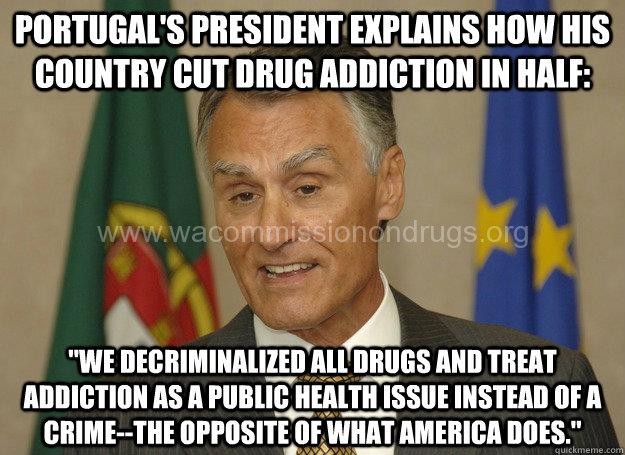
In the 15 years since Portugal decided to decriminalize drug use and invest instead in treatment and prevention services, use of injected drugs has fallen by 50%. Since Switzerland legalized heroin for addicts more than a decade ago, nobody has died of anoverdose on legal heroin.
A key figure in shaping Colombia's strategy at the upcoming U.N. conference is Maricio Rodriguez, an economist and diplomat. The drug war, he told me in Cartagena, is “the worst tragedy we have ever lived in, in Colombia and probably all of Latin America.” The combined death toll from the Latin American drug war exceeds even the war in Syria. “Every day that goes by is a day in which we are losing hundreds of people and we are losing hundreds of millions of dollars,” he explains.
Like most Colombians, he has relatives who were murdered when narco-traffickers were taking over the country. “Everybody has a story,” he says.
To explain why this carnage is happening, Rodriguez cited the late Nobel Prize-winning U.S. economist Milton Friedman, who grew up in Chicago under alcohol prohibition, and learned there what happens if you ban a popular substance. It doesn't matter whether the government targets whiskey or cocaine; a ban forces legal businesses out of the market — and armed criminal gangs take it over. They then go to war to control the trade. But once the prohibition ends, so does the violence. (Ask yourself: Where are the violent alcohol dealers today?)
Ranged against reform-minded countries at the U.N. conference will be governments that want to maintain or even intensify the global war, including Russia, Cuba, Saudi Arabia and China. Although the U.S. has historically been the most hard-line country, this time, its representatives will arrive at the conference in breach of U.N. drug treaties. The drug laws require a war on cannabis, but four U.S. states and the District of Columbia have now fully legalized the drug. Nobody knows what the result of this U.N. meeting will be, but nobody will ever be able to say again that the world is united behind the idea of a drug war.
Voboril, the Czech Republic's street user turned government minister, told me he is itching to tell the U.N. a simple truth: “This is reality: This is hundreds of thousands of people dying … for one simple reason — some governments just don't want to change. Nothing else.”

mercoledì 9 marzo 2016

ITALIA - UNGASS. Incontro a Roma

Si e' svolto ieri mattina, presso la Sala Polifunzionale di Palazzo Chigi, l'incontro con le associazioni e le ONG rappresentative sul territorio nazionale in preparazione ad UNGASS 2016 (Sessione speciale dell' Assemblea Generale ONU sulle droghe), che si svolgera' il prossimo Aprile a New York. UNGASS e' un evento molto atteso. Dopo diciotto anni infatti, la Sessione Speciale dell'Assemblea Generale delle Nazioni Unite si riunira' per valutare i risultati raggiunti e le sfide nella lotta al problema mondiale della droga. Per questo il Dipartimento Politiche Antidroga ha ritento opportuno, anche su sollecitazione del Cartello di Genova, organizzare questo importante incontro con la societa' civile, in ottemperanza anche a quanto previsto nella Strategia Europea e nel Piano d'azione europeo. Patrizia De Rose -Direttore Generale del Dipartimento Politiche Antidroga- nel corso del suo intervento ha ribadito che e' necessario considerare la persona indipendentemente dal fatto che possa fare o no uso di sostanze stupefacenti. Le persone che fanno uso di droga e le persone tossicodipendenti possiedono infatti lo stesso diritto alla salute degli altri e, risulta quindi necessario garantire a tutti gli interventi di prevenzione, di cura, di riabilitazione sociale e lavorativa e di riduzione del rischio e del danno. Nel corso dell'incontro e' stato dato ampio spazio alle sessioni tematiche che hanno riguardato: droga e salute, droga e diritti umani, droga e criminalita' e le pene alternative alla detenzione.
La giornata ha visto la partecipazione oltre che di esperti internazionali in materia, provenienti da importanti organizzazioni internazionali, anche da rappresentanti istituzionali come il Sen. Benedetto della Vedova, Sottosegretario di Stato agli Affari Esteri ed alla Cooperazione, dopo aver espresso l'apprezzamento al DPA per aver organizzato un incontro cosi' importante, ha sottolineato quanto sia importante "la promozione di politiche sulla droga basate sul pieno rispetto dei diritti umani, su un approccio sanitario e sull'evidenza scientifica e la protezione dei gruppi sociali piu' vulnerabili (donne e bambini), sia in ordine all'applicazione indiscriminata di norme repressive, sia in ordine alla diffusione delle sostanze stupefacenti". Il senatore ha inoltre aggiunto che "l'UNGASS e' un'utile occasione per promuovere una maggiore consapevolezza circa la flessibilita' prevista dalle Convenzioni ONU per l'elaborazione delle politiche nazionali in materia di droga". Vito De Filippo, Sottosegretario di Stato al Ministero della Salute, ha dichiarato che il SSN assicura una rete di servizi per le dipendenze su tutto il territorio nazionale, gestita dalle Regioni, che offre le prestazioni di prevenzione diagnosi e cura, sia a livello ambulatoriale che a livello residenziale e semiresidenziale. Gennaro Migliore, Sottosegretario di Stato al Ministero della Giustizia, ha evidenziato come il ministero voglia attuare degli interventi su tutti gli aspetti che riguardano la dipendenza. Promuovere il contrasto alla pena di morte per i reati connessi alla droga nei paesi dove e' prevista. Il contrasto al grande traffico di droga in relazione agli impegni previsti dalla convenzione di Palermo e l'attuazione di pene alternative per chi e' in carcere per reati di droga anche al fine di ridurre significativamente i fenomeni di recidiva.
Luigi Manconi, Presidente della Commissione straordinaria per la tutela e la promozione dei diritti umani del Senato, ha sottolineato che bisogna mettere al centro i diritti umani: "Finora - ha dichiarato - il discorso pubblico sulla questione sostanze stupefacenti e' stata sequestrato da temi come repressione e proibizione. Il problema di fondo e' che il consumo e' una attivita' umana che riguarda molti milioni di persone e quindi la tutela del loro diritto alla salute e' prioritario. Non bisogna dimenticare che il consumatore rimane titolare di tutte le sue facolta', garanzie e fondamentali tutele". "Sono convinta che il collegamento con la societa' civile rappresenti un punto di forza per lo sviluppo di strategie comuni e condivise. Per questo ho fortemente voluto questo incontro con le ONG e le associazioni piu' rappresentative sul territorio italiano ed internazionale. Le indicazioni che usciranno da questo incontro contribuiranno a sviluppare le nuove strategie nazionali sulle droghe. La presenza delle istituzioni in questa giornata rappresenta una risposta concreta su questa materia da parte del nostro Governo" ha dichiarato Patrizia De Rose, Direttore Generale del Dipartimento Politiche Antidroga.

ITALIA - UNGASS. Incontro a Roma

martedì 12 gennaio 2016

Droghe, l’Onu è ancora in mezzo al guado

Articolo di Marco Perduca * 23 dicembre 2015 18:28

Dall’otto all’undici dicembre s’è tenuta nella sede dell’Onu di Vienna l’ultima sessione della Cnd (Commission on Narcotic Drugs) del 2015 dedicata alla preparazione della sessione speciale dell’Assemblea generale (Ungass 2016), che dal 19 al 21 aprile prossimi si terrà a New York per affrontare il tema del controllo mondiale delle droghe. Il fronte conservatore del modello proibizionista comprende i paesi che fanno parte della Conferenza islamica, gli stati asiatici e la Russia: questi ritengono che Ungass 2016 debba semplicemente ratificare i documenti in fase di definizione a Vienna che, sostanzialmente, riaffermano gli obiettivi tradizionali presenti nella dichiarazione politica del 2009: la riduzione, fino all’eliminazione, dell’offerta e della domanda di droga attraverso la repressione penale e la lotta al narcotraffico.

Il fronte aperturista, che raccoglie la stragrande maggioranza dei paesi latino-americani e, in teoria, gli europei, vuole invece che il dibattito di New York sia vero, aperto, e che includa punti di vista e riflessioni anche di altre agenzie dell’Onu: in questa luce, i documenti finali dovrebbero essere messi a punto all’Assemblea per riflettere le conclusioni del dibattito al Palazzo di Vetro. E’ previsto che il dibattito affronti cinque temi chiave, dai diritti umani, agli aspetti socio-sanitari, allo sviluppo alternativo nei paesi produttori.

La Cnd ha una presidenza che varia ogni dodici mesi, dopo la Tailandia toccherà alla Repubblica Ceca, e le sessioni dedicate alla definizione dell’agenda dell’Ungass sono state affidate a una giunta coordinata dall’ambasciatore egiziano, che non sempre aiuta l’emergere di compromessi al rialzo. Comunque sia siamo anni luce avanti rispetto all’Ungass del 1998.

Dall’Oms, all’Undp ( programma Onu per lo sviluppo), da Unaids all’Alto Commissario per i diritti umani, passando per tutti gli speciali Rapporteur, si sono consolidate posizioni che pongono al centro il rispetto dei diritti umani e le ripercussioni negative dell’aver affidato al diritto penale il governo del fenomeno della circolazione e del consumo delle sostanze contenute nelle tre Convenzioni. Rispetto al passato, si arriva a riconoscere un “margine di manovra” interpretativo delle tre Convenzioni sulle droghe: la Convenzione del 1961 afferma infatti che “il possesso personale può esser considerato come reato” e non “deve” e che comunque ciò verrà stabilito dal singolo stato sulla base della propria Costituzione, delle caratteristiche del sistema penale nazionale, rispettando i principi basilari secondo cui non può esserci reato senza vittima e la pena deve essere proporzionale alla gravità del reato.

Se all’Unodc, l’ufficio per le droghe e il crimine, esiste un dibattito in merito alle priorità e agli approcci da perseguire, lo Incb, l’organismo di controllo sull’applicazione delle Convenzioni, resta sostanzialmente ancorato a posizioni di retroguardia, da depositario unico dell’interpretazione autentica delle Convenzioni che non riconosce alcun approccio alternativo a quello proibizionista. Da notare che il sistema creato con le Convenzioni del 1961, 1971 e 1988 non prevede un regime sanzionatorio in caso lo Incb ritenga che non siano rispettati gli obblighi assunti al momento della ratifica.

A gennaio e febbraio prossimi ci saranno ulteriori incontri informali per la definizione dell’agenda. La prossima riunione della Cnd si terrà dal 14 al 22 marzo e solo allora si capirà se il Palazzo di Vetro sarà solo un palcoscenico per interventi rituali dei governi o se si potrà davvero discutere nel merito: per prefigurare un futuro in discontinuità piuttosto che riaffermare le fallimentari ricette del passato.

Tutta la documentazione su Ungass on line sul sito ungass.fuoriluogo.it 

* rappresentante all'Onu per il Partito Radicale Transnazionale

(intervento pubblicato sul quotidiano il manifesto del 23/12/2015)

Droghe, l’Onu è ancora in mezzo al guado

sabato 7 marzo 2015

Encod brings peace proposals to UN drug summit in Vienna

Side events feature perspectives from those directly affected by the drug war

Encod press release March 6, 2015

VIENNA - Between March 9 and 17, Encod, the European coalition for just and effective drug policies, will attend the 58th session of the UN Commission on Narcotic Drugs (CND) in Vienna. At this UN summit on the course of drug policies worldwide, Encod will present first hand testimonies on the impact of drug prohibition on the lives of citizens.

On Monday, March 9th, a side event will present the results of studies carried out in Slovenia and France into the impact on human rights and public health of the criminalization of cannabis users in these countries. The event will focus on crucial arguments that will help to avoid harmful effects of drug policy and contribute to a more evidence-based and humane approach.

On Thursday, March 12th, the second side event will highlight the review made by patients themselves on the medicinal values of the cannabis plant and the importance of installing a legal framework to facilitate the use of cannabis for these purposes.

Encod is grateful to the United Nations for the opportunity to present the delegates at the UN summit with a rare chance to listen directly to people whose lives have been seriously affected by drug prohibition. We believe it’s crucial that governments take into account the voices of those citizens whose lives have been ruined due to 60 years of global mismanagement of the drug issue.

As Encod we believe that the freedom to farm i.e. the protection of the right of any adult to possess and grow any plant they choose is a crucial element of an effective alternative system to the war on drugs, which has, as we know today, been an utter failure. In this alternative system the priority should be on the protection of people, not profits. The concept of harm reduction is in principle incompatible with drug prohibition, as prohibition itself causes the majority of drug related harms.

Janko Belin, one of the Encod delegates for the UN CND, explains: “Since the introduction of the Harm Reduction concept in the late eighties, we can see how the paradigm has changed from outright repression towards a medical treatment orientated approach. But we want to live in a world where traditional plants and extracts can be used by any adult without fear of being considered or treated as a criminal.”

Encod welcomes all delegates and journalists to attend these side events. The following Encod members will speak: from Slovenia Maja Kohek, Andrej Kurnik and Janko Belin, from Italy Enrico Fletzer and Alberto Sciolari, from Austria Toni Straka and from the Netherlands Derrick Bergman.

Monday March 9, 13.10-14.00, Conference Room MOE100:

Report on the criminalization of cannabis users in Europe

(in partnership with ONEJ! - Association of Prekmurje Initiative Slovenia and Cannabis Sans Frontières France)

Thursday March 12, 13.10-14.00, Conference Room MOE79:

Medical perspectives of cannabis: a patients review

(in partnership with Pazienti Impazienti Cannabis Italy and Hanf-Institut Austria)

For further information please contact:

Janko Belin (Encod, Drustvo Areal) phone +386 70 133 804

belinjanko@gmail.com

Toni Straka (Encod, Hanf-Institut) phone +43 676 69 66664

toni.straka@hanfinstitut.at

Joep Oomen (Encod) phone +32 495 122 644 info@encod.org


Encod brings peace proposals to UN drug summit in Vienna

sabato 13 settembre 2014

Report Launch:Taking Control: Pathways to Drug Policies that Work


On Tuesday, September 9th the Global Commission on Drug Policy released a new, groundbreaking report, Taking Control: Pathways to Drug Policies that Work, at a press conference at MOMA in New York City.

venerdì 6 dicembre 2013

Leaked paper reveals UN split over war on drugs

Latin American nations call for treatment strategy, claiming UN's prohibition stance plays into hands of paramilitary groups
Saturday 30 November 2013 19.50 GMT


Major international divisions over the global "war on drugs" have been revealed in a leaked draft of a UN document setting out the organisation's long-term strategy for combating illicit narcotics.

The draft, written in September and seen by the Observer, shows there are serious and entrenched divisions over the longstanding US-led policy promoting prohibition as an exclusive solution to the problem.

Instead, a number of countries are pushing for the "war on drugs" to be seen in a different light, which places greater emphasis on treating drug consumption as a public health problem, rather than a criminal justice matter.

It is rare for such a document to leak. Normally only the final agreed version is published once all differences between UN member states have been removed.

The divisions highlighted in the draft are potentially important. The document will form the basis of a joint "high-level" statement on drugs to be published in the spring, setting out the UN's thinking. This will then pave the way for a general assembly review, an event that occurs every 10 years, and, in 2016, will confirm the UN's position for the next decade. "The idea that there is a global consensus on drugs policy is fake," said Damon Barrett, deputy director of the charity Harm Reduction International. "The differences have been there for a long time, but you rarely get to see them. It all gets whittled down to the lowest common denominator, when all you see is agreement. But it's interesting to see now what they are arguing about."

The current review, taking place in Vienna at the UN Commission on Narcotic Drugs, comes after South American countries threw down the gauntlet to the US at this year's Organisation of American States summit meeting, when they argued that alternatives to prohibition must be considered.

Countries such as Colombia, Guatemala and Mexico have become increasingly critical of the UN's prohibition stance, claiming that maintaining the status quo plays into the hands of the cartels and paramilitary groups.

The draft reveals that Ecuador is pushing the UN to include a statement that recognises that the world needs to look beyond prohibition. Its submission claims there is "a need for more effective results in addressing the world drug problem" that will encourage "deliberations on different approaches that could be more efficient and effective".

Venezuela is pushing for the draft to include a new understanding of "the economic implications of the current dominating health and law enforcement approach in tackling the world drug problem", arguing that the current policy fails to recognise the "dynamics of the drug criminal market".

Experts said the level of disagreement showed fault lines were opening up in the globally agreed position on drug control. "Heavy reliance on law enforcement for controlling drugs is yielding a poor return on investment and leading to all kinds of terrible human rights abuses," said Kasia Malinowska-Sempruch, director of the Open Society Global Drug Policy Program. "The withdrawal from the most repressive parts of the drug war has begun – locally, nationally and globally."

Attacking the status quo is not confined to South American countries, however. Norway wants the draft to pose "questions related to decriminalisation and a critical assessment of the approach represented by the so-called war on drugs". Switzerland wants the draft to recognise the consequences of the current policy on public health issues. It wants it to include the observation that member states "note with concern that consumption prevalence has not been reduced significantly and that the consumption of new psychoactive substances has increased in most regions of the world". It also wants the draft to "express concern that according to UNAids, the UN programme on HIV/Aids, the global goal of reducing HIV infections among people who inject drugs by 50% by 2015 will not be reached, and that drug-related transmission is driving the expansion of the epidemic in many countries".

The EU is also pushing hard for the draft to emphasise the need for drug-dependence treatment and care options for offenders as an alternative to incarceration.

"Drug users should be entitled to access to treatment, essential medicines, care and related support services," the EU's submission suggests. "Programmes related to recovery and social reintegration should also be encouraged."

Ann Fordham, executive director of the International Drug Policy Consortium, said the draft revealed there was growing tension over the global drugs policy. "We are starting to see member states break with the consensus about how we should control drugs in the world. Punishment hasn't worked. All the money spent on crop eradication hasn't had the impact we would like to see."

Leaked paper reveals UN split over war on drugs

Archivio blog