Visualizzazione post con etichetta money. Mostra tutti i post
Visualizzazione post con etichetta money. Mostra tutti i post
martedì 19 novembre 2019


sabato 17 agosto 2019
giovedì 23 maggio 2019
sabato 9 marzo 2019
venerdì 29 settembre 2017
Snoop Dogg's venture capital firm is leading an investment in a cannabis tech company
Jeremy Berke
A cannabis-specific venture capital firm that counts Snoop Dogg among its partners is investing in a Toronto-based cannabis tech company.
| Snoop Dogg's fund is making big moves in the cannabis space.Richard Shotwell/AP |

Snoop Dogg's fund, Casa Verde, led a $2 million seed round in Trellis, a cannabis inventory management firm. Trellis develops software to help dispensaries and other plant-touching businesses comply with regulatory requirements, including seed-to-sale tracking.
Casa Verde makes early-stage investments in cannabis companies that do not touch the plant, but rather provide ancillary products and services to the emerging industry.
"We are at a pivotal point in the industry where the market is expanding with new regulations and operators are experiencing growing pains. This makes it all the more important to have strong tools and procedures in place," Pranav Sood, the CEO of Trellis said. "We are thrilled to have been able to attract such a strong team of beta clients, investors, and advisors to support us in our vision."
Trellis works with cannabis clients in both Canada and California and plans to expand to more states that have legalized cannabis for recreational and medicinal use.
"As cannabis legalization sweeps the US, the compliance burden for cannabis-related businesses will become more and more rigorous," Karan Wadhera, a Goldman Sachs alum, and the managing partner at Casa Verde said. "We have been searching for companies with an elegant solution to address the growing pains of the industry."
"That is exactly what Pranav and his team have built with Trellis," Wadhera said.
Gateway, a California-based incubator for cannabis startups also provided additional funding, as well as Argonautic Ventures and One Gun.
Wadhera previously told Business Insider in an interview that investing in ancillary startups that provide software and tech services to cannabis companies is one of the "most exciting" areas of the industry, as these companies can "actually scale" and aren't subject to the often byzantine regulations that plant-touching businesses are.
Cannabis is considered an illegal drug by the federal government, although a number of states have legalized the plant for recreational and medicinal use. Attorney General Jeff Sessions, a noted opponent of cannabis, has threatened to crack down on the nascent industry.
mercoledì 4 gennaio 2017
Six Predictions For The Marijuana Industry In 2017

I write about retail and cannabis.
Opinions expressed by Forbes Contributors are their own.
This year saw big election wins for marijuana in several states. In addition, Colorado crossed the $1 billion mark for annual marijuana sales. Now a new year is almost here and a new presidential administration for the cannabis industry to navigate. It's time to look ahead and see what's in store for the cannabis industry in 2017.
The two biggest areas of focus for the upcoming year are California and Jeff Sessions. With California's recreational marijuana market in the building phase, many in the industry will be watching for progress throughout the year. Another big center of attention will be the appointment of Jeff Sessions as U.S. Attorney General. This will keep the industry on heightened alert for any changes in law enforcement. Aside from those two topics, here are some of the industry’s biggest predictions for the 2017.
- Los Angeles Will Become The Marijuana Capital
Move over Denver, Adam Bierman Chief Executive Officer of cannabis investment firm MedMen Capital believes that the City of Angels will steal the spotlight from the Mile High City. Bierman said that by some estimates, Los Angeles's medical marijuana market alone is already close to $1 billion, easily overshadowing Colorado’s entire market. The city is expected to pass an ordinance in 2017 that will clear the path for a proper licensing program and open up the recreational market. Bierman said that capital is flowing into the area for local ventures as investors begin to smell money in the emerging market.
- A Sports League Will Green Light Marijuana
Bierman believes that in 2017 a major sports league will approve the use of cannabis for medical purposes. Many professional athletes have turned to using cannabis to treat pain and head injuries and are rejecting prescribed opiates. With medical marijuana legal in 29 states, the players are pushing to be treated just like other patients.
- A Primetime Network Show With A Marijuana Theme
With many polls showing that most Americans approve of legalizing marijuana, it won't be long before a major network will use marijuana as a backdrop. It's been over a decade since Showtime had a hit with Weeds. That series focused on a suburban mom that sold pot to make ends meet. It was considered ground breaking at the time with its taboo topic. Now HBO has High Maintenance and MTV's got Mary + Jane. Adam Scott from Parks and Recreation got a green light from NBC to develop a show called Buds about a dispensary in Denver. There isn't any timeline yet as to when the comedy could hit the air waves.
- An Increase In Interest For Synthetic CBD
With the Hemp Industries Association and the DEA battling over the legality of cannabis extracts like cannabinoids or CBD, there is an expectation for increased interest in synthetic cannabinoids. Seth Yakatan, the chief executive officer of biotech company Kalytera, said, “With AG Sessions and the DEA's clarification that plant derived CBD isn't legal federally, there will likely be interest in synthetic forms of CBD, which is what Kalytera has been testing the efficacy of for a few years.” Aside from the debate over whether CBD is legal or not, Yakatan is right that synthetic products do not have the legal limitations of other products. However, the synthetic products are not believed to be as effective as the natural products according to some patients. Fear over legal issues could create more demand for the synthetics.
- The Growth of Craft Marijuana
Sasha Kadey, Chief Marketing Officer of vaporizer distributor Greenlane, said he expects that as market supplies grow, prices will fall, causing a commoditizing effect. “This is leading to premiumization," he said. "Much like the alcohol industry experienced during its maturation, with producers now seeking to differentiate with premium packaging, brand building, so called “seed to sale” storytelling, and other value adds.” Other growers will stress their organic features, while some will push celebrity endorsements. It will be the year of the craft bud.
6. Recycling Marijuana Failures
The Cannabis Business Alliance is hoping to work with lawmakers to create options for marijuana that fails pesticide testing. Currently marijuana producers have to destroy crops that fail testing. The CBA is working towards a new rule to allow for these harvests to be turned into solvent-based concentrates that would be considered safe.
martedì 16 febbraio 2016
Banking for Cannabis Companies Is About to Get Easier Thanks to This Startup

Only 30 percent of companies in the marijuana industry have a bank account. As the industry makes billions of dollars in sales, a small startup out of Arizona is here to help make sure all that cash has a safe home.
BY WILL YAKOWICZ
Staff writer, Inc.@WillYakowicz
Although selling marijuana is now legal in 24 states and the District of Columbia, doing business as a legal marijuana company is a logistical nightmare. That's because marijuana is still federally illegal, and banks open themselves up to potential seizure by the FDIC if they take money that is the result of a federally illegal act.
Despite the fact that President Obama has given financial institutions the green light to serve the legal cannabis industry (so long as they monitor closely for potential money-laundering and other violations), most banks won't work with the $6.7 billion marijuana industry. The result is that 70 percent of cannabis companies don't have a bank account. The few banks that do take on marijuana clients do not advertise what they're doing.
Enter Hypur, a startup in Scottsdale, Arizona, that for the past year has been quietly convincing banks that it is safe and profitable to work with cannabis businesses.
Hypur, which was founded by a team of banking compliance and software entrepreneurs in 2014, has successfully helped about five banks in Colorado serve a number of cannabis businesses in the state. Hypur would not reveal which banks, citing nondisclosure agreements.
The startup's secret sauce is a software platform that audits a cannabis company in its entirety, shifting through documents and state licenses, financial statements, tax returns, property leases, and more, to ensure it is legal and legitimate. The software connects to the cannabis company's point-of-sale system as well as the state's seed-to-sale system, which follows marijuana plants from the grow house until they're sold to a customer, to monitor the business and ensure compliance.
Automated compliance.
One of the greatest hurdles for banks that do want to do work with this lucrative market is to make sure businesses are compliant under state law. It can take up to 20 hours for a banker to do a single marijuana business's paperwork, while other businesses can get a bank account set up within an hour, says Andre Herrera, executive vice president and co-founder of Hypur.
Michael Sinnwell, chief operating officer and co-founder of Hypur, adds, "That's one of the biggest things--banks spend a lot of time chasing paper and we're eliminating the paper-chasing."
 After Hypur has collected all the licenses and documents and has proved the company is legally operating in the state, the system creates automated notifications and red-flag triggers for when a license or lease will expire to make sure the client does not fall out of compliance.
Banks using Hypur are granted access to granular financial information coming from each dispensary's point-of-sale system. (Hypur is integrated into POS software likeFlowhub and BioTrack THC and marketplace platforms like Tradiv.) Not only can banks on the platform assure bank regulators like the FDIC that everything is above board, Hypur breaks down the provenance of every dollar coming into a cannabis bank account, says Sinnwell.
"Here's where the money came from and here's how much cash you should expect coming through your door at any given point. We allow banks to know a given transaction is a legitimate transaction between a consumer and that merchant," Sinnwell says. "We call it Know Your Customer's Customer. Banks know their customer but now they have an idea of their customer's customer to make sure it's not laundered funds."
Follow the money.
The ability to know you customer's customer is a big deal in the banking world. Once a Hypur customer gives a cannabis business an account, that business is encouraged to have its customers download Hypur's mobile payment app. The app, which is about to finish beta testing, hosts a direct bank-to-bank electronic transaction, meaning a customer pays directly from their bank account to the cannabis business's bank account. The bank can follow each transaction coming in and follow the product going out of the business.
"Our goal is to eliminate cash," Sinnwell says.
Cash is not only a pain to deal with and keep safe; it also poses danger to the merchant and the merchant's employees. Money also walks. Cash businesses tend to lose 10 percent due to theft. Lastly, businesses that are cash only are inconvenient to customers.
While 30 percent of cannabis companies have a bank account, no cannabis company can accept debit or credit cards because companies like Visa and Mastercard will not give the industry merchant accounts until federal law changes. For this reason, an entire cottage industry of armed cash pick-up and delivery companies has emerged in states like California, Colorado, Oregon, and Washington to bring millions in cash to entrepreneur's homes, private vaults, or banks or local federal reserve branches (some banks prefer to bring the cash straight to their federal account) for the ones with bank accounts.
 Hypur's platform and app allows banks to see each dollar come into a business's account and match with a customer and product. When a cannabis client's armored truck pulls up to a bank, the bank knows exactly how much is coming and where each bill came from.
According to Hypur, it monitors hundreds of millions of dollars of transactions a month. The company, which raised $6 million from investors, doesn't serve only the cannabis industry. It also serves any cash-intensive business, like gun and ammunition shops, payday lenders, off-track betting parlors, and pawn shops. Sinnwell says that the Hypur platform provides effective tools to companies that are struggling for credibility and acceptance by financial institutions.
"Once the data and information starts to flow and banks can know a business isn't laundering funds, that's when the industry blooms," he says. "The biggest thing for regulators is to know that all of this cash is accounted for."
Banking for Cannabis Companies Is About to Get Easier Thanks to This Startup
Enter Hypur, a startup in Scottsdale, Arizona, that for the past year has been quietly convincing banks that it is safe and profitable to work with cannabis businesses.
Hypur, which was founded by a team of banking compliance and software entrepreneurs in 2014, has successfully helped about five banks in Colorado serve a number of cannabis businesses in the state. Hypur would not reveal which banks, citing nondisclosure agreements.
The startup's secret sauce is a software platform that audits a cannabis company in its entirety, shifting through documents and state licenses, financial statements, tax returns, property leases, and more, to ensure it is legal and legitimate. The software connects to the cannabis company's point-of-sale system as well as the state's seed-to-sale system, which follows marijuana plants from the grow house until they're sold to a customer, to monitor the business and ensure compliance.
Automated compliance.
One of the greatest hurdles for banks that do want to do work with this lucrative market is to make sure businesses are compliant under state law. It can take up to 20 hours for a banker to do a single marijuana business's paperwork, while other businesses can get a bank account set up within an hour, says Andre Herrera, executive vice president and co-founder of Hypur.
Michael Sinnwell, chief operating officer and co-founder of Hypur, adds, "That's one of the biggest things--banks spend a lot of time chasing paper and we're eliminating the paper-chasing."
Banks using Hypur are granted access to granular financial information coming from each dispensary's point-of-sale system. (Hypur is integrated into POS software likeFlowhub and BioTrack THC and marketplace platforms like Tradiv.) Not only can banks on the platform assure bank regulators like the FDIC that everything is above board, Hypur breaks down the provenance of every dollar coming into a cannabis bank account, says Sinnwell.
"Here's where the money came from and here's how much cash you should expect coming through your door at any given point. We allow banks to know a given transaction is a legitimate transaction between a consumer and that merchant," Sinnwell says. "We call it Know Your Customer's Customer. Banks know their customer but now they have an idea of their customer's customer to make sure it's not laundered funds."
Follow the money.
The ability to know you customer's customer is a big deal in the banking world. Once a Hypur customer gives a cannabis business an account, that business is encouraged to have its customers download Hypur's mobile payment app. The app, which is about to finish beta testing, hosts a direct bank-to-bank electronic transaction, meaning a customer pays directly from their bank account to the cannabis business's bank account. The bank can follow each transaction coming in and follow the product going out of the business.
"Our goal is to eliminate cash," Sinnwell says.
Cash is not only a pain to deal with and keep safe; it also poses danger to the merchant and the merchant's employees. Money also walks. Cash businesses tend to lose 10 percent due to theft. Lastly, businesses that are cash only are inconvenient to customers.
While 30 percent of cannabis companies have a bank account, no cannabis company can accept debit or credit cards because companies like Visa and Mastercard will not give the industry merchant accounts until federal law changes. For this reason, an entire cottage industry of armed cash pick-up and delivery companies has emerged in states like California, Colorado, Oregon, and Washington to bring millions in cash to entrepreneur's homes, private vaults, or banks or local federal reserve branches (some banks prefer to bring the cash straight to their federal account) for the ones with bank accounts.

According to Hypur, it monitors hundreds of millions of dollars of transactions a month. The company, which raised $6 million from investors, doesn't serve only the cannabis industry. It also serves any cash-intensive business, like gun and ammunition shops, payday lenders, off-track betting parlors, and pawn shops. Sinnwell says that the Hypur platform provides effective tools to companies that are struggling for credibility and acceptance by financial institutions.
"Once the data and information starts to flow and banks can know a business isn't laundering funds, that's when the industry blooms," he says. "The biggest thing for regulators is to know that all of this cash is accounted for."
Banking for Cannabis Companies Is About to Get Easier Thanks to This Startup
lunedì 15 febbraio 2016
domenica 17 gennaio 2016
sabato 19 dicembre 2015
Prediction: 2016 Will Be the Greenest Year in History Cannabis Entrepreneur Nicole Smith Talks About the Industry

Posted: 12/17/2015 4:00 pm EST Updated: 12/17/2015 4:00 pm EST
Tis the Season -- for reflection and prediction. Tune in any TV network and you'll see experts prognosticating on the global state of affairs while other segments reflect on the year that was. The cannabis industry is no different.
One of the industry's primary movers-and-shakers is Nicole Smith, founder and CEO of Mary's Medicinals, the Denver-based company that manufactures transdermal cannabis patches along with other unique cannabis nutraceutical products. In fact, Mary's Medicinals has won the Cannabis Business Award for "Most Innovative Product" for two years in a row and Smith was recently named a Denver Business Journal Outstanding Woman in Business for 2015.
This author recently asked Smith to reflect on the year that was and offer some predictions for the future.
Nicole, there is always talk about "Big Business" at the door of the cannabis industry. What's your take?
Nicole Smith: Everyone abhors the possibility of 'Monsanto Marijuana,' but major corporations and investment firms will inevitably find ways to get into the industry. For better or for worse, the industry is going to mature very quickly. The success of larger existing cannabis companies will power the next wave of research and development, distribution and marketing but there are investors clamoring to "get on board." With this wave of investment, we'll see both the entry of new players and the consolidation of the existing market as larger organizations continue to buy up smaller firms. It's a free country with a free market but, as with any product, an educated consumer is key. The cannabis consumer is very sophisticated, for the most part, and this will, I think, help avoid the "Monsanto Marijuana."

Does that include The Edibles Market, which has taken quite a hit in the press in 2015?
Nicole Smith: I think the edibles market will "grow up" in 2016. Overdosing on edibles has been too easy. A slew of new regulations and safety guidelines will definitely have an impact on this previously rapid-growth sector. In Denver, manufacturers are facing new proposed requirements that may include marking individual items with a THC symbol. Branding changes and required investment in new technology will drive out many smaller manufacturers as regulations continue to stack up.
Consumers should expect a reduction in gummy bears and other candies that are perceived as appealing to children. Meanwhile, artisanal chefs and brewers have begun to explore the potential of cannabis as an intriguing ingredient in high-end craft brews and gourmet meals. There will also be new oral preparations of cannabis available, like our new high-bioavailability capsules. These emerging areas are geared to the 'adult-oriented' cannabis market and will see significant growth in 2016.

What is your perception of the socio-economic impact in the legal cannabis states?
Nicole Smith: Without question the growing legal cannabis industry has begun to have a major impact on the bottom-line in communities where it has been allowed to prosper. There are estimates of nearly $3 billion in sales in 2015! Unemployment is down. Schools, drug treatment programs and other municipal services have been positively impacted -- and citizens are taking note. Multiple reports show that in Colorado, teen drug use and crime are both down. Beyond all of the jobs both in cannabis and ancillary industries, cannabis companies have contributed millions of dollars to educational, research, patient and community support programs. If you drive down Interstate 25 in Denver, don't be surprised when you see a sign proclaiming 'Litter Removal Sponsored by Metro Cannabis.'
As the cannabis industry becomes increasingly important to local economies, and influential in government, we will begin to see incremental banking and tax reform -- especially on the federal level. Smaller local banks will begin to find ways to participate in and benefit from the cannabis economy. And those of us in the industry will eventually be able to bank like everyone else (laughs).

There are three levels of cannabis control -- state, federal and international. What do you foresee in those areas?
Nicole Smith: There are nearly a dozen states (California, Arizona, Nevada, Michigan, Florida, Massachusetts, Maine, Hawaii, Missouri, Ohio, and Montana) that are in various stages of trying to get ballot initiatives for general legalization in 2016. It is too early to know which states will actually get something on the ballot, but we know several will. Vermont may be the first state to legalize recreational use through a legislative process.
At the federal level, the prospect of someone new entering the White House presents quite a bit of uncertainty. Some conservative presidential candidates have threatened to vigorously enforce federal marijuana laws, while Bernie Sanders promises to end the drug war completely. Without trying to predict the outcome of the election, let's just say there are many possibilities, but a reversal of state legalization is very unlikely.
Internationally things are also very exciting but complex. With a new Prime Minister (Justin Trudeau), Canada is poised to be the first G7 nation to legalize cannabis, and many other nations are exploring the possibility of following suit. Rumors continue to swirl about a report from the United Nations Office on Drugs and Crime that will call on governments around the world to decriminalize drug use and possession for personal consumption. Whether or not that will happen in 2016, legalization will continue to draw headlines throughout the year.
And do you think that general legalization will hurt the medical use of cannabis?
Nicole Smith: It certainly could. Growing pains are inevitable. In Washington, the highly regulated recreational market has all but shuttered the previously vast medical dispensary system. In Colorado, a duel system has emerged, but many feel that an evolution of the '2 Door' system is needed. To keep up, many products are sold both medically and recreationally so that they are available to users with or without a prescription. However, the retail side is more heavily taxed, and can cost 40-60% more. As more states legalize, there is going to be a difficult discussion about how we open up adult use while making sure we take care of the patients that need these products as medicine.
It is not a simple issue. Can we separate medical and recreational use? If so, where do we draw the line between medical and recreational use? Treating a child's epilepsy is, of course, purely medical. But we see many customers using our 'Medical' products for many conditions that wouldn't qualify as 'debilitating,' even something as simple as a hangover or menstrual cramps. But these are also not 'recreational' users trying to get stoned. Is an athlete entitled to use cannabis as sports medicine? What about someone trying to treat stress or anxiety? Do they deserve the same access to non-toxic/non-pharmaceutical relief as someone with a 'qualifying' condition? The only answer, in my opinion, is to provide unrestricted access to everything for everyone -- just like any over the counter drug. Hopefully we'll see a move in that direction in 2016.
venerdì 16 ottobre 2015
Where the Women Executives Are: The Marijuana Industry
A new survey finds that 36 percent of executive positions in legal pot businesses are held by women, a considerably higher level than the average for U.S. businesses.

 Staff writer, Inc.@WillYakowiczBY WILL YAKOWICZ
According to a new survey by Marijuana Business Daily, women hold 36 percent of leadership positions--owner/founder, CEO, or president--across the cannabis industry. The average for all U.S. companies is just 22 percent, according to Pew Research.
When broken down by sector, the numbers get interesting. Testing labs had the highest level of women executives, at 63 percent. The sector with the lowest level was investment firms, with 28 percent.
The good news is that even though the percentage of women leaders in investment firms is low for the pot industry, it still is higher than average compared with other U.S. businesses. The bad news, according to the survey, is that one out of four cannabis companies have no female executives at all.
See the infographic below for more details, and check out Inc.'s coverage of female entrepreneurs in the marijuana industry.
Where the Women Executives Are: The Marijuana Industry
domenica 27 settembre 2015
martedì 25 agosto 2015
domenica 23 agosto 2015
Cannabis startup Tradiv is raising $1M to connect growers and sellers

That’s right: The B2B pot ecosystem is unfolding right before our eyes.
Backed by Cannabis accelerator CanopyBoulder and accelerator partner Micah Tapman, Tradiv revealed the raise in a public filing with the U.S. Securities and Exchange Commission. The weed startup has so far raised $650,000, according to the filing — at least $20,000 of which likely came from CanopyBoulder, in exchange for a whopping 9.5 percent equity stake. The filing also lists Emily Paxhia, partner of Cannabis-only fund Poseidon Asset Management; and former Microsoft Surface manager, Nick Hofmeister.
Cannabis startup Tradiv is raising $1M to connect growers and sellers
mercoledì 12 agosto 2015
6 tech startups sowing seeds for the future of cannabis
 by JELLE VAN WIJHE Tweet — 3h ago in INSIDER
Back in February, rapper-turned-venture capitalist Snoop Dogg announced his plans to raise a $25 million fund for tech startups working in the field of cannabis. That led to his participation in the biggest investment in a cannabis-focused startup to date: a $10 million Series A investment in San Francisco-based weed delivery startup Eaze, in April.
It’s been a long time coming, but it seems that now the floodgates have opened and cannabis is getting its chance at disruption.

With Washington and Colorado officially legalizing recreational cannabis use back in 2012 (it’s also been legalized in Alaska and Oregon since), a whole new market has germinated and is fast spreading in the US.
You might be surprised to find, however, that the startups developing the hemp-isphere are not just the usual suspects of a lifestyle market. Sure, you have your online stores that sell brand-name smoking merchandise, and a few companies competing for the top-spot in on-demand delivery – but it’s starting to look like many potrepreneurs have bigger plans for the space.
What we’re seeing is the start of a full-blown ecosystem around a core product. Startup accelerator Canopy Builder has accepted their inaugural class for a cannabis-specific program, partnerships and acquisitions are already in motion, and the market looks like it will only continue to mature.
Here we highlight six of the companies that will shape the future of cannabis tech:

Bud and Breakfast launched their weed-friendly accommodation booking platform in April. All listings are in places where cannabis consumption is legal, so guests can be sure they’re in the clear.

PotCoin is a cannabis-specific cryptocurrency. Launched in 2014, the virtual currency wants to facilitate transactions between individuals and institutions.
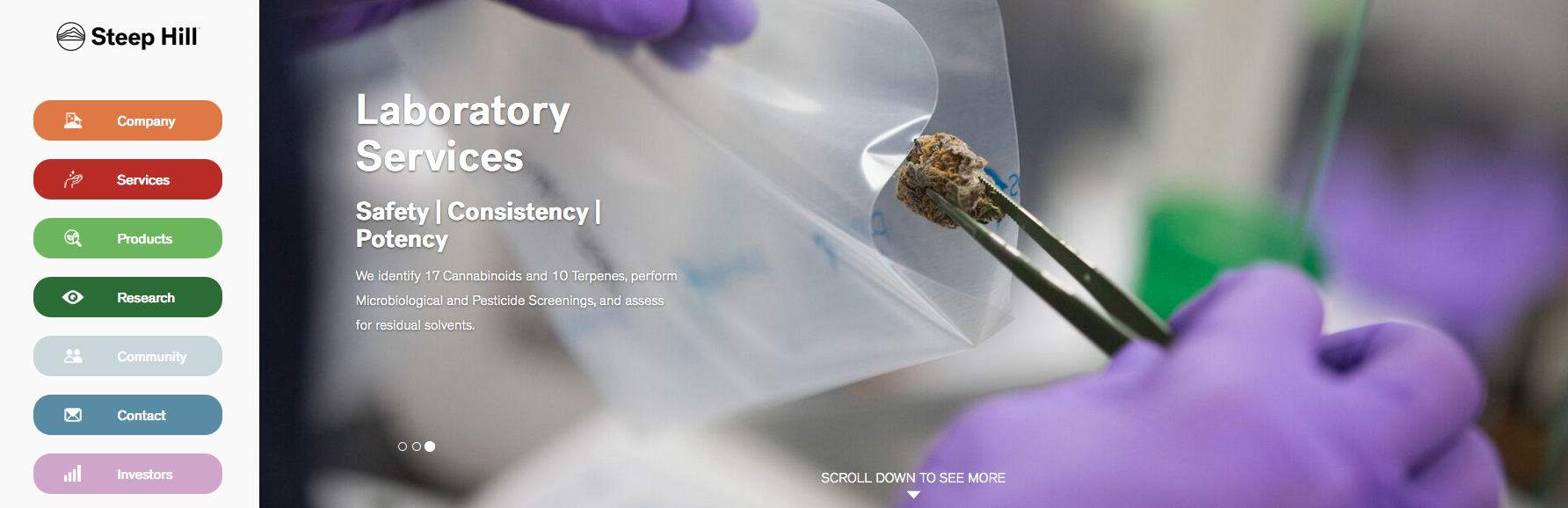
Steep Hill offers three products that help growers and distributors to leverage the power of analytics in the world of cannabis, including on-site analysis tools and laboratory services.

Flowhub offers a seed-to-sale platform that will streamline grow and dispensary businesses. Marijuana-centric social network MassRoots is working with Flowhub to bring partial integration of the platform to MassRoots. Users will get access to live pricing, inventory and an order-ahead system.

HerbFront is a real-estate listing platform specifically for those in need of marijuana-friendly property for their growing or distributing business.
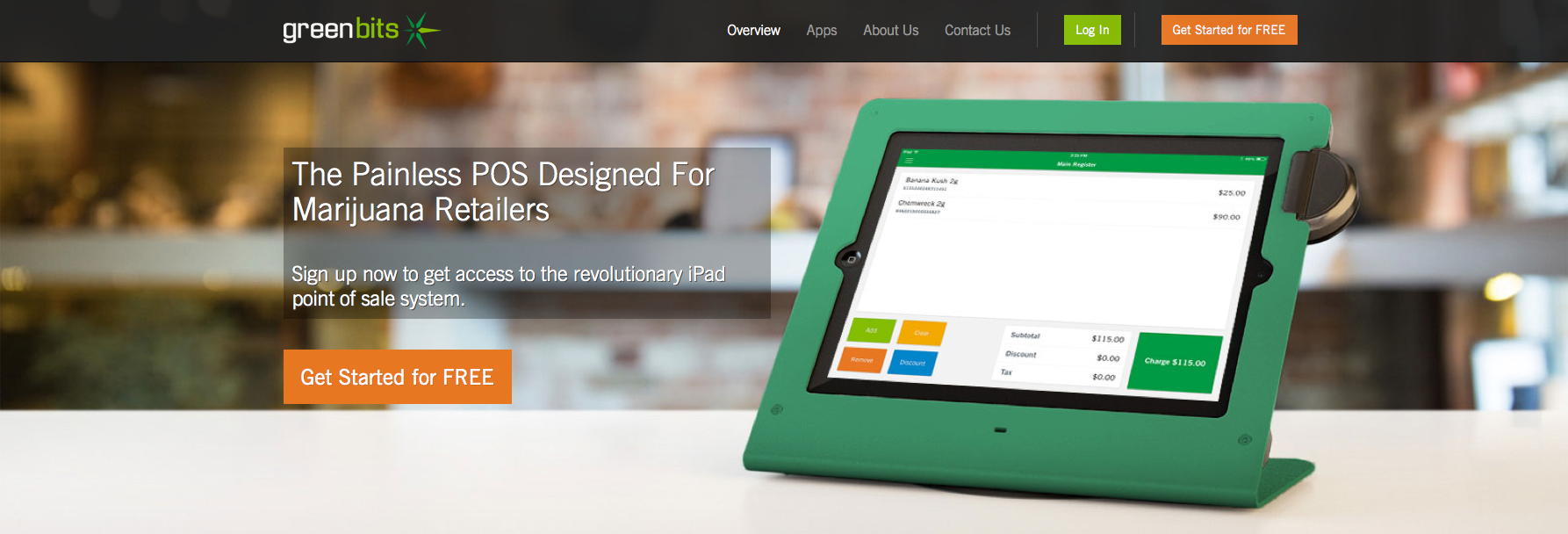
Green Bits aims to alleviate the pains of running a cannabusiness with their point of sale system. Their app handles everything you need to get your dispensary running smoothly.
As more states and countries decide to go the way of legalization, we will undoubtedly be seeing much more innovation developing in this ecosystem. Be sure to track the cannabis market on Index.
sabato 1 agosto 2015
giovedì 30 luglio 2015
Oregon To Begin Recreational Marijuana Sales Early

Gov. Kate Brown (D) signed a law on Tuesday allowing the sale of recreational marijuana in existing medical marijuana dispensaries, starting just three months after Oregon’s reformed marijuana law went into effect.
The measure “is a smart solution to a short-term logistical problem,” Kristen Grainger, Brown’s spokeswoman, told The Huffington Post. “Oregon’s new recreational marijuana law went into effect in July 2015, but Oregonians couldn’t lawfully buy it anywhere for another year or more. If marijuana is legal to use, it shouldn’t be illegal to buy.”
 The new marijuana law allows adults 21 and older to buy up to one-fourth ounce of recreational marijuana per day at medical marijuana shops. Consumers also may buy seeds and up to four non-flowering cannabis plants. The 25 percent state tax on marijuana sales won’t begin until Jan. 4, so early shoppers can buy their newly legal weed tax-free for a few months.
The Oregon Liquor Control Commission, charged with regulating and monitoring the industry, will issue licenses to new recreational marijuana retailers later. Those shops, which will be allowed to sell up to one ounce per transaction, are likely to open before the end of 2016.
State voters in November approved Measure 91, which legalized the possession, use and sale of recreational marijuana for adults. The law took effect July 1, but sales hadn’t been expected to begin until late 2016, giving state authorities time to establish a regulatory framework and issue licenses to retailers.
“I think this is a step forward,” U.S. Rep. Earl Blumenauer (D) told HuffPost of the new law. “The state is doing a careful job of rolling this out in a thoughtful way, working to keep with the intent of the ballot measure.”
Blumenauer has been a vocal supporter of ending marijuana prohibition-style policies, offering several congressional bills aimed at reforming marijuana policy.
To date, four states, and the District of Columbia, have legalized marijuana for recreational purposes. Colorado and Washington state were the first to legalize the substance for adult use in 2012, with the first shops opening in both states in 2014. Twenty-three states, including Oregon in 1998, have legalized medical marijuana.

Multiple recent polls have illustrated the dramatic shift in public opinion on the issue, finding record high percentages of Americans in support of legalization for recreational purposes.
In April, CBS News found 53 percent in support of legalization, the most since CBS began asking the question in 1979. That same month, Fox News found a record 51 percent in favor of legalization. In March, General Social Survey, widely regarded as the most authoritative source on public opinion research, found 52 percent in favor.
Source: Huffington Post
Iscriviti a:
Post (Atom)