Visualizzazione post con etichetta Colorado. Mostra tutti i post
Visualizzazione post con etichetta Colorado. Mostra tutti i post
giovedì 9 novembre 2017


lunedì 23 ottobre 2017
martedì 10 ottobre 2017
venerdì 28 aprile 2017
Colorado Set to Prohibit Cannabis Co-op Growing Operations
THE ASSOCIATED PRESS
April 10, 2017
 DENVER (AP) — Colorado was set Monday to outlaw marijuana growing co-ops soon after the state Senate unanimously approved a bill making it a crime for people to cultivate recreational cannabis for other people. The bill supported by the office of Gov. John Hickenlooper passed 35-0 but it was unclear when he would sign it.
There are no state estimates on how many collective recreational marijuana growing operations exist in Colorado, though they are popular among users who share the cost of electricity, water and fertilizer to grow their cannabis.
 RELATED STORY
Colorado Will Allow Medical Cannabis Use While Awaiting Trial
Colorado legalized recreational marijuana in 2012, but it has a nagging black-market problem. Law enforcement and state lawmakers attribute the black-market problem in part to weak restrictions on who can grow cannabis.
The Colorado state constitution authorizes people over 21 to grow their own cannabis, or to assist someone else in growing. That language allows groups to designate a single “farmer” to care for their marijuana plants, allowing them to avoid cannabis taxes that approach 30 percent, depending on the jurisdiction.
But police groups and Hickenlooper, a Democrat, have called on lawmakers to curb the practice of assisting other recreational cannabis users.
The bill had already passed the House.
 RELATED STORY
Colorado Weighs Strategy to Guard Against Federal Cannabis Crackdown
The governor plans to sign another bill this week in the state’s crackdown. It limits the number of marijuana plants that can be grown in a home to 12 plants, which would force medical marijuana users authorized to grow more than 12 plants to grow it in agricultural or commercial locations or to buy it from dispensaries that tax marijuana.
Hickenlooper plans to sign that bill this week, his office said.
The bill passed Monday also provides $6 million a year in marijuana tax revenues to give law enforcement agencies more money to investigate illegal cannabis growing operations.
Colorado Set to Prohibit Cannabis Co-op Growing Operations
April 10, 2017
DENVER (AP) — Colorado was set Monday to outlaw marijuana growing co-ops soon after the state Senate unanimously approved a bill making it a crime for people to cultivate recreational cannabis for other people. The bill supported by the office of Gov. John Hickenlooper passed 35-0 but it was unclear when he would sign it.There are no state estimates on how many collective recreational marijuana growing operations exist in Colorado, though they are popular among users who share the cost of electricity, water and fertilizer to grow their cannabis.
Colorado Will Allow Medical Cannabis Use While Awaiting Trial
Colorado legalized recreational marijuana in 2012, but it has a nagging black-market problem. Law enforcement and state lawmakers attribute the black-market problem in part to weak restrictions on who can grow cannabis.
The Colorado state constitution authorizes people over 21 to grow their own cannabis, or to assist someone else in growing. That language allows groups to designate a single “farmer” to care for their marijuana plants, allowing them to avoid cannabis taxes that approach 30 percent, depending on the jurisdiction.
But police groups and Hickenlooper, a Democrat, have called on lawmakers to curb the practice of assisting other recreational cannabis users.
The bill had already passed the House.
Colorado Weighs Strategy to Guard Against Federal Cannabis Crackdown
The governor plans to sign another bill this week in the state’s crackdown. It limits the number of marijuana plants that can be grown in a home to 12 plants, which would force medical marijuana users authorized to grow more than 12 plants to grow it in agricultural or commercial locations or to buy it from dispensaries that tax marijuana.
Hickenlooper plans to sign that bill this week, his office said.
The bill passed Monday also provides $6 million a year in marijuana tax revenues to give law enforcement agencies more money to investigate illegal cannabis growing operations.
Colorado Set to Prohibit Cannabis Co-op Growing Operations
domenica 26 marzo 2017
giovedì 9 giugno 2016
Forget Colorado Weed, Marijuana Companies Are Going Global
Legal marijuana is already a global industry and the U.S. is behind the curve

BY WILL YAKOWICZ
Staff writer, Inc.@WillYakowicz
When you think of the legal marijuana industry, you think of Colorado and California. But marijuana is not uniquely American, nor is the legalization movement.
Medical and recreational marijuana is a multi-billion dollar global industry, with various programs either ready to be implemented or already up and running in countries like Canada, Australia, Germany, Italy, and the Czech Republic. Despite global drug policy, marijuana is grown, distributed and used all over the world. While Colorado and California are looked at as models of the modern marijuana economy, the U.S. lags behind other countries like Canada, which already has a fully-functional nationwide medical program and will launch its nationwide recreational program in the next year.
Brendan Kennedy, the cofounder of Privateer Holdings, which owns various marijuana companies like Marley Natural and Canadian pharmaceutical-grade cannabis producer Tilray, says his companies are expanding abroad while the U.S. Drug Enforcement Agency and the Food and Drug Administration debate whether or not to treat the plant as a medicine or keep it in the same category as heroin.
"People think cannabis legalization is a U.S. phenomenon or even a western U.S. paradigm shift, but this is taking place around the world," says Kennedy. "It's a misconception to think this is a Californian thing, or a Colorado thing. It's much larger than that. We look at marijuana from a global perspective."
Kennedy has been to Spain, Portugal, Germany, the Czech Republic, and Italy in the last six months to explore marijuana business opportunities. Currently in the U.K., he will go back to Privateer's headquarters in Seattle, then visit Tilray's 60,000-square foot facilities in British Columbia, Canada, then to Australia, where Tilray has an import license to send marijuana for a clinical trial with a chemotherapy-induced nausea and vomiting study with the University of Sydney, the government of New South Wales and the country's largest cancer hospital.
"These places are already far ahead of the U.S. in terms of implementing and regulating this product as a medicine," says Kennedy. "We spend time in places like these in hopes to build cultivation facilities or import our medical cannabis and medical cannabis products while the DEA and FDA are debating the potential rescheduling."
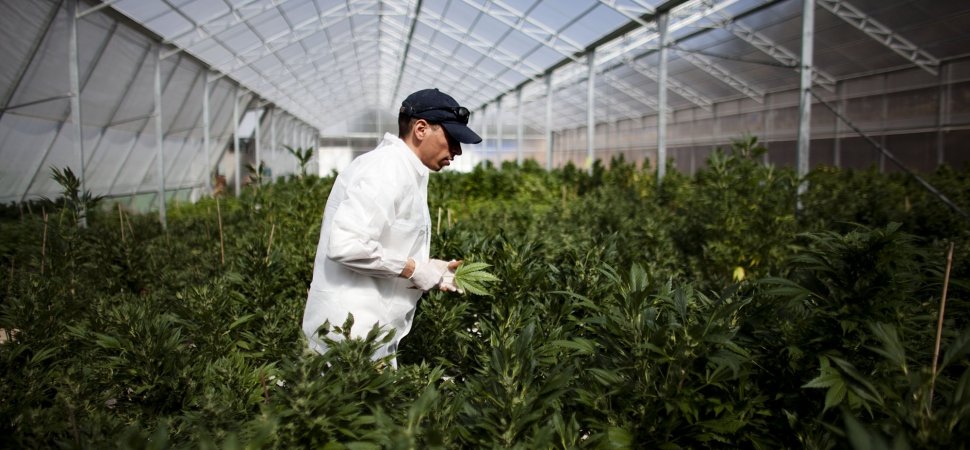 |
| Marijuana is being produced around the world, from Israel to Australia. Above, the growing facility of the Tikun Olam in Safed, Israel, with Israel's Health Ministry, distributes cannabis for medicinal purposes to over 1800 people. (Photo by Uriel Sinai/Getty Images) CREDIT: Getty Images |
As the U.S.-based industry awaits that ruling, companies are looking in other countries to hedge their bets on a global, import-export industry. Kennedy says that as marijuana reform spreads across the world, a global economy is forming and marijuana production will start to blossom where other commodities are currently grown, such as coffee, fruit, cotton, tobacco and medicinal opium poppies.
"For us, it's more about environmental sustainability and ultimately, it's a crop that is the basis for this product and it should be grown in an environment where sunshine is plentiful," says Kennedy.
Tilray is not the only company that has an import-export license to send marijuana to other countries. U.K.-based GW Pharmaceuticals, which is extracting CBD from the cannabis plant to make anti-seizure medication, already has an import-export licenses for marijuana. O.penVape, which is a vaporizer company based in Denver, recently announced a licensing agreement with a Jamaica-based company to grow pot for its vaporizers.
As marijuana slowly emerges from prohibition, it will be easier for companies to legally grow in other countries where there are more ideal climates and water tables that will help lower prices and the indoor grow methods created to escape the DEA's helicopters will become history, Kennedy says.
"If I could short the indoor grow market in Denver, I would," says Kennedy. "You have to look at other models of tightly controlled agricultural products used for medical purposes, like poppies, which are grown in Australia, Spain and other climates that are beneficial for low-cost production. The bulk of marijuana produced around the world will be grown outside in greenhouses or fields."
As marijuana grows head to cheaper pastures outside in states and counties with ideal climates, like California, Texas, Florida, Mexico, Australia, Israel, and South East Asia, each region will have its own properties.
Just like the wine industry, marijuana from specific regions will be defined by its terroir, Kennedy says. Marijuana's terroir could include pot grown in Humboldt, the Emerald Triangle, pot grown near the Sea of Galilee, weed from the Golden Triangle of South East Asia or cannabis grown under the shade of olive trees in Spain, Kennedy suggests.
"I don't think Denver warehouse terroir will be that appealing or competitive," Kennedy says.
Aeron Sullivan, the co-founder of Tradiv, an online wholesale marketplace for legal pot businesses to buy and sell marijuana, says there is no doubt pot production will be outsourced to other regions of the world and the southern states in the U.S.
"Once you can import and export marijuana easily, you will see facilities in places where you can produce as efficiently as possible," says Sullivan, who was recently named on Inc.'s 30 Under 30 list. "Right now in Humboldt, cost per gram is at $1. Why not set up greenhouses in Cambodia with its renewable water tables and grow for ten cents a gram? You can fly over a ton of marijuana for a fairly inexpensive amount."
Sullivan says the U.S. is not the only country moving fast to favorable drug reformation. Pretty soon, he says, the global industry will be up and running and major corporations will have energy efficient grows outside, producing metric ton after metric ton of high-grade marijuana at a low cost production.
"It's a commodity, it's going to grow where ever the commodity grows," says Sullivan. "Oranges grow in Florida, avocados grow in Mexico. Sativa originated in India and commodities grow where they like to grow."
Forget Colorado Weed, Marijuana Companies Are Going Global
domenica 22 maggio 2016
Marijuana Moguls: 10 Entrepreneurs Own 20 Percent of Denver's Pot Shops
According to an analysis of marijuana licenses held in Denver, 10 individuals own 20 percent of the market while the remaining 80 percent is controlled by 641 smaller-business owners.
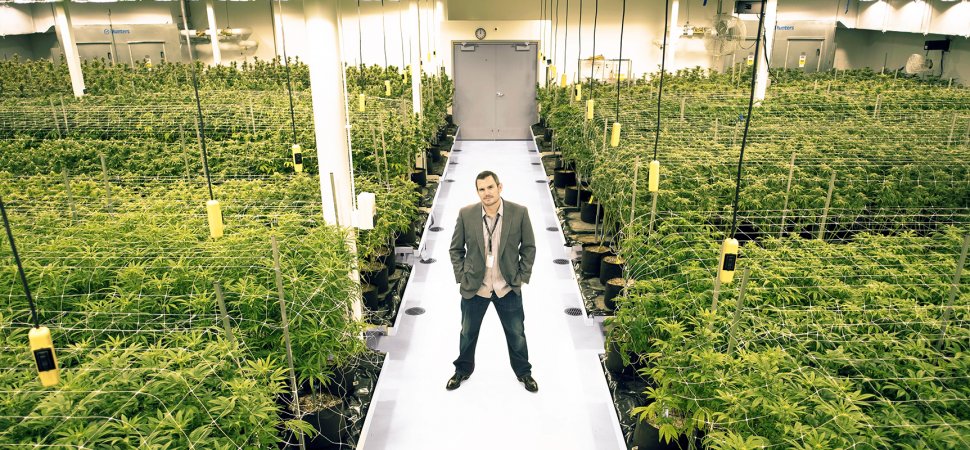

In only two years since full-on legalization, Denver's marijuana industry
has surpassed $1 billion in sales. But who are the entrepreneurs at the
top of the Mile High City's market?According to an analysis of Denver's
1,046 marijuana business licenses by The Denver Post, a handful of businessmen have successfully cornered almost a quarter of the market. The Post finds
that 10 people, including a bankrupted Subway franchisee, a car-detail
shop owner, and a New Zealand-born child car seat entrepreneur, control
20 percent of all marijuana businesses in Denver. The rest of the market,
just over 80 percent, is controlled by 641 business owners.
has surpassed $1 billion in sales. But who are the entrepreneurs at the
top of the Mile High City's market?According to an analysis of Denver's
1,046 marijuana business licenses by The Denver Post, a handful of businessmen have successfully cornered almost a quarter of the market. The Post finds
that 10 people, including a bankrupted Subway franchisee, a car-detail
shop owner, and a New Zealand-born child car seat entrepreneur, control
20 percent of all marijuana businesses in Denver. The rest of the market,
just over 80 percent, is controlled by 641 business owners.
That's significant stake when you consider that in 2015, more than $996
million worth of weed was sold in Colorado. The Post estimates that the
top five license holders rake in about $100 million in revenue each year.
million worth of weed was sold in Colorado. The Post estimates that the
top five license holders rake in about $100 million in revenue each year.
When it comes to employment, the five biggest cannabis entrepreneurs,
Peter Knobel, Joshua Ginsberg, Rhett Jordan, John Lord, and John
Fritzel, employ about 2,000 people, which welcomes them into the top
12 private employers in Denver, the Postreports.
Peter Knobel, Joshua Ginsberg, Rhett Jordan, John Lord, and John
Fritzel, employ about 2,000 people, which welcomes them into the top
12 private employers in Denver, the Postreports.
Peter Knobel, Joshua Ginsberg, and Rhett Jordan, who are all partners in
the Native Roots brand of marijuana grow facilities and dispensaries,
share the number one, two, and three spots on the list, with 59 licenses
among the three of them. Knobel, a telecom executive and Vail-based
real estate developer, owns half the partnership. (Licenses are granted to
companies, but the ownership structure is included. Depending on how companies are set up, different partners can own a bigger share of a
company's total licenses. Also, licenses can be bought and sold between businesses, but the new owner will have to apply for change of ownership.
All of this is why each partner is ranked individually.) Ginsberg, who ran
his own car-detail shop and a few other businesses before getting into
weed,and Jordan both own a quarter of the licenses.
the Native Roots brand of marijuana grow facilities and dispensaries,
share the number one, two, and three spots on the list, with 59 licenses
among the three of them. Knobel, a telecom executive and Vail-based
real estate developer, owns half the partnership. (Licenses are granted to
companies, but the ownership structure is included. Depending on how companies are set up, different partners can own a bigger share of a
company's total licenses. Also, licenses can be bought and sold between businesses, but the new owner will have to apply for change of ownership.
All of this is why each partner is ranked individually.) Ginsberg, who ran
his own car-detail shop and a few other businesses before getting into
weed,and Jordan both own a quarter of the licenses.
John Lord is the fourth largest, with 43 licenses, and is the sole owner of
LivWell Enlightened Health, which has 14 locations across the state.
Lord owns the greatest number of licenses as an individual, but didn't
make the top slot because Native Roots is a bigger company. Lord also
boasts a string of other pot companies, including Flavored Essentials,
Infusiasm, and hip-hop artist Snoop Dogg's pot brand Leafs by Snoop.
John Fritzel went bankrupt in 2009 while in real estate, but started over
with one pot shop later that year. Today, he owns 32 marijuana licenses
across four companies, Buddy Boy, PotCo, Lightshade Labs, and
MJardin, a marijuana consultancy he runs that has clients in almost
10 states.
LivWell Enlightened Health, which has 14 locations across the state.
Lord owns the greatest number of licenses as an individual, but didn't
make the top slot because Native Roots is a bigger company. Lord also
boasts a string of other pot companies, including Flavored Essentials,
Infusiasm, and hip-hop artist Snoop Dogg's pot brand Leafs by Snoop.
John Fritzel went bankrupt in 2009 while in real estate, but started over
with one pot shop later that year. Today, he owns 32 marijuana licenses
across four companies, Buddy Boy, PotCo, Lightshade Labs, and
MJardin, a marijuana consultancy he runs that has clients in almost
10 states.
Anthony Sauro, Christian Johnson, and Matthew Aiken are in sixth,
seventh and eighth places, with 27 licenses under the brand name Sweet
Leaf. Each of the partners owns an equal share of the business.
seventh and eighth places, with 27 licenses under the brand name Sweet
Leaf. Each of the partners owns an equal share of the business.
Shawn Phillips, who owns nine dispensaries under the Strainwise brand,
which is owned by his wife, Erin Phillips, comes in ninth place with 22
licenses.
which is owned by his wife, Erin Phillips, comes in ninth place with 22
licenses.
Joseph Max Cohen comes in 10th place, with 21 licenses for sixth
dispensaries under the brand the Clinic and a concentrates
manufacturing company under the brand the Lab. Cohen, who used
to develop commercial land, has licensed his business in Nevada
and Illinois.
dispensaries under the brand the Clinic and a concentrates
manufacturing company under the brand the Lab. Cohen, who used
to develop commercial land, has licensed his business in Nevada
and Illinois.
Recently, the Denver City Council voted to constrain the industry's
growth
by freezing the licensing of new businesses. For the time being, no new
licenses will be issued (except 45 that are currently pending). The city
has capped the number of grow facilities and retail shops to 421.
growth
by freezing the licensing of new businesses. For the time being, no new
licenses will be issued (except 45 that are currently pending). The city
has capped the number of grow facilities and retail shops to 421.
According to the Post, most of the 10 largest pot businesses in Denver
grew through acquisitions of smaller businesses. State records show
that 450 change-of-ownership applications were filed in Denver as
smaller companies threw in the towel, the Postreports.
grew through acquisitions of smaller businesses. State records show
that 450 change-of-ownership applications were filed in Denver as
smaller companies threw in the towel, the Postreports.
Entrepreneur Toni Savage Fox, who started in medical marijuana but
then pivoted to recreational sales after 2014, says that the combination
of strict regulations, heavy tax burdens under 280E, which is a tax code
the IRS made in the 1970s for drug dealers that doesn't allow regular
business deductions, and a lack of support from banks means smaller
mom-and-pop pot shops will be selling out to bigger companies.
then pivoted to recreational sales after 2014, says that the combination
of strict regulations, heavy tax burdens under 280E, which is a tax code
the IRS made in the 1970s for drug dealers that doesn't allow regular
business deductions, and a lack of support from banks means smaller
mom-and-pop pot shops will be selling out to bigger companies.
"I don't believe there is any room in the future of retail cannabis for
small, independent shops such as mine," Savage Fox tells the Post.
"Not for much longer, anyway."
small, independent shops such as mine," Savage Fox tells the Post.
"Not for much longer, anyway."
sabato 14 maggio 2016
sabato 9 aprile 2016
CANNABIS SCIENCE IS VERY EXCITED AS THE DEA CONSIDERS TO RESCHEDULE MARIJUANA/CANNABIS WITH A LANDMARK DECISION AS EARLY AS MID-YEAR, 2016
COLORADO SPRINGS, CO--(Marketwired - Apr 6, 2016) - Cannabis Science, Inc. (OTC PINK: CBIS), a U.S. company specializing in the development of cannabis-based medicines, today acknowledges and is very excited about the Landmark move with the Drug Enforcement Agency's (DEA) decision to review marijuana's federal drug classification as early as mid-2016. Rescheduling marijuana would ease restrictions on research across the country, while at the same time reducing penalties for marijuana offenses. Increased research capabilities could spur innovation and growth in the cannabis industry.
To review the Huffington Post article please click here to read the article in its entirety.
In a letter to the Senators; http://big.assets.huffingtonpost.com/dearesponse.pdf the Drug Enforcement Administration (DEA) is looking to decide on the reclassification of Marijuana by mid-year.
For years, marijuana has shared the "Schedule I" classification with heroin and LSD, drugs with much higher rates of death and hospitalization for users. This classification also specifies the drug has no "current accepted medical use". Cannabis Science, along with the masses, believe this has changed emphatically, based on the many ground-breaking university and private studies along with the ever growing long list of peer reviewed articles.
"We are very pleased to hear the DEA's decision to review marijuana's drug classification scheduling. It is clear to us and to so many others that the natural drug offers a host of health benefits and treatment properties. Cannabis Science will benefit extraordinarily as our research is already on the cutting edge, this Landmark move will open the industry in leaps and bounds," said Cannabis Science Inc. President, CEO & Co-Founder Raymond C. Dabney.
The DEA hopes to publish its decision in the first half of 2016. This decision is becoming increasingly important as more states decide to legalize cannabis for medicinal use. Nearly half of the U.S. states have already made such a decision, and a schedule change would have positive benefits for each of them.
About Cannabis Science, Inc.
Cannabis Science, Inc., takes advantage of its unique understanding of metabolic processes to provide novel treatment approaches to a number of illnesses for which current treatments and understanding remain unsatisfactory. Cannabinoids have an extensive history dating back thousands of years, and currently, there are a growing number of peer-reviewed scientific publications that document the underlying biochemical pathways that cannabinoids modulate. The Company works with leading experts in drug development, medicinal characterization, and clinical research to develop, produce, and commercialize novel therapeutic approaches for the treatment for illnesses caused by infections as well as for age-related illness. Our initial focus is on skin cancers, HIV/AIDS, and neurological conditions. The Company is proceeding with the research and development of its proprietary drugs as a part of this initial focus: CS-S/BCC-1, CS-TATI-1, and CS-NEURO-1, respectively.
Forward-Looking Statements
This Press Release includes forward-looking statements within the meaning of Section 27A of the Securities Act of 1933 and Section 21E of the Securities Act of 1934. A statement containing words such as "anticipate," "seek," intend," "believe," "estimate," "expect," "project," "plan," or similar phrases may be deemed "forward-looking statements" within the meaning of the Private Securities Litigation Reform Act of 1995. Some or all of the events or results anticipated by these forward-looking statements may not occur. Factors that could cause or contribute to such differences include the future U.S. and global economies, the impact of competition, and the Company's reliance on existing regulations regarding the use and development of cannabis-based drugs. Cannabis Science, Inc., does not undertake any duty nor does it intend to update the results of these forward-looking statements. Safe Harbor Statement. The Private Securities Litigation Reform Act of 1995 provides a 'safe harbor' for forward looking statements. Certain of the statements contained herein, which are not historical facts are forward looking statements with respect to events, the occurrence of which involved risks and uncertainties. These forward- looking statements may be impacted, either positively or negatively, by various factors. Information concerning potential factors that could affect the company are detailed from time to time in the company's reports filed with the Securities and Exchange Commission.
To review the Huffington Post article please click here to read the article in its entirety.
In a letter to the Senators; http://big.assets.huffingtonpost.com/dearesponse.pdf the Drug Enforcement Administration (DEA) is looking to decide on the reclassification of Marijuana by mid-year.
For years, marijuana has shared the "Schedule I" classification with heroin and LSD, drugs with much higher rates of death and hospitalization for users. This classification also specifies the drug has no "current accepted medical use". Cannabis Science, along with the masses, believe this has changed emphatically, based on the many ground-breaking university and private studies along with the ever growing long list of peer reviewed articles.
"We are very pleased to hear the DEA's decision to review marijuana's drug classification scheduling. It is clear to us and to so many others that the natural drug offers a host of health benefits and treatment properties. Cannabis Science will benefit extraordinarily as our research is already on the cutting edge, this Landmark move will open the industry in leaps and bounds," said Cannabis Science Inc. President, CEO & Co-Founder Raymond C. Dabney.
The DEA hopes to publish its decision in the first half of 2016. This decision is becoming increasingly important as more states decide to legalize cannabis for medicinal use. Nearly half of the U.S. states have already made such a decision, and a schedule change would have positive benefits for each of them.
About Cannabis Science, Inc.
Cannabis Science, Inc., takes advantage of its unique understanding of metabolic processes to provide novel treatment approaches to a number of illnesses for which current treatments and understanding remain unsatisfactory. Cannabinoids have an extensive history dating back thousands of years, and currently, there are a growing number of peer-reviewed scientific publications that document the underlying biochemical pathways that cannabinoids modulate. The Company works with leading experts in drug development, medicinal characterization, and clinical research to develop, produce, and commercialize novel therapeutic approaches for the treatment for illnesses caused by infections as well as for age-related illness. Our initial focus is on skin cancers, HIV/AIDS, and neurological conditions. The Company is proceeding with the research and development of its proprietary drugs as a part of this initial focus: CS-S/BCC-1, CS-TATI-1, and CS-NEURO-1, respectively.
Forward-Looking Statements
This Press Release includes forward-looking statements within the meaning of Section 27A of the Securities Act of 1933 and Section 21E of the Securities Act of 1934. A statement containing words such as "anticipate," "seek," intend," "believe," "estimate," "expect," "project," "plan," or similar phrases may be deemed "forward-looking statements" within the meaning of the Private Securities Litigation Reform Act of 1995. Some or all of the events or results anticipated by these forward-looking statements may not occur. Factors that could cause or contribute to such differences include the future U.S. and global economies, the impact of competition, and the Company's reliance on existing regulations regarding the use and development of cannabis-based drugs. Cannabis Science, Inc., does not undertake any duty nor does it intend to update the results of these forward-looking statements. Safe Harbor Statement. The Private Securities Litigation Reform Act of 1995 provides a 'safe harbor' for forward looking statements. Certain of the statements contained herein, which are not historical facts are forward looking statements with respect to events, the occurrence of which involved risks and uncertainties. These forward- looking statements may be impacted, either positively or negatively, by various factors. Information concerning potential factors that could affect the company are detailed from time to time in the company's reports filed with the Securities and Exchange Commission.
venerdì 1 aprile 2016
Marijuana Companies Stuck Doing Business the Old-Fashioned Way, in Cash
Colorado pot firms are still largely shut out of the banking sector, meaning they have to use armored trucks, security to ferry currency
DENVER—Two years after Colorado fully legalized the sale of marijuana, most banks here still don’t offer services to the businesses involved.
Financial institutions are caught between state law that has legalized marijuana and federal law that bans it. Banks’ federal regulators don’t fully recognize such businesses and impose onerous reporting requirements on banks that deal with them.
Without bank accounts, the state’s burgeoning pot sector—2,500 licensed businesses with revenue of $1 billion a year, paying $130 million in taxes—can’t accept credit or debit cards from customers, Colorado officials say.
Marijuana-related businesses instead use cash to pay their employees, purchase equipment or pay taxes to the state. Reports abound of business owners refurbishing retired armored bank trucks to transport money and hiring heavily armed security guards.
“I am concerned and we do hold our breath from a public-safety perspective,” said Colorado Attorney General Cynthia Coffman. A Republican, she opposed the 2012 ballot referendum that legalized marijuana. But she is now trying to persuade federal regulators to allow banks to do business with Colorado companies handling the drug.

Pot displayed for sale at a dispensary in Denver. The industry and some lawmakers are urging federal regulators to issue clear guidelines for banking services to marijuana businesses. PHOTO: ASSOCIATED PRESS
Lacking that clearance, “there are large amounts of cash floating in the system that makes money laundering very easy,” Ms. Coffman said in an interview. “I believe it fuels the interest of cartels and traffickers in coming to Colorado and doing business. We definitely have seen an uptick in that activity.”
Other states that have legalized recreational marijuana share similar concerns. On March 27, four Democratic senators from three states pressed federal financial regulators to issue clear joint regulatory guidelines for banking services to marijuana businesses. The letter was sent to six banking agencies.
Federal law classifies marijuana as a top-tier illegal controlled substance.
The latest disappointment for Colorado officials came in January, when a federal judge dismissed a lawsuit filed by a credit union established with the help of the state to serve the cannabis industry that sought approval from federal banking regulators to set up a “master account.” Such an account is essential for financial institutions to do business with other banks and serve customers by taking deposits or issuing credit cards.
The judge said an order to overturn the banking regulators’ decision would “facilitate criminal activity.” He described the current situation as “untenable” and said he hoped “it will soon be addressed and resolved by Congress.”
The solar energy and cannabis movements in the U.S. are uniquely tied to a community in Northern California. Now, an idealist businessman at the center of the two industries is looking to create an eco-tourism center that highlights their intertwined history. Photo/Video: Jake Nicol for The Wall Street Journal
Last April, Rep. Ed Perlmutter (D., Colo.) introduced legislation that would provide a “safe harbor” to banks working with marijuana businesses by prohibiting federal regulators from terminating or limiting their deposit insurance coverage, among other steps. The bill and others like it have languished.
The Obama administration has issued some guidelines for banks that choose to deal with marijuana businesses in states where it is legal. In a 2013 memo, the Justice Department indicated it wouldn’t challenge states’ marijuana laws as long as they don’t conflict with its enforcement priorities.
The Treasury Department’s Financial Crimes Enforcement Network, or FinCen, implicitly suggested that it didn’t consider banks’ dealings with marijuana businesses illegal in states like Colorado by laying out rules saying financial institutions can conduct such transactions as long as they file “suspicious activity reports.” These are forms banks are generally required to file when they face a suspected incident of money laundering or fraud, a process that can be complex and costly.
The Justice Department and Treasury rules have had only a limited impact, because they don’t absolve banks from rules set by other federal agencies.
Still, those guidelines have been enough to encourage a small number of community banks and credit unions in Colorado to start offering basic banking services to marijuana businesses. Andrew Freedman, director of marijuana policy coordination for Democratic Gov. John Hickenlooper, declined to say how many, saying most preferred to keep a low profile.
Write to Yuka Hayashi at yuka.hayashi@wsj.com
Marijuana Companies Stuck Doing Business the Old-Fashioned Way, in Cash
giovedì 4 febbraio 2016
Negli Usa esplode (+284%) il grande business della marijuana legale. Assieme al gettito fiscale

domenica 17 gennaio 2016
sabato 19 dicembre 2015
Prediction: 2016 Will Be the Greenest Year in History Cannabis Entrepreneur Nicole Smith Talks About the Industry

Posted: 12/17/2015 4:00 pm EST Updated: 12/17/2015 4:00 pm EST
Tis the Season -- for reflection and prediction. Tune in any TV network and you'll see experts prognosticating on the global state of affairs while other segments reflect on the year that was. The cannabis industry is no different.
One of the industry's primary movers-and-shakers is Nicole Smith, founder and CEO of Mary's Medicinals, the Denver-based company that manufactures transdermal cannabis patches along with other unique cannabis nutraceutical products. In fact, Mary's Medicinals has won the Cannabis Business Award for "Most Innovative Product" for two years in a row and Smith was recently named a Denver Business Journal Outstanding Woman in Business for 2015.
This author recently asked Smith to reflect on the year that was and offer some predictions for the future.
Nicole, there is always talk about "Big Business" at the door of the cannabis industry. What's your take?
Nicole Smith: Everyone abhors the possibility of 'Monsanto Marijuana,' but major corporations and investment firms will inevitably find ways to get into the industry. For better or for worse, the industry is going to mature very quickly. The success of larger existing cannabis companies will power the next wave of research and development, distribution and marketing but there are investors clamoring to "get on board." With this wave of investment, we'll see both the entry of new players and the consolidation of the existing market as larger organizations continue to buy up smaller firms. It's a free country with a free market but, as with any product, an educated consumer is key. The cannabis consumer is very sophisticated, for the most part, and this will, I think, help avoid the "Monsanto Marijuana."

Does that include The Edibles Market, which has taken quite a hit in the press in 2015?
Nicole Smith: I think the edibles market will "grow up" in 2016. Overdosing on edibles has been too easy. A slew of new regulations and safety guidelines will definitely have an impact on this previously rapid-growth sector. In Denver, manufacturers are facing new proposed requirements that may include marking individual items with a THC symbol. Branding changes and required investment in new technology will drive out many smaller manufacturers as regulations continue to stack up.
Consumers should expect a reduction in gummy bears and other candies that are perceived as appealing to children. Meanwhile, artisanal chefs and brewers have begun to explore the potential of cannabis as an intriguing ingredient in high-end craft brews and gourmet meals. There will also be new oral preparations of cannabis available, like our new high-bioavailability capsules. These emerging areas are geared to the 'adult-oriented' cannabis market and will see significant growth in 2016.

What is your perception of the socio-economic impact in the legal cannabis states?
Nicole Smith: Without question the growing legal cannabis industry has begun to have a major impact on the bottom-line in communities where it has been allowed to prosper. There are estimates of nearly $3 billion in sales in 2015! Unemployment is down. Schools, drug treatment programs and other municipal services have been positively impacted -- and citizens are taking note. Multiple reports show that in Colorado, teen drug use and crime are both down. Beyond all of the jobs both in cannabis and ancillary industries, cannabis companies have contributed millions of dollars to educational, research, patient and community support programs. If you drive down Interstate 25 in Denver, don't be surprised when you see a sign proclaiming 'Litter Removal Sponsored by Metro Cannabis.'
As the cannabis industry becomes increasingly important to local economies, and influential in government, we will begin to see incremental banking and tax reform -- especially on the federal level. Smaller local banks will begin to find ways to participate in and benefit from the cannabis economy. And those of us in the industry will eventually be able to bank like everyone else (laughs).

There are three levels of cannabis control -- state, federal and international. What do you foresee in those areas?
Nicole Smith: There are nearly a dozen states (California, Arizona, Nevada, Michigan, Florida, Massachusetts, Maine, Hawaii, Missouri, Ohio, and Montana) that are in various stages of trying to get ballot initiatives for general legalization in 2016. It is too early to know which states will actually get something on the ballot, but we know several will. Vermont may be the first state to legalize recreational use through a legislative process.
At the federal level, the prospect of someone new entering the White House presents quite a bit of uncertainty. Some conservative presidential candidates have threatened to vigorously enforce federal marijuana laws, while Bernie Sanders promises to end the drug war completely. Without trying to predict the outcome of the election, let's just say there are many possibilities, but a reversal of state legalization is very unlikely.
Internationally things are also very exciting but complex. With a new Prime Minister (Justin Trudeau), Canada is poised to be the first G7 nation to legalize cannabis, and many other nations are exploring the possibility of following suit. Rumors continue to swirl about a report from the United Nations Office on Drugs and Crime that will call on governments around the world to decriminalize drug use and possession for personal consumption. Whether or not that will happen in 2016, legalization will continue to draw headlines throughout the year.
And do you think that general legalization will hurt the medical use of cannabis?
Nicole Smith: It certainly could. Growing pains are inevitable. In Washington, the highly regulated recreational market has all but shuttered the previously vast medical dispensary system. In Colorado, a duel system has emerged, but many feel that an evolution of the '2 Door' system is needed. To keep up, many products are sold both medically and recreationally so that they are available to users with or without a prescription. However, the retail side is more heavily taxed, and can cost 40-60% more. As more states legalize, there is going to be a difficult discussion about how we open up adult use while making sure we take care of the patients that need these products as medicine.
It is not a simple issue. Can we separate medical and recreational use? If so, where do we draw the line between medical and recreational use? Treating a child's epilepsy is, of course, purely medical. But we see many customers using our 'Medical' products for many conditions that wouldn't qualify as 'debilitating,' even something as simple as a hangover or menstrual cramps. But these are also not 'recreational' users trying to get stoned. Is an athlete entitled to use cannabis as sports medicine? What about someone trying to treat stress or anxiety? Do they deserve the same access to non-toxic/non-pharmaceutical relief as someone with a 'qualifying' condition? The only answer, in my opinion, is to provide unrestricted access to everything for everyone -- just like any over the counter drug. Hopefully we'll see a move in that direction in 2016.
Iscriviti a:
Post (Atom)