Visualizzazione post con etichetta california. Mostra tutti i post
Visualizzazione post con etichetta california. Mostra tutti i post
sabato 24 marzo 2018


giovedì 9 novembre 2017
giovedì 2 novembre 2017
venerdì 5 maggio 2017
lunedì 24 aprile 2017
lunedì 3 aprile 2017
Le Herbe Brings Ultrasonic Technology to Cannabis Beverages
 Cannabis beverage manufacturer Le Herbe wants to help consumers get their buzz faster, and has partnered with ultrasonic liquid processing company Qsonica to develop new methods of extraction, preservation, and processing of drinkable cannabinoids.
Using ultrasonic technology, Le Herbe is able to shrink down the psychoactive chemicals in cannabis, THC and CBD, so that they’re more quickly absorbed by the body. The consumer is said to feel the high about 20 to 30 minutes after drinking and the effects can last for up to eight hours.
Prior to getting involved in cannabis beverages, Qsonica worked primarily in biotech labs, using its particle-shrinking technology on a smaller scale. According to Le Herbe spokesman Vincent Cali, this is the first time Qsonica has worked on a larger commercial scale.
“It’s about getting a functional ingredient to be stable so it is better absorbed into your body,” Cali said.
According to Cali, absorption is enhanced 10-fold, however, there is no scientific consensus yet on whether the ultrasonic process affects the length or intensity of the high.
The process is also cost-saving and energy-saving. Marijuana beverages can be a cost-prohibitive category for startups, Cali said, and ultrasonic processing is efficient.

Le Herbe was founded in Seattle in 2014, two years after Washington state legalized the possession and sale of recreational marijuana. The company produces several ready-to-drink marijuana beverages, including a green tea, a cold brew coffee, and Coco Loco coconut water, all of which contain 10mg of THC. The company also sells a marijuana cocktail mixer and a tincture.
Beverages still only make up a relatively tiny portion of the emerging U.S. marijuana market. According to marijuana industry analyst Headset, as of June, 2016 beverages were the sixth most popular category and only made up 3.7 percent of all cannabis transactions. While total unit sales have increased, their overall share of the market has decreased.
In comparison, edibles — including candy, cookies, and other food items — are the second most popular category behind the plant, making up 13.1 percent of sales. Pre-rolled joints, vape pens, and concentrates are also ranked above beverage.
The Headset report was released prior to four additional U.S. states, including California, voting in November to legalize the possession, use, and sale of recreational marijuana. However, recreational markets in those states have yet to be established.
venerdì 31 marzo 2017
6 ways new federal bills would protect California cannabis consumers, businesses
 |
| Hemant Lata, left, and Suman Chandra work at a federally-approved medical marijuana facility at the University of Mississippi in Oxford in 2014. (File photo by Lance Murphey, The New York Times) |
mercoledì 4 gennaio 2017
Six Predictions For The Marijuana Industry In 2017

I write about retail and cannabis.
Opinions expressed by Forbes Contributors are their own.
This year saw big election wins for marijuana in several states. In addition, Colorado crossed the $1 billion mark for annual marijuana sales. Now a new year is almost here and a new presidential administration for the cannabis industry to navigate. It's time to look ahead and see what's in store for the cannabis industry in 2017.
The two biggest areas of focus for the upcoming year are California and Jeff Sessions. With California's recreational marijuana market in the building phase, many in the industry will be watching for progress throughout the year. Another big center of attention will be the appointment of Jeff Sessions as U.S. Attorney General. This will keep the industry on heightened alert for any changes in law enforcement. Aside from those two topics, here are some of the industry’s biggest predictions for the 2017.
- Los Angeles Will Become The Marijuana Capital
Move over Denver, Adam Bierman Chief Executive Officer of cannabis investment firm MedMen Capital believes that the City of Angels will steal the spotlight from the Mile High City. Bierman said that by some estimates, Los Angeles's medical marijuana market alone is already close to $1 billion, easily overshadowing Colorado’s entire market. The city is expected to pass an ordinance in 2017 that will clear the path for a proper licensing program and open up the recreational market. Bierman said that capital is flowing into the area for local ventures as investors begin to smell money in the emerging market.
- A Sports League Will Green Light Marijuana
Bierman believes that in 2017 a major sports league will approve the use of cannabis for medical purposes. Many professional athletes have turned to using cannabis to treat pain and head injuries and are rejecting prescribed opiates. With medical marijuana legal in 29 states, the players are pushing to be treated just like other patients.
- A Primetime Network Show With A Marijuana Theme
With many polls showing that most Americans approve of legalizing marijuana, it won't be long before a major network will use marijuana as a backdrop. It's been over a decade since Showtime had a hit with Weeds. That series focused on a suburban mom that sold pot to make ends meet. It was considered ground breaking at the time with its taboo topic. Now HBO has High Maintenance and MTV's got Mary + Jane. Adam Scott from Parks and Recreation got a green light from NBC to develop a show called Buds about a dispensary in Denver. There isn't any timeline yet as to when the comedy could hit the air waves.
- An Increase In Interest For Synthetic CBD
With the Hemp Industries Association and the DEA battling over the legality of cannabis extracts like cannabinoids or CBD, there is an expectation for increased interest in synthetic cannabinoids. Seth Yakatan, the chief executive officer of biotech company Kalytera, said, “With AG Sessions and the DEA's clarification that plant derived CBD isn't legal federally, there will likely be interest in synthetic forms of CBD, which is what Kalytera has been testing the efficacy of for a few years.” Aside from the debate over whether CBD is legal or not, Yakatan is right that synthetic products do not have the legal limitations of other products. However, the synthetic products are not believed to be as effective as the natural products according to some patients. Fear over legal issues could create more demand for the synthetics.
- The Growth of Craft Marijuana
Sasha Kadey, Chief Marketing Officer of vaporizer distributor Greenlane, said he expects that as market supplies grow, prices will fall, causing a commoditizing effect. “This is leading to premiumization," he said. "Much like the alcohol industry experienced during its maturation, with producers now seeking to differentiate with premium packaging, brand building, so called “seed to sale” storytelling, and other value adds.” Other growers will stress their organic features, while some will push celebrity endorsements. It will be the year of the craft bud.
6. Recycling Marijuana Failures
The Cannabis Business Alliance is hoping to work with lawmakers to create options for marijuana that fails pesticide testing. Currently marijuana producers have to destroy crops that fail testing. The CBA is working towards a new rule to allow for these harvests to be turned into solvent-based concentrates that would be considered safe.
domenica 18 settembre 2016
Patients may soon be able to use medical marijuana in California hospital
In a first-ever for California, patients at Marin General may soon be allowed to consume medical marijuana in the hospital.

Patients, however, would not be allowed to smoke the drug, which doctors have been legally prescribing in California since the late 1990s because smoking is banned in the state’s hospitals.
Last month, Bedard told Media News about his plan.
“I want to have Marin General be the first hospital in California to openly and transparently allow patients to use medical cannabis,” said Bedard, a retired emergency medicine physician who used to work at Marin General and is now a member of the district board.
Last year, the pro-marijuana activist group California NORML reported that more than 1,500 physicians in the state had recommended medical marijuana under Prop. 215. The so-called Compassionate Use Act of 1996 effectively legalized the medicinal use of cannabis by seriously ill Californians. A federal court decision later established that California physicians who follow certain guidelines in recommending or approving the medical use of marijuana are immune from sanction or criminal prosecution.
Under the law, physicians are free to recommend marijuana for their patients, so long as they don’t actually assist them in obtaining it.
Bedard is no stranger to the often controversial subject of medical marijuana. He helped author the rebuttal to the argument against Proposition 64, an initiative appearing on the Nov. 8 ballot that would legalize the recreational use of marijuana. If voters pass the measure, California would join a handful of states and cities that already allow the practice, including Alaska, Colorado, Oregon and Washington, as well as Portland and South Portland, Maine, and Keego Harbor, Michigan.
Proposition 64 would make the recreational use of marijuana legal for adults age 21 and older in California; adults would be allowed to grow small amounts at home for personal use. The initiative would limit the sale of non-medical marijuana to be regulated as licensed businesses that only adults 21 and older would be permitted to enter.
 Bedard said he is passionate about legalizing marijuana because he believes people of color are suffering disproportionately under existing law.
“Four times as many blacks and Latinos get arrested as whites with virtually the same use rates,” Bedard said. “If you want to reform the justice system, this is by far the easiest and most effective way.”
He also believes that adults should be able to choose whether they want to use cannabis or alcohol, which he considers to be far more harmful.
“As an emergency physician, I know that marijuana is safer than alcohol,” Bedard told Media News.
Bedard served on a California Medical Association task force on marijuana that led to the association recommending the legalization of cannabis.
Last month, after Bedard had sent his resolution to the administrators at Marin General, along with his fellow board members and other interested parties, the reaction was mixed.
“I think it is a fantastic idea,” said Frederick Mayer, a retired Marin pharmacist who heads Pharmacists Planning Services Inc., a nonprofit pharmacy education organization.
Mayer said hospitals in Israel have pioneered the use of cannabis for palliative care. He said in some cases marijuana can be substituted for the more dangerous narcotics used for pain management, which are leading increasingly to addiction problems.
Others, though, are more cautious, a reflection of the public’s mixed feeling about legalizing all uses of pot. District board member Jennifer Rienks said last month that she still has “a lot of questions” about Bedard’s proposal.
“At this point, I really need to hear more about it,” Rienks said.
In his resolution, Bedard acknowledges that Marin General administrators are “concerned that the federal government could/would retaliate by lifting the hospital’s Medicare provider number and the state could withhold Medi-Cal funding.”
But he says such fears are overblown since a federal budget amendment authored by California Reps. Dana Rohrabacher, a Republican and Democrat Sam Farr prevents the government from using federal funds to penalize patients, physicians and hospitals that are complying with state law.
Patients may soon be able to use medical marijuana in California hospital
domenica 4 settembre 2016
Peter Thiel-backed Marley Natural Enters Cannabis Distribution Game

One of the first state-approved cannabis distributors in California will carry the red, gold, and green flag.
Marley Natural — the venture capital-backed cannabis brand licensed by the heirs of reggae legend Bob Marley — received approval to open a cannabis processing and distribution center in Santa Rosa this week.
California’s Medical Marijuana Cannabis Regulation and Safety Act requires all cannabis products to pass through a state-licensed distribution center before reaching retail shelves. On Tuesday, city officials in the Sonoma County city gave the green light to Marley Natural to open a “processing, manufacturing, and distribution center” in a business park, according to the Santa Rosa Press Democrat.
With its easy access to cannabis-producing regions via US-101 and its proximity to population centers in the Bay Area, Santa Rosa is an ideal center for cannabis commerce. At least, city officials hope so.
Marley Natural is the first cannabis business to receive city approval under interim zoning rules meant to encourage marijuana businesses. Other major cannabis brands, including Cannacraft’s Care By Design and AbsoluteXtracts, also do business in the city — despite a June raid by local law enforcement on its property.
Marley Natural’s move represents a push to control several stages of the supply chain.
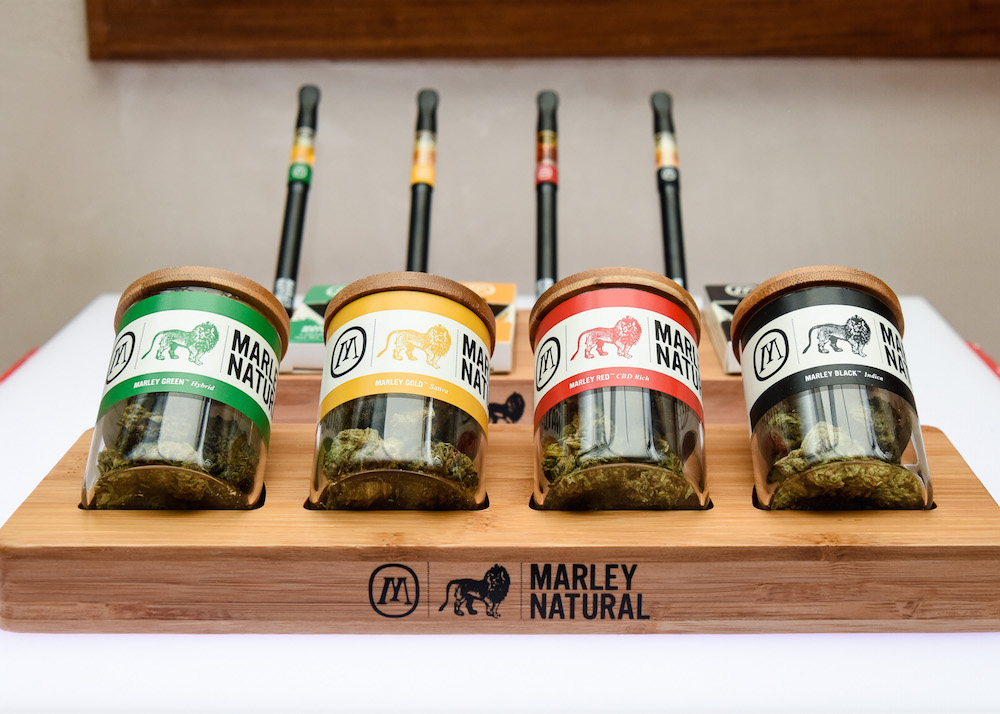
Various strains of cannabis and other cannabis- and hemp-derived products under the Marley Natural label went on sale in California in April. The brand launched in Oregon earlier this week, and there are plans to expand to Washington.
The company licenses existing growers to produce outdoor cannabis under the Marley Natural label.
Privateer Holdings, the cannabis venture capital fund launched following a $75 million investment from Peter Thiel‘s Founders Fund, is based in Seattle. In addition to investing in Marley Natural, Privateer has also sunk capital into cannabis information website Leafly.
For now, Santa Rosa is the planned headquarters of its California operations. The company plans to employ up to 40 people there, the newspaper reported, and obtain state license as soon as they become available in 2018.
Have you tried the Marley Natural strains? Tell us about your experience.
Chris Roberts has written about medical cannabis, drug policy, and legalization ever since spending a few months in Humboldt County in 2009, with bylines for the San Francisco Chronicle, San Francisco Examiner, and SF Weekly. Follow him on Twitter and Instagram @cbloggy.
Peter Thiel-backed Marley Natural Enters Cannabis Distribution Game
lunedì 15 agosto 2016
New York Times: cannabis, non trattiamola più come droga pericolosa
Articolo di Redazione
13 agosto 2016 12:03
 I sostenitori di una politica più ragionevole sulla cannabis hanno ottenuto una piccola vittoria questa settimana quando l'Amministrazione Obama ha dichiarato che avrebbe autorizzato un maggior numero di istituti a coltivare marijuana per scopi di ricerca medica. Ma il Governo non ha colto l'opportunità di un cambiamento più significativo.
Giovedi' scorso il Dipartimento antidroga (Drug Enforcement Administration o DEA) ha rigettato due petizioni - una dei Governatori degli Stati del Rhode Island e di Washington, e l'altra di un cittadino del New Mexico - che chiedevano l'eliminazione della cannabis dalla Tabella 1 della legge sugli stupefacenti. Le droghe in quella tabella, che includono eroina e Lsd, sono considerate prive di efficacia terapeutica; la legge federale ne vieta il possesso, e i ricercatori devono fare i salti mortali per ottenere l'autorizzazione a studiarle e ottenerne piccoli campioni. La presenza della cannabis in quell'elenco è profondamente sbagliata, visto che molti scienziati e lo stesso Presidente Obama hanno detto che non è più pericolosa dell'alcol.
Negli anni, il Congresso e i ministri della Giustizia hanno delegato ogni decisione alla DEA, che fa parte di quel ministero di Giustizia cui spetta il compito di reprimere in base alla normativa federale antidroga. La DEA ha così acquisito un esteso controllo sulle politiche antidroga. Ad esempio, decide chi può e non può coltivare marijuana per scopi scientifici e quali studiosi possono o meno studiarla. Si è opposta vigorosamente ad ogni sforzo da parte di scienziati, rappresentanti degli Stati e legislatori federali di riclassificare la cannabis, rigettando o rifiutandosi di riconoscere le evidenze scientifiche secondo cui la marijuana è meno pericolosa di quanto previsto dalla legge.
L'Università del Mississippi è l'unica istituzione che, dal 1968, è autorizzata a coltivare piante di cannabis a fini di ricerca. Questo ha limitato fortemente la sua reperibilità. Solo ora, la DEA ha dichiarato che autorizzerà un maggior numero di università a coltivare piante di cannabis per metterla a disposizione di quei ricercatori che hanno ottenuto l'autorizzazione a studiarla. Questo dovrebbe facilitare il reperimento di una varietà di cannabis con concentrazioni variabili di componenti diverse.
Oltre alla scarsità della cannabis destinata alla ricerca, la presenza della sostanza nella Tabella 1 significa che gli scienziati devono ottenere molteplici autorizzazioni da parte di diverse agenzie federali come la DEA e la Food and Drug Administration (agenzia che vigila sulla sicurezza alimentare e dei farmaci). In confronto, il Governo rende molto più facile studiare gli oppiacei ed altre sostanze pericolose che sono invece elencate nelle Tabelle da 2 a 5.
La DEA e la FDA continuano a sostenere che non ci sono sufficienti prove scientifiche per rimuovere la cannabis dalla Tabella 1. Ma sono in malafede; è lo stesso Governo che ha reso impossibile fare quegli studi e sperimentazioni che potrebbero fornire le prove a sostegno della riclassificazione della sostanza.
Mentre la DEA esita a ripensare le politiche sulla cannabis, gli elettori da ogni parte del Paese stanno espandendo l'accesso a questa sostanza attraverso iniziative legislative e referendarie. L'Alaska, il Colorado, l'Oregon, lo Stato di Washington e il Distretto di Columbia (dove ha sede la capitale Washington) hanno legalizzato l'uso ricreativo, e 25 Stati e il Distretto di Columbia e Puerto Rico hanno legalizzato la cannabis terapeutica. I residenti di almeno cinque Stati - Arizona, California, Maine, Massachusetts e Nevada - saranno chiamati a voltare sulla legalizzazione dell'uso ricreativo della marijuana a novembre. E i residenti dell'Arkansas e della Florida voteranno sull'uso terapeutico della cannabis.
L'Amministrazione Obama ha fatto la cosa giusta nel consentire agli Stati di legiferare in tal senso. Ma il prossimo Presidente potrebbe facilmente revocare questa decisione. Hillary Clinton ha detto di essere a favore della facoltà degli Stati di legalizzare la sostanza e anche a rimuoverla dalla Tabella 1. Donald Trump ha detto che personalmente è contrario alla legalizzazione per uso ricreativo, ma favorevole alla cannabis terapeutica e al diritto degli Stati a scegliersi la loro legislazione.
Sarebbe opportuno rimuovere la cannabis dalla Tabella 1. Ridurre le limitazioni alla ricerca e le pene per chi le usa sarebbe un passo nella giusta direzione.
Editoriale del Editorial Board del New York Times pubblicato il 13 agosto 2016 sull'edizione online del quotidiano
New York Times: cannabis, non trattiamola più come droga pericolosa
lunedì 15 febbraio 2016
domenica 7 febbraio 2016
Cannabis legale. Un business di 5,4 miliardi di Usd nel 2015
Questa settimana due studi ci hanno fatto sapere che l'industria della marijuana sta attraversando un buon periodo. Le vendite nel 2015 sono state per un valore di 5,4 miliardi di dollari, rispetto al 4,6 miliardi del 2014. Lo fa sapere l'Arc View Group, un'azienda con base a San Francisco e New Frontier, con base a Washington. Per l'anno in corso, si prevede di raggiungere vendite per una valore di 6,7 miliardi di dollari.
 Una situazione che, per potenzialita' e ampiezza della portata, attira molto Wall Street. Siccome sempre piu' Stati stanno legalizzando la vendita di marijuana, gli analisti vi intravedono un importante prospettiva per il mercato. I fondi stanno prendendo in considerazione la possibilita' di investire in marijuana. E' anche in corso una discussione tra genitori se consentire o meno ai propri figi di fare acquisti del genere. E dire addio ai sacchetti anonimi per il trasporto e alle lampade negli armadi per la coltivazione in casa. L'indotto industriale si sta cominciando ad interessare, come le aziende per i climatizzatori (tipo la Bouder in Colorado), e quelle per mitigare il forte odore del prodotto in se' e -la FunkSac- che produce a Denver borse per il trasporto a prova di bambino.
“C'e' ancora una certa diffidenza in merito”, dice Brandy Keen, co-fondatore di Surna, che produce tecnologia per la coltivazione domestica al chiuso.
“Questo e' un settore che e' emerso dagli scantinati. Nato da armadi e cantine nascoste in edifici di cemento”.
Il consumo di marijuana non medica, da parte di una popolazione adulta, rappresenta 998.000.000 di dollari del totale delle vendite del 2015, rispetto ai 351 milioni del 2014, secondo il rapporto di ArcView/New Frontier. Le stime sono basate sulle entrate fiscali dello Stato e sui dati di vendita a scopi terapeutici e lucrativi. Il rapporto prevede che per il 2020, il mercato legale si attestera' sui 21,8 miliardi di dollari.
 Allo stato, questi dati sono una sintesi del rapporto completo la cui divulgazione e' prevista per fine febbraio, e comunque e' una delle ultime analisi di mercato che si e' interessata del mercato emergente della marijuana. Merrill Lynch, in un rapporto citato da Philly.com nello scorso dicembre, ha previsto che il mercato della cannabis, e le tecnologie varie ad esso connesse, se legalizzato tendera' a crescere.
Greenwave Advisors, nella sua ultima relazione annuale a novembre, ha stimato un fatturato di 4,8 miliardi di dollari per il 2015, rispetto ai circa 3,2 miliardi del 2014. Si attende un'ulteriore crescita nel 2016 e un "surge" nel 2017 e il 2018.
L'ultimo rapporto definisce tre tipi di consumo di marijuana legale. Quello adulto ricreazionale; quello medico; quello di farmaci con l'uso di prodotti i cui componenti sono per la maggior parte estratti dalla cannabis. Il 2016 sarebbe il “punto di non ritorno”, quando la maggioranza degli Stati passera' da un divieto ad una qualche forma di mercato legalizzato.
John Kagia, direttore per le analisi dell'industria New Frontier, nell'ambito di incontri molto affollati sugli investimenti in materia di marijuana, ha spiegato, in virtu' del contesto normativo, come comprendere gli aspetti piu' difficili.
Quattro Stati e il Distretto di Columbia ne consentono il consumo agli adulti, e quest'anno, ci sono sette nuove consultazioni elettorali in merito: California, Nevada, Arizona, Massachusetts, Maine, Rhode Island e Vermont.
Sono inoltre ventitre gli Stati che consentono l'uso medico della cannabis, e altri quattro -Florida, Ohio, Missouri e Pennsylvania- hanno legislazioni molto avanzate in merito.
Alcuni ostacoli normativi federali si stanno allentando, e l'interesse federale nella ricerca sull'uso di marijuana medica è in crescita. Ma, secondo il rapporto, ci sono diverse voci contrarie.
Alcune aziende di cannabis sono sottoposte ad una maggiore pressione fiscale. Ed hanno anche difficolta' a far ricorso alle banche per colpa delle leggi federali, che le portano ad avere problemi di sicurezza ed efficienza, costringendole, proprio per l'efficienza, a fare notevoli investimenti. L'aumento della concorrenza al di la' dei confini dei singoli Stati che potrebbero legalizzare questo commercio, potrebbe porre nuove sfide.
 Secondo il rapporto, le scorte di marijuana in un mercato al di sotto delle performance tradizionali del 2015 (Nasdaq e gli indici di Standard&Poor) hanno smorzato gli interessi degli investitori.
La legalizzazione è anche un tema caldo nel dibattito nazionale, rendendola abbastanza vulnerabile in un anno che e' quello elettorale. "Anche se l'opinione pubblica si sta spostando a favore della riforma della cannabis, i candidati alla presidenza sono più reticenti a sostenere la legalizzazione", dice il rapporto.
Il potenziale di business della pianta ha profonde radici. Cosi e' accaduto per il rapper Snoop Dogg, il cantante country Willie Nelson e l'attore Tommy Chong, che hanno dimostrato, sfruttando la propria celebrità, di poter stabilire nuovi marchi nel mercato.
(articolo di Christine Hauser, pubblicato sul The New York Times del 05/02/2016)
Cannabis legale. Un business di 5,4 miliardi di Usd nel 2015
Una situazione che, per potenzialita' e ampiezza della portata, attira molto Wall Street. Siccome sempre piu' Stati stanno legalizzando la vendita di marijuana, gli analisti vi intravedono un importante prospettiva per il mercato. I fondi stanno prendendo in considerazione la possibilita' di investire in marijuana. E' anche in corso una discussione tra genitori se consentire o meno ai propri figi di fare acquisti del genere. E dire addio ai sacchetti anonimi per il trasporto e alle lampade negli armadi per la coltivazione in casa. L'indotto industriale si sta cominciando ad interessare, come le aziende per i climatizzatori (tipo la Bouder in Colorado), e quelle per mitigare il forte odore del prodotto in se' e -la FunkSac- che produce a Denver borse per il trasporto a prova di bambino.“C'e' ancora una certa diffidenza in merito”, dice Brandy Keen, co-fondatore di Surna, che produce tecnologia per la coltivazione domestica al chiuso.
“Questo e' un settore che e' emerso dagli scantinati. Nato da armadi e cantine nascoste in edifici di cemento”.
Il consumo di marijuana non medica, da parte di una popolazione adulta, rappresenta 998.000.000 di dollari del totale delle vendite del 2015, rispetto ai 351 milioni del 2014, secondo il rapporto di ArcView/New Frontier. Le stime sono basate sulle entrate fiscali dello Stato e sui dati di vendita a scopi terapeutici e lucrativi. Il rapporto prevede che per il 2020, il mercato legale si attestera' sui 21,8 miliardi di dollari.

Greenwave Advisors, nella sua ultima relazione annuale a novembre, ha stimato un fatturato di 4,8 miliardi di dollari per il 2015, rispetto ai circa 3,2 miliardi del 2014. Si attende un'ulteriore crescita nel 2016 e un "surge" nel 2017 e il 2018.
L'ultimo rapporto definisce tre tipi di consumo di marijuana legale. Quello adulto ricreazionale; quello medico; quello di farmaci con l'uso di prodotti i cui componenti sono per la maggior parte estratti dalla cannabis. Il 2016 sarebbe il “punto di non ritorno”, quando la maggioranza degli Stati passera' da un divieto ad una qualche forma di mercato legalizzato.
John Kagia, direttore per le analisi dell'industria New Frontier, nell'ambito di incontri molto affollati sugli investimenti in materia di marijuana, ha spiegato, in virtu' del contesto normativo, come comprendere gli aspetti piu' difficili.
Quattro Stati e il Distretto di Columbia ne consentono il consumo agli adulti, e quest'anno, ci sono sette nuove consultazioni elettorali in merito: California, Nevada, Arizona, Massachusetts, Maine, Rhode Island e Vermont.
Sono inoltre ventitre gli Stati che consentono l'uso medico della cannabis, e altri quattro -Florida, Ohio, Missouri e Pennsylvania- hanno legislazioni molto avanzate in merito.
Alcuni ostacoli normativi federali si stanno allentando, e l'interesse federale nella ricerca sull'uso di marijuana medica è in crescita. Ma, secondo il rapporto, ci sono diverse voci contrarie.
Alcune aziende di cannabis sono sottoposte ad una maggiore pressione fiscale. Ed hanno anche difficolta' a far ricorso alle banche per colpa delle leggi federali, che le portano ad avere problemi di sicurezza ed efficienza, costringendole, proprio per l'efficienza, a fare notevoli investimenti. L'aumento della concorrenza al di la' dei confini dei singoli Stati che potrebbero legalizzare questo commercio, potrebbe porre nuove sfide.

La legalizzazione è anche un tema caldo nel dibattito nazionale, rendendola abbastanza vulnerabile in un anno che e' quello elettorale. "Anche se l'opinione pubblica si sta spostando a favore della riforma della cannabis, i candidati alla presidenza sono più reticenti a sostenere la legalizzazione", dice il rapporto.
Il potenziale di business della pianta ha profonde radici. Cosi e' accaduto per il rapper Snoop Dogg, il cantante country Willie Nelson e l'attore Tommy Chong, che hanno dimostrato, sfruttando la propria celebrità, di poter stabilire nuovi marchi nel mercato.
(articolo di Christine Hauser, pubblicato sul The New York Times del 05/02/2016)
Cannabis legale. Un business di 5,4 miliardi di Usd nel 2015
domenica 3 gennaio 2016
Marijuana Legalization 2016: Which States Will Consider Cannabis This Year?

BY JACKIE SALO 12/30/15 AT 8:35 PM
As pot legalization gains momentum across the country, more states are looking to let either lawmakers or voters decide on cannabis on the 2016 ballot. Four states and Washington, D.C., have passed legislation to permit recreational marijuana entirely, and others are gearing up to consider whether to follow their lead in the new year. At least 10 states are expected to consider whether to legalize marijuana for some degree of use.
Here are the battlegrounds that lie ahead in the movement to legalize cannabis.
Arizona -- A campaign being led by the Marijuana Policy Project of Arizona would legalize the possession and consumption of marijuana for adults 21 and older, and allow them to grow up to six plants in their homes. The initiative needs over 150,000 signatures by July 7 to place the question on the 2016 ballot.
California -- Legalization advocates filed the state's ninth recreational marijuana legalization initiative, the Adult Use of Marijuana Act, but need to collect 365,880 signatures before the state's Feb. 4 deadline to appear on the 2016 ballot.

Maine -- Some parts of the state have already legalized marijuana for medical use, but a new bill looks to legalize cannabis entirely. The Maine Marijuana Legalization Initiative would allow adults 21 and older to possess up to 2.5 ounces of marijuana, including concentrated forms of the drug.
Massachusetts -- The state may completely decriminalize marijuana in 2016 with a bill that, if passed, would enable cannabis to be regulated like alcohol. Advocates have also proposed similar laws with the Massachusetts Marijuana Legalization Initiative, which may appear on the 2016 ballot. Cannabis is legal in the state only for medicinal use.

The cannabis reform committee will need signatures from 250,000 registered voters to earn it a spot on the November 2016 ballot. "We intend to save the state and local government about $300 million a year they spend on cannabis prohibition," said Jeffrey Hank, chairman of the Michigan Comprehensive Cannabis Law Reform. "And raise an additional $100 to $200 million in additional revenue and create [as many as] 25,000 jobs."
Missouri -- One group, New Approach Missouri, has filed a petition with the secretary of state's office to legalize cannabis for medical purposes. To get on the ballot, around 160,000 signatures from registered voters will be needed.

Rhode Island -- A bill to legalize marijuana, introduced last January, will likely be considered in 2016. The Marijuana Regulation, Control and Taxation Act would legalize pot entirely. "Regulating marijuana will take sales out of the underground market and allow authorities to keep tabs on the product," state Rep. Scott Slater, a Democrat who sponsored the bill, told the Huffington Post.
The Vermont Cannabis Collaborative supports the bill and published a report last month touting the economic benefits of the drug. "Vermont has a unique opportunity to define what this industry looks like," reads the report. "What if our cannabis economy became known for the same values that make Vermont unique: collaboration, innovation, community, creativity, environmental stewardship, healthy lifestyles and artisanal goods?"
Marijuana Legalization 2016: Which States Will Consider Cannabis This Year?
mercoledì 22 luglio 2015
Lt. Gov. Gavin Newsom releases report on guidelines for marijuana legalization
Lt. Gov. Gavin Newsom addresses the California Democratic Party Convention on May 16, 2015. A group led by Newsom hopes to lay out 58 recommendations and goals for implementing general legalization of pot -- an issue expected to go before state voters next year.
(Irfan Khan / Los Angeles Times)
By MELANIE MASON contact the reporter
A panel chaired by Lt. Gov. Gavin Newsom hopes to guide the debate on the legalization of marijuana in California with an emphasis on limiting children’s access to cannabis, reducing illegal activity and tightly regulating the drug's growth and sales.
In a report released Wednesday, the group lays out 58 recommendations and goals for implementing general legalization -- an issue expected to go before voters next year.
Newsom said in an interview that he hopes the report offers guidance to proponents of a legalization initiative aimed at the November 2016 ballot, as well as to help lawmakers and officials who would have to implement it if it passed.
However, Newsom said, the drafting of the report “tempered…significantly” his enthusiasm for unfettered legalization.The report does not explicity endorse or oppose legalization of recreational marijuana, although Newsom, who is running for governor in 2018, has been outspoken in support of legalization and is the highest-ranking California official to take that position.
“I’m more cautious as a parent, more cautious as a policymaker," Newsom said. "…We don’t want this to be the next Gold Rush.”
The report calls for strong regulation of the marijuana market from the outset. It suggests establishing licensing and training standards, and designating a central entity to oversee legalization.
“We’re not arguing for a free market. We’re arguing for a very regulated market that has real oversight, that is flexible,” Newsom said.
That regulation should extend to retail stores, the report says, including requiring identification and age limits to enter stores and limitations on what types of products, such as edible forms of marijuana, could be sold.
Taxes on legal marijuana should be used for education, public health programs and public safety, according to the commission. But the report cautions that maximizing revenue—“which would depend on higher levels of consumption,” it notes—should not be the goal of cannabis taxes.
Six different ballot measures to legalize marijuana have been submitted to the California secretary of state. A survey by the Public Policy Institute in California found last month that 54% of residents favor legalization, with 44% against it.
Law enforcement groups oppose legalization, arguing that it would not stamp out illegal sales and would increase risks to public safety.
“If, in fact, we legalize a psychoactive drug, that’s certainly going to increase the number of impaired drivers on the road,” said Chula Vista Police Chief David Bejarano, the president of the California Police Chiefs Assn.
Joining Newsom in crafting the report, called “Pathways Report: Policy Options for Regulating Marijuana in California,” were Abdi Soltani, executive director of the American Civil Liberties Union of Northern California, and Keith Humphreys, a professor at the Stanford University School of Medicine.
Follow @melmason for more on California government and politics.
Iscriviti a:
Post (Atom)