Johann Hari
Once a decade, the United Nations organizes a meeting where every country in the world comes together to figure out what to do about drugs — and up to now, they've always pledged to wage a relentless war, to fight until the planet is “drug-free.” They've consistently affirmed U.N. treaties written in the 1960s and 1970s, mainly by the United States, which require every country to arrest and imprison their way out of drug-related problems.
But at this year's meeting in New York City later this month, several countries are going to declare: This approach has been a disaster. We can't do this anymore. Enough.
The drug war is now the subject of a raucous debate within the U.S. — and if you look at the stories of three influential people who will speak on behalf of their countries for change at the U.N., they might sound strangely familiar. The reasons why U.S. citizens are rejecting the war on drugs are, it turns out, also the reasons why it is being rejected all over the world, from the Caribbean to Europe to South America.
In August 2014, the justice minister for Jamaica, Mark Golding, had to make a phone call no government official ever wants to make. He had to explain to a mother that her son was dead. Mario Deane was picked up on the street because he was smoking a spliff, put into custody and beaten to death.
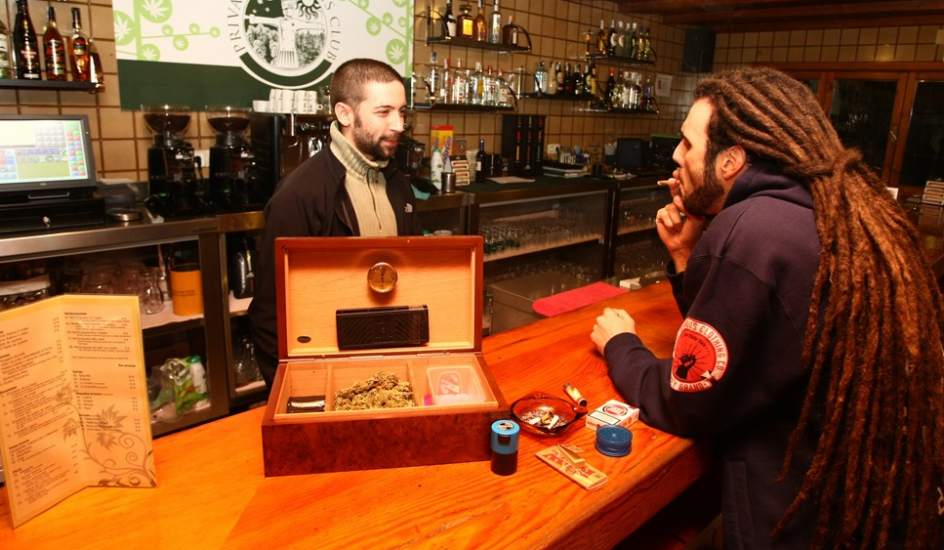
It was, for Golding, a moment that made him realize he could no longer support his country's drug laws. All over the world, the criminalization of cannabis has been used as an excuse to harass unpopular minorities (in Jamaica's case, the poor), and, he told me, it has “worsened the relationship between those young men and law enforcement.” So he persuaded the Cabinet to decriminalize cannabis for personal possession. “We wanted to take ganja out of the picture,” he says, “as a medium through which the police would use hard or heavy policing against younger men.”
Existing U.N. drug treaties allow decriminalization of drugs in small amounts for personal use. But they don't allow countries to create regulated structures for buying and selling drugs, which would drive the drug-dealing gangs out of business. Jamaica is therefore still required to wage a futile war on people who sell cannabis, and farmers who grow it, meaning there is still an armed conflict between police and the young men whom they accuse of dealing.
“A country should be in a position to design its own regime,” Golding will argue at the U.N. “The eradication of drugs hasn't happened, despite decades of war waged on it.” It is, he believes, unjust: “Why is it that people can buy a bottle of rum or a bottle of wine … but you can't do that for cannabis?”
In the Czech Republic, the official responsible for drug policy is Jindrich Voboril. As a teenager on the streets of communist-controlled Czechoslovakia, Voboril was guzzling opiates and amphetamines and was, he told me, a “hardcore experimenter” with almost any substance he could find.
“I was growing up on the streets, so I was a typical street kid,” he says. He was trying to escape an abusive home life where his father was an alcoholic, and a public life dominated by communist tyranny. “I was on the path of developing a serious drug problem,” he says, and before long, he was watching his friends die of overdoses or suicides.
One thing that pulled Voboril away from addiction was his discovery of the democratic resistance. When he became an activist in the Czech underground he felt a new sense of meaning and purpose, and it saved him.
Soon after the dictatorship fell, he set up the first major drug treatment program in the Czech Republic. He wanted to create practical policies that would help addicts find purpose and save people like his friends — only to find compassionate policies were discouraged, or outright banned, by the global drug war, which is built instead on punishment. The drug war, it seemed to him, was based on ideology, not results, just like the communist system he had fought successfully to overthrow. If you put pledges for a “drug-free world” in a different font, he says, it could be a Stalinist slogan.
He believes that in the real world, addicts are mostly people with mental health problems like depression, or people trapped in terrible environments. Punishing them only makes the problem worse. Accordingly he wants to see a global transfer of resources — from punishing addicts to helping them turn their lives around. Such alternatives work.
In the 15 years since Portugal decided to decriminalize drug use and invest instead in treatment and prevention services, use of injected drugs has fallen by 50%. Since Switzerland legalized heroin for addicts more than a decade ago, nobody has died of anoverdose on legal heroin.
A key figure in shaping Colombia's strategy at the upcoming U.N. conference is Maricio Rodriguez, an economist and diplomat. The drug war, he told me in Cartagena, is “the worst tragedy we have ever lived in, in Colombia and probably all of Latin America.” The combined death toll from the Latin American drug war exceeds even the war in Syria. “Every day that goes by is a day in which we are losing hundreds of people and we are losing hundreds of millions of dollars,” he explains.
Like most Colombians, he has relatives who were murdered when narco-traffickers were taking over the country. “Everybody has a story,” he says.
To explain why this carnage is happening, Rodriguez cited the late Nobel Prize-winning U.S. economist Milton Friedman, who grew up in Chicago under alcohol prohibition, and learned there what happens if you ban a popular substance. It doesn't matter whether the government targets whiskey or cocaine; a ban forces legal businesses out of the market — and armed criminal gangs take it over. They then go to war to control the trade. But once the prohibition ends, so does the violence. (Ask yourself: Where are the violent alcohol dealers today?)
Ranged against reform-minded countries at the U.N. conference will be governments that want to maintain or even intensify the global war, including Russia, Cuba, Saudi Arabia and China. Although the U.S. has historically been the most hard-line country, this time, its representatives will arrive at the conference in breach of U.N. drug treaties. The drug laws require a war on cannabis, but four U.S. states and the District of Columbia have now fully legalized the drug. Nobody knows what the result of this U.N. meeting will be, but nobody will ever be able to say again that the world is united behind the idea of a drug war.
Voboril, the Czech Republic's street user turned government minister, told me he is itching to tell the U.N. a simple truth: “This is reality: This is hundreds of thousands of people dying … for one simple reason — some governments just don't want to change. Nothing else.”
Johann Hari is author of "Chasing The Scream: The First and Last Days of the War on Drugs."