cookie

Translate

Visualizzazione post con etichetta George Washington. Mostra tutti i post

domenica 14 luglio 2013

Washington State Marijuana Regulators Want Clarity From Feds

OLYMPIA, WA – Two Washington state regulators who are drafting rules for the state’s newly legal recreational marijuana industry said they would benefit from clearer directives by the federal government on how to build a system that would avoid being shut down.

Chris Marr, one of three appointed members of the state Liquor Control Board charged with drafting state pot rules, said the U.S. Department of Justice had so far provided scant guidance on how to develop an industry that federal authorities, who view pot as an illegal drug, won’t feel compelled to shutter.

“Policy is being established that will be a precursor for a large number of states,” Marr said. “It’s irresponsible. They should at least engage even if just for the purposes of information gathering.”

Washington and Colorado last November became the first U.S. states to legalize recreational pot use, even as the drug remains illegal under federal law, and both expect to have recreational-use marijuana stores open starting next year.

Despite the federal prohibition of cannabis, the states are proceeding with efforts to create rules for their nascent markets with provisions including advertising restrictions and security requirements for growing operations.

Engagement in those efforts could give federal authorities a voice in a process that could also serve as a model for other states that may pursue legalization in the future, Marr said.

But apart from a handful of opaque or piecemeal statements, the Obama administration has been tight-lipped in how it plans to respond to state legalization of the recreational marijuana.

In December, President Barack Obama told ABC news that he “has bigger fish to fry” than going after recreational marijuana users. U.S. Attorney General Eric Holder later told a U.S. House subcommittee he was committed to upholding federal drug laws.

“People on the outside may think that ‘Surely they’re monitoring it, getting information quietly,’” Marr said. “My understanding is as far as the federal government is concerned they’ve been totally unengaged.”

Ruthann Kurose, Marr’s colleague on the Liquor Control Board, agreed that more feedback from the Obama administration would be helpful, but was reluctant to level criticism.

“They have to think not only about one or two states but about the national implications,” Kurose said. “I do think it would be easier if we had some clarity.”

Board Chairwoman Sharon Foster was not immediately available for comment. The Justice Department did not respond to a request for comment.

But a spokesman for Washington state Governor Jay Inslee, a Democrat, said Inslee and state Attorney General Bob Ferguson had met with Holder in January to discuss the state’s plans.

In that meeting, Holder posed questions on issues from labeling requirements to keeping pot from leaving the state, and Inslee responded in a letter the following month, the spokesman said. Inslee has not been in direct contact with Holder since.

“But our Washington D.C. staff stays in touch with the Department of Justice, and we made sure they saw the draft rules and the final rules when they came out. They’re aware of what’s happening,” Inslee spokesman David Postman said.

Postman said that “it would be nice to have an affirmative statement from the federal government that they would allow things to happen.” He said the Justice Department had offered no timeline for clarifying its position.

One clue to how the federal government will handle recreational pot may lie in its approach to the medical marijuana industry, which now legally operates in 18 states and the District of Columbia.

The Justice Department has given individual U.S. Attorneys some discretion in taking state laws into account in addressing medical pot, marijuana business lawyer Hilary Bricken said.

In Washington state, Bricken said, there is “a vast difference” in approach between the Seattle-based Western District and the more rural Eastern District, with the latter taking a harder line in shutting dispensaries and growing operations.

In Marr’s view, such decentralization raises the prospect of a recreational-use system that “is allowed to flourish” in one part of the state but “not allowed to function” in another.

Emily Langlie, spokeswoman for the U.S. Attorney for the Western District of Washington, referred questions to the Justice Department. A spokesman for the U.S. Attorney for the state’s Eastern District did not return a call for comment.

Washington State Marijuana Regulators Want Clarity From Feds

venerdì 22 febbraio 2013

Colorado marijuana task force recommends allowing pot tourism


Members of a task force proposing regulations for recreational marijuana in Colorado approved recommendations Tuesday that would allow for marijuana tourism but block out-of-state pot shop owners.

The Amendment 64 Implementation Task Force voted to allow people from outside of Colorado to shop in forthcoming retail marijuana stores, though the amount they could purchase at any one store would be limited.

The goal is to prevent "smurfing," which would occur when one person goes from store-to-store accumulating marijuana to then sell into the black market. The thinking is that lowering the amount of marijuana an out-of-stater could buy in any one store would make smurfing too time-consuming to be

A task force recommends allowing marijuana tourism in Colorado. (Kathryn Scott Osler, The Denver Post file)worthwhile.

30 QUESTIONS: Answers to frequently asked questions about Colorado's pot legalization

The task force also approved recommendations that recreational marijuana stores only be owned by Colorado residents. People would have to live in the state for two years to be considered residents.

And the task force voted to recommend that recreational marijuana stores be vertically integrated - meaning they would have to grow most of what they sell - for at least the first two years. In addition, only medical-marijuana dispensary owners would be able to apply to open recreational marijuana stores for the first year. Applications for recreational pot shops will be accepted starting later this year.

Amendment 64 legalized limited possession and retail sales of marijuana for people 21 and older. The task force has until the end of the month to recommend rules for how that should work. Legislators will then cobble together laws for the new recreational marijuana regime.

The first recreational marijuana stores are expected to open at the beginning of next year.

Colorado marijuana task force recommends allowing pot tourism

sabato 19 gennaio 2013

Hemp legalization effort gathers steam

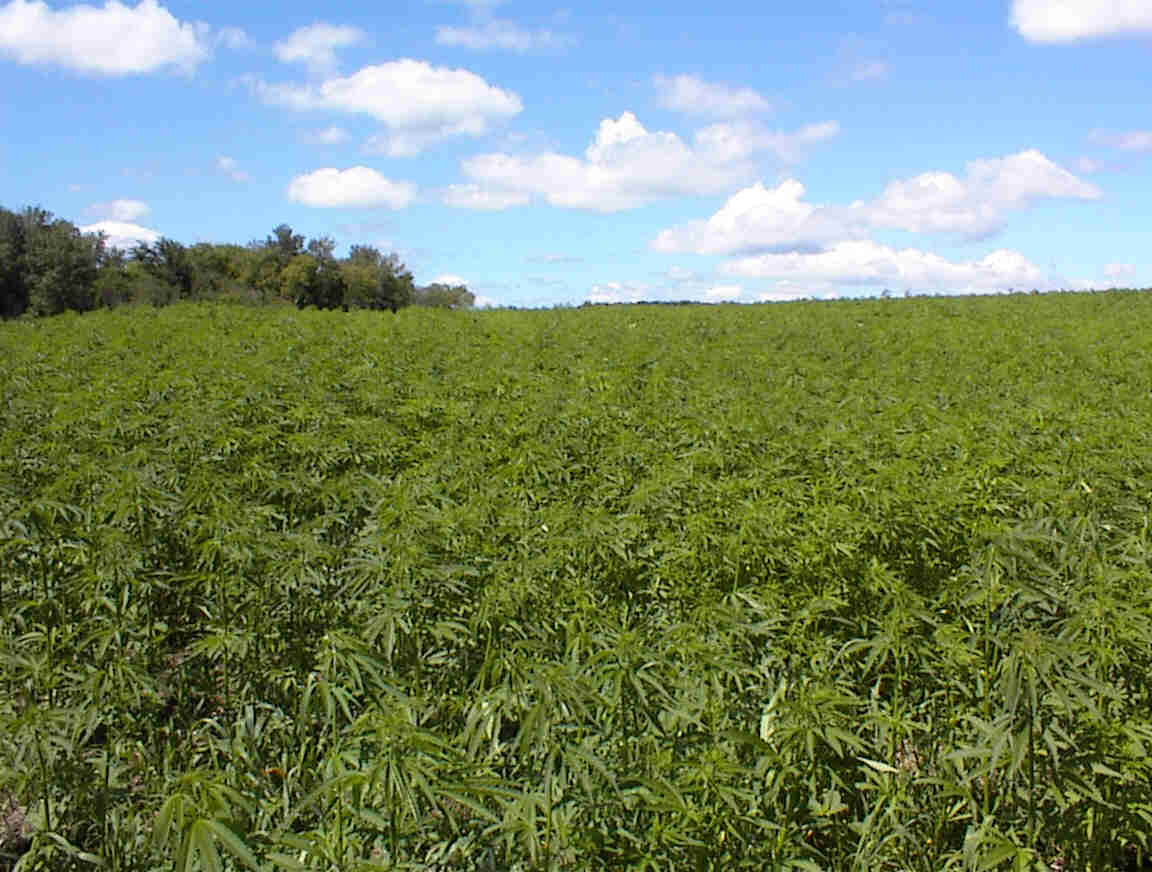
In the cannabis plant family, hemp is the good seed. Marijuana, the evil weed. Michael Bowman, a gregarious Colorado farmer who grows corn and wheat, has been working his contacts in Congress in an attempt to persuade lawmakers that hemp has been framed, unfairly lumped with the stuff people smoke to get high.
Somehow over time, as Bowman’s pitch goes, hemp, which is used to make paper, oils and a variety of useful products, was mistaken for its twin, marijuana — a.k.a pot, chronic, blunt and weed — a medicinal drug loaded with tetrahydrocannabinol that buzzes the mind. Hemp got caught up in the legendary crusade against pot popularized by the movie “Reefer Madness.” All varieties of cannabis ended up on the most-wanted list, outlawed by Congress as well as lawmakers in other nations, inspiring people to kill it on sight.
Bowman’s message is simple: Be sensible. “Can we just stop being stupid? Can we just talk about how things need to change?”
While the United States ranks as the world’s leading consumer of hemp products — with total sales of food and body-care products exceeding $43 million in 2011 — it is the only major industrialized country that bans growing it, even though 11 states have passed measures removing barriers to hemp production and research. Ninety percent of the U.S. supply comes from Canada.
Since Colorado and Washington legalized marijuana by ballot initiatives last fall, a group of farmers and activists have been pushing to revive a crop they say offers a solution to vexing environmental, health and economic challenges.
Proponents value hemp both for how it grows — quickly and in a wide geographic range, without requiring much in terms of water, pesticides and fertilizers — and what it can produce. Its seeds and oil are fodder for health and beauty products, while the strength of its natural fiber makes it a good candidate to be used as a building composite. Combine hemp with water and lime and you get “hempcrete,” which can help construct a house; process it differently and it can make up a BMW’s interior door panel.
But Bowman’s project to plant 100 acres of hemp on his 3,000-acre farm on April 30 — to coincide with the 80th birthday of his friend singer Willie Nelson, known for his support for hemp and marijuana legalization — could run afoul of the Agriculture Department’s farm program, which helps subsidize his corn and wheat. He also grows edible beans, alfalfa and, occasionally, sunflowers.
In a statement, Agriculture Department spokesman Justin DeJong said that since hemp is considered “a Schedule I controlled substance” under the Controlled Substances Act of 1970, it “cannot be grown on farmland” receiving federal commodity subsidies. If convicted of a violation, a farmer cannot get subsidies for five years.
Drug Enforcement Administration spokesman Rusty Payne said in a statement that the controlled-substance law refers “to all cannabis plants, regardless of their THC content,” and that only marijuana growers with a DEA permit can grow it.
It didn’t used to be this way. In the colonial era, Benjamin Franklin published an article touting hemp’s virtues, and Virginia farmers were allowed to pay their taxes in hemp. A USDA botanist grew a half-dozen varieties of hemp on federal property in the 1920s. The U.S. government urged farmers to grow “Hemp for Victory” during World War II to provide the raw material for ropes, sailors’ uniforms and other supplies.
But a couple of factors — the high taxes the federal government imposed on growing hemp in the late 1930s and again in the early ’50s, and then the DEA’s interpretation of the 1970 law — made producing hemp nearly impossible.
But starting in 1999, states began to pass legislation making it easier to either grow industrial hemp or conduct research on it. These measures, however, have had little practical effect. Since the DEA only grants permits in rare instances and demands costly, elaborate security precautions, large-scale hemp growing in the United States is not viable.
The Canadian government, meanwhile, recently announced it would invest nearly $100,000 in marketing hemp and researching which varieties would thrive in different regions of the country.
Canadian Embassy spokesman Chris Plunkett described industrial hemp as “an important crop” for Canada because it grows well in the northern prairie “where other crops, due to climate, cannot grow,” and can be rotated in to break disease cycles.
In the United States, its advocates describe hemp in glowing terms. It can be grown organically with relative ease, and its stalks not only store carbon but could potentially produce biomass energy. The oil is rich in protein and Omega-3 fats and can be eaten as well as be used in products such as Dr. Bronner’s Magic Soaps. Hemp seeds are sold as snacks, and it can be made into paper as well as a building composite to replace fiberglass and in some instances concrete.
Lynda Parker, a Denver-based citizen advocate, learned about hemp while tracking legislation for a political science class she took in 1996. Five years ago, after retiring, she decided to lobby full time for legalization.
“If we’re serious about climate change and the environment, there is no single thing we can do that is more impactful,” she said.
Parker and Bowman, introduced to each other by a Colorado Department of Agriculture official, pushed several efforts in the legislature aimed at reintroducing hemp.
They worked hard to distinguish hemp — which can actually make marijuana less potent when the two plants cross-fertilize — from pot, trying to overcome what they called “the giggle factor.”
“People would ask, ‘Does this mean I can smoke my drapes?’ It’s always the drapes,” Parker recalled.
Victory came Nov. 6, when Colorado voters approved Amendment 64, which not only legalized pot but required “the general assembly to enact legislation governing the cultivation, processing, and sale of industrial hemp.”
Those working on the federal law describe it as a simple matter of economics. Sen. Ron Wyden (D-Ore.) who introduced legislation last Congress with Sen. Rand Paul (R-Ky.) to decouple hemp from marijuana as a controlled substance and plans to push for the bill again this year, noticed the seeds sold as a snack under the name “hemp hearts” last summer at his local Costco in Tigard, Ore.
“Why would you say you can sell it at your local Costco, but farmers around the world get to make most of the money?” Wyden asked.
Even potential Canadian competitors are trying to assist the hemp vanguard here. As Parker and Bowman worked on their state’s ballot initiative, the Canadian consulate in Denver served as unofficial advisers. They flew Canadian Mounties and an expert in composites to discuss the logistics of enforcement and processing hemp once it’s legal and funded Parker’s trip to Winnipeg to attend an industry meeting.
“If and when it becomes legal to grow hemp in the United States, that’s just going to add credence and credibility to what we’re doing,” said Hemp Oil Canada President Shaun Crew, who has already registered the name “Hemp Oil USA” for when he opens up shop south of the border.
Still, that day may be a while off. National Farmers Union President Roger Johnson, whose group supports legalization, failed to help North Dakotan farmers overcome federal opposition to hemp cultivation while serving as the state’s agriculture commissioner.
“I don’t want to throw cold water on this,” Johnson said, with hesitation in his voice. “We were in this fight for 10 years straight and got absolutely nowhere.”
But Vote Hemp President Eric Steenstra argued “there’s a lot of additional momentum” for legalization right now, noting that even conservative-leaning Kentucky is eyeing industrial hemp. The state’s agricultural commissioner, James Comer, is campaigning hard for legalization and on Friday, the Kentucky Chamber of Commerce voted to back a Senate bill that would sanction hemp farming.
Crew is in favor of the campaign, though he warned his American allies not to exaggerate hemp’s potential and become convinced “there’s a big pot of gold at the end of the hemp rainbow.”
“This isn’t the be-all and end-all,” Crew said, noting that 15 years after legalization, hemp occupies only 50,000 acres of land in Canada. “We’re just a blip on the radar screen of agriculture in our two countries.”

Hemp legalization effort gathers steam - Washington Post


Archivio blog