Visualizzazione post con etichetta Steve De Angelo. Mostra tutti i post
Visualizzazione post con etichetta Steve De Angelo. Mostra tutti i post
lunedì 25 luglio 2016


mercoledì 29 giugno 2016
Cannabis Entrepreneurs Worried as Big Businesses Move Into Industry
Steve DeAngelo, a veteran marijuana activist turned entrepreneur, warns that as marijuana prohibition ends and corporations start entering the industry, the pioneers could lose their place to disruptive technologies and business models.

Marijuana legalization means that bigger corporate interests and institutional capital will enter the industry and start competing with the businesses and entrepreneurs who have been at it for decades.
But what does this mean for the industry's activists and pioneers who protested federal law, got arrested, and created the very industry that is attracting attention as one of the fastest-growing sectors in the U.S. economy? Entrepreneurs will be displaced, says Steve DeAngelo, founder of Harborside, the largest dispensary in the U.S., during his keynote address at the National Cannabis Industry Association business summit and expo in Oakland on Wednesday.
DeAngelo explains that there are only ten states in the U.S.that haven't reformed their cannabis laws in some way, there are eight ballot measures across different states to pass more reform this November, and the DEA could recognize that cannabis has medical benefits and might reschedule it this summer. All of this change will open the industry up to new entrants, bigger, more mainstream companies, and institutional investment. While legalization will be overwhelmingly positive, it won't be without negative effects on the current industry.
"This is going to the painful, it will hurt a lot of people who have been in the industry for decades," says DeAngelo. "It's going to hurt the very people who have helped bring the industry to today."
DeAngelo explained that industry newcomers have the ability to raise more money than legacy players because they have more connections to active capital markets outside of cannabis, he says. The new entrants will introduce disruptive business models that will force legacy businesses to change the way they have been doing things for decades.
"Legacy cannabis companies will need to learn how to adapt to a much more intense competitive environment and changing cultural landscape," says DeAngelo. "The folks coming in are not from the cannabis underground, they come with different values. There will be a process of adaptation for the legacy entrepreneurs."
A lot of the folks coming into the legal cannabis market are from other industries and have established political power and financial resources, says DeAngelo.
"Some of these players have been able to influence legislation to game the system to their benefit," says DeAngelo. "In Nevada, there is a provision that gives the distribution of cannabis exclusively to alcohol distribution companies. Guess who put that one in there?"
As the DEA and FDA look to possibly reschedule marijuana under the Controlled Substances Act, DeAngelo says if the federal government decides marijuana has medical benefits, it will help pharmaceutical companies enter the industry.
"It's evident that rescheduling will be a platform for Big Pharma to come in and take significant marketshare," says DeAngelo.
But as different formulations of cannabis hit the market, more people will try cannabis products.
"More sophisticated products like vape pens, transdermal patches, pills, topical creams, beverages and edibles will provide new adopters, newcomers to cannabis with more socially acceptable ways of using cannabis," says DeAngelo.
Once federal law is reformed and national brands are created, institutional investors will come into he space and start acquiring the strongest brands.
"The institutional investors are almost here, I can hear them in the hall way," says DeAngelo. "When they come, there will be a rich wave of exits, of acquisitions of companies who have played their cards right and been smart. I think those first acquisitions will be science companies, medical companies, companies that do genetics, others that explore new formulations. We will then see cannabis beverage companies that will be acquired by huge mainstream beverage corporations, companies that already make beverages at large scale."
As the cannabis industry changes, as more companies come into the market from outside of the industry, more customers will come to use cannabis.
"I don't think this is a bad thing," says DeAneglo. "All of this is a good thing. There is this monumental collision that is about to happen between the corporate world and cannabis. If we are ever going to achieve our goal, if this plant is ever going to get in the hands of people all over the world, this will be necessary."
Lastly, DeAngelo spoke directly to the legacy entrepreneurs and the newcomers.
The legacy entrepreneurs, DeAngelo says, are going to be called upon to make one more sacrifice--to let go of the cannabis plant and let it go completely mainstream, which will mean some pioneers will lose their place and new entrants will replace them.
"Let's make this sacrifice gracefully, we need to release this plant and allow her to go out, get wings, claim her destiny, to go out and help every single person she can help and we are not going to do it ourselves," says DeAngelo. "We have to welcome these newcomers, we need to let them help the industry."
mercoledì 14 ottobre 2015
Cannabis, imprenditore più ricco al mondo: “Legalizzazione è giustizia sociale”
di Davide Turrini

In un libro autobiografico Steve De Angelo, a capo dell'Harborside Health Center di Oakland con 130 dipendenti, parla di 40 anni di attivismo per i diritti civili negli Stati Uniti: "Chi fuma e coltiva marijuana, soprattutto se nero, finisce in cella più spesso di chi compie crimini violenti. E per i contribuenti sono spese folli: 750 dollari ogni arresto per 3,6 miliardi all'anno". Il futuro? "Un massiccio commercio interstatale di cannabis nella costa Ovest"
“La legalizzazione della cannabis significa giustizia sociale”. Parola di Steve DeAngelo, l’imprenditore californiano di marijuana di maggiore successo negli Usa che racconta in un libro autobiografico (The Cannabis Manifesto – A New paradigm of wellness) la sua avventura aziendale e un’intera vita passata sulle barricate della controcultura Usa.
Dal 2006 il 57enne attivista di diritti civili, elegante ed impegnata icona pop al sentore dolciastro di marijuana, è a capo del dispensario medico di cannabis più grande al mondo. Si tratta del Harborside Health Center di Oakland, in California, dove la marijuana è legale per fini terapeutici dal 1996. L’azienda di DeAngelo da allora ha aggiunto un altro ambulatorio/piantagione a San Jose, e in tutto tiene a libro paga più di 130 dipendenti con un giro d’affari da oltre 94.000 clienti.
“A volte mi chiedo perché ho passato la vita a sostenere ogni tipo di riforma nell’ambito della cannabis invece di lavorare, che so, su questioni più urgenti come il cambiamento climatico, l’estinzione della specie, le armi nucleari”, spiega DeAngelo nelle prime pagine della sua biografia. “La risposta breve, e più semplice, è che mi sono innamorato della pianta di cannabis quand’ero adolescente, ma ho sempre odiato essere definito e trattato da criminale. C’erano solo due vie d’uscita quindi: dimenticare la cannabis, o cambiare le leggi in materia. La legalizzazione della cannabis è diventata così un requisito indispensabile per la mia felicità personale. La risposta lunga, invece, è che tutta la mia vita è stata animata da una dedizione alla giustizia sociale in un modo o nell’altro, e la fine del proibizionismo significava intersecare tutte le altre cause di giustizia sociale, dai diritti civili all’ambiente, che ho sostenuto negli anni”.

DeAngelo era già sulle barricate quando appena quattordicenne urlava la sua contrarietà alla guerra in Vietnam. Disobbedienza civile in Pennsylvania Avenue di fronte alla Casa Bianca con i lacrimogeni, gli zoccoli dei cavalli e i manganelli dei poliziotti che martellavano zigomi, braccia e anche del futuro re delle ‘canne’. “Tra i combattimenti di strada ho studiato. E sempre lì ho imparato a conoscere la porta girevole del Pentagono dove entravano e uscivano i grandi appaltatori della difesa statunitense, ma è stata la militarizzazione della guerra governativa contro la droga a definire la mia vita futura”.
Nel mirino di DeAngelo c’è la privatizzazione del sistema carcerario, ma soprattutto il profitto immenso che ne hanno tratto i grandi gruppi industriali che hanno investito in esso: “Rendiamoci conto che un reato di violenza si verifica negli Stati Uniti ogni ventisei secondi negli Stati Uniti, ma invece di arrestare chi commette crimini violenti ogni anno vengono arrestate ben più persone con l’accusa di possedere e fumare marijuana. Ogni arresto per cannabis costa ai contribuenti un minimo di 750 dollari, per un costo annuo stimato di 3,6 miliardi. Ma vi sembra logico tutto ciò?”. Ed è qui che secondo DeAngelo si incrocia il privato con la dimensione pubblica delle battaglie per i diritti civili: i neri sono i più vessati, fermati pregiudizialmente prima dei bianchi, e arrestati comunque, proprio come è successo nel caso di uno dei dipendenti dell’Harborside Helph, caso di cronaca dettagliato e citato nel libro, mentre aiutava un paziente ad assumere cannabis.

E DeAngelo a proprio favore cita proprio il tasso di criminalità quasi azzerato nel quartiere di Oakland dove ha sede il suo dispensario medico: “In un autorevole studio della RAND Corporation 2011 si è scoperto che i dispensari e i coltivatori di cannabis in California hanno fatto talmente bene il loro lavoro che è stato quasi impossibile per i cartelli messicani vendere nel nostro stato la loro merce, più economica, ma di pessima qualità”. La lotta dell’uomo con le treccine e una cannetta perennemente accesa in mano non finisce di certo a Oakland. E’ ora che tutti gli Stati Uniti legalizzino la marijuana (solo 23 stati hanno approvato normative che permettono l’uso per motivi terapeutici, mentre in Colorado, Washington, Alaska, Oregon e Washington D.C. è stata legalizzata a scopo ricreativo ndr): “La California ha il microclima ideale per la coltivazione, probabilmente più di qualsiasi altra parte del mondo, e certamente è il miglior luogo possibile negli Stati Uniti. Ma do comunque un’occhiata allo sviluppo del business negli altri stati Usa e in tutto il mondo. Seguo con più attenzione ciò che succede negli stati confinanti con la California: l’Oregon e il Nevada. Guardo avanti per il giorno in cui avremo il primo massiccio stato regionale per il commercio di cannabis interstatale. Speriamo che accadrà presto qui sulla costa Ovest”.
domenica 27 settembre 2015
sabato 21 febbraio 2015
From Oaktown to The OC, Drug War opposition builds
By Debra J. Saunders
Published 3:00 pm, Friday, February 20, 2015
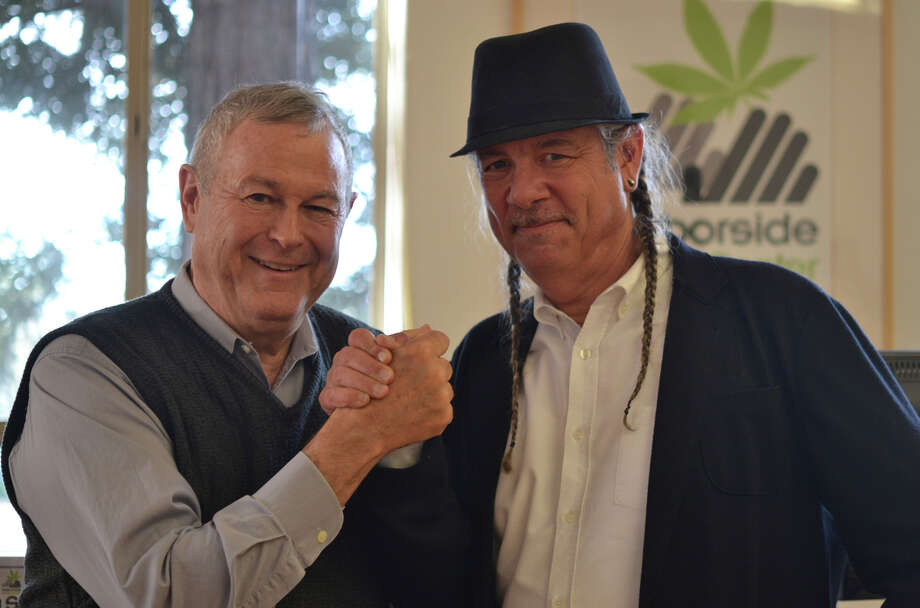
They’ve got the law on their side. For a decade, Rohrabacher and Rep. Sam Farr, D-Carmel, pushed for legislation to prohibit the Department of Justice from using federal funds to go after medical cannabis operations in states that have legalized them. California became the first state in the nation to do so in 1996.
At first, that bipartisan effort failed spectacularly. But as the number of states that legalized medical marijuana approached 32, the political calculus changed. In May, the House passed the Rohrabacher-Farr Amendment by a 219-189 vote to prohibit the use of federal funds to block state-authorized medical cannabis. Congressional leaders included the amendment in the $1.1 trillion “Cromnibus” bill, which the president signed in December. Now Congress and the White House are on the record opposing federal prosecutions against marijuana operations in states that sanction them.
“The intent of Congress was pretty clear,” Marijuana Majority Chairman Tom Angell noted. California voters also sent an unmistakable message that they want the feds “to knock it off. It’s a waste of taxpayer resources.”
 |
| Photo: Morgan Flores |
Yet U.S. Attorney Melinda Haag has refused to pull back a 2012 lawsuit designed to shutter Oakland’sHarborside Health Center by seizing the assets of a facility that serves 108,000 patients. This month, Haag’s office went to court to push the effort in spite of the new law. “Why have you picked this fight?” a federal judge asked.
Rohrabacher, Farr and Rep. Barbara Lee, D-Oakland, signed a joint statement telling the administration they believe the Department of Justice “is not acting within the spirit or the letter of the law.” The feds have gone so far that three members of Congress are standing up for the pot guy.
On the phone, Rohrabacher admitted that his amendment lacks teeth. There’s no criminal penalty for prosecutors who go rogue. The former Reagan speechwriter argued that federal enforcement of marijuana laws represents “a huge waste of limited law enforcement resources to prevent people from smoking weed in their backyard.” Yes, Rohrabacher supports legalizing marijuana for recreational use as well.
How did he sell 48 other Republicans on the bill? Rohrabacher pushed the states’ rights angle pursuant to the Tenth Amendment. But also, “Republicans are supposed to believe in limited government and individual responsibility and especially a doctor-patient relationship,” quoth Rohrabacher, “and I convinced my fellow Republicans to stick by their principles.”
Rohrabacher also has a strong civil libertarian streak. On his blog last month, the congressman has hit civil asset forfeiture as “among the most disturbing, even tyrannical, federal programs of the last decades.” The practice “means officers of the law can confiscate a private citizen’s property — cash, bank accounts, a car, a boat, a house, whatever — and not return it even if the citizen is innocent of any crime. Conceived as a major weapon in the misbegotten drug war, the practice has done little if anything to eliminate dangerous drugs from society. Rather, it has taken deadly aim at the rights and liberties of ordinary Americans, and it has proven especially harsh on the poorest Americans. It has deeply corrupted too many of our police forces, taking their eyes off best practices and incentivizing them to seize property against the clear meaning of our Constitution’s Fourth Amendment.”
Rohrabacher posted that blog after Attorney General Eric Holder announced his department would end the “equitable sharing” program that partnered state and local law enforcement with federal law enforcement and allowed locals to share as much as 80 percent of seized assets. “Holder understands this diabolical, Prohibition-created relationship,” Rohrabacher posited, “and I urge him, consulting his better angels, to work toward removing marijuana from Schedule I and reschedule it at a more appropriate level, or remove it from the scheduling framework altogether. I also predict that a good many of my fellow Republicans, silent now, will applaud his removing this incubus from our lives.”
Incubus? That’s strong language — yet appropriate when you consider the means the U.S. Attorney is using to go after Harborside. Haag hasn’t charged DeAngelo with breaking federal drug laws. There are no criminal charges. She instead has gone after Harborside’s assets. Actually her office leaned on DeAngelo’s landlord to run him out of a property for which he has been paying rent since 2006. Rather than go after the marijuana operation alone, the feds set their sights on a third party. The federal government has all the power, and still it seeks to get private citizens to do its dirty work.
Debra J. Saunders is a San Francisco Chronicle columnist. E-mail: dsaunders@sfchronicle.com Twitter: @DebraJSaunders
Rohrabacher, Farr and Rep. Barbara Lee, D-Oakland, signed a joint statement telling the administration they believe the Department of Justice “is not acting within the spirit or the letter of the law.” The feds have gone so far that three members of Congress are standing up for the pot guy.
On the phone, Rohrabacher admitted that his amendment lacks teeth. There’s no criminal penalty for prosecutors who go rogue. The former Reagan speechwriter argued that federal enforcement of marijuana laws represents “a huge waste of limited law enforcement resources to prevent people from smoking weed in their backyard.” Yes, Rohrabacher supports legalizing marijuana for recreational use as well.
How did he sell 48 other Republicans on the bill? Rohrabacher pushed the states’ rights angle pursuant to the Tenth Amendment. But also, “Republicans are supposed to believe in limited government and individual responsibility and especially a doctor-patient relationship,” quoth Rohrabacher, “and I convinced my fellow Republicans to stick by their principles.”
Rohrabacher also has a strong civil libertarian streak. On his blog last month, the congressman has hit civil asset forfeiture as “among the most disturbing, even tyrannical, federal programs of the last decades.” The practice “means officers of the law can confiscate a private citizen’s property — cash, bank accounts, a car, a boat, a house, whatever — and not return it even if the citizen is innocent of any crime. Conceived as a major weapon in the misbegotten drug war, the practice has done little if anything to eliminate dangerous drugs from society. Rather, it has taken deadly aim at the rights and liberties of ordinary Americans, and it has proven especially harsh on the poorest Americans. It has deeply corrupted too many of our police forces, taking their eyes off best practices and incentivizing them to seize property against the clear meaning of our Constitution’s Fourth Amendment.”
Rohrabacher posted that blog after Attorney General Eric Holder announced his department would end the “equitable sharing” program that partnered state and local law enforcement with federal law enforcement and allowed locals to share as much as 80 percent of seized assets. “Holder understands this diabolical, Prohibition-created relationship,” Rohrabacher posited, “and I urge him, consulting his better angels, to work toward removing marijuana from Schedule I and reschedule it at a more appropriate level, or remove it from the scheduling framework altogether. I also predict that a good many of my fellow Republicans, silent now, will applaud his removing this incubus from our lives.”
Incubus? That’s strong language — yet appropriate when you consider the means the U.S. Attorney is using to go after Harborside. Haag hasn’t charged DeAngelo with breaking federal drug laws. There are no criminal charges. She instead has gone after Harborside’s assets. Actually her office leaned on DeAngelo’s landlord to run him out of a property for which he has been paying rent since 2006. Rather than go after the marijuana operation alone, the feds set their sights on a third party. The federal government has all the power, and still it seeks to get private citizens to do its dirty work.
Debra J. Saunders is a San Francisco Chronicle columnist. E-mail: dsaunders@sfchronicle.com Twitter: @DebraJSaunders
mercoledì 9 gennaio 2013
USA - Cannabis medica. Giudice salva il piu' grande dispensario
Il piu' grande dispensario di marijuana medica del mondo, che ha sede a
San Francisco, per ora puo' continuare ad operare nonostante un bando
federale. Lo ha deciso, riportano i media locali, un giudice
californiano, secondo cui e' il governo a dover prima emanare una nuova
legge per dichiarare il dispensario illegale.
La sentenza e' un nuovo capitolo della guerra che oppone le autorita' federali, secondo cui i dispensari violano le leggi sulla droga, e quelle locali, che invece vogliono mantenere le entrate derivanti dalle tasse sulla marijuana medica. La citta' di Oakland, ad esempio, dove si trova una delle sedi del dispensario, guadagna 1,4 milioni di dollari l'anno. In tutta la California sono 100mila i pazienti che hanno accesso alla droga per uso medico, metre in tutti gli Usa sono 18 gli stati che ne hanno ammesso la vendita.
La sentenza e' un nuovo capitolo della guerra che oppone le autorita' federali, secondo cui i dispensari violano le leggi sulla droga, e quelle locali, che invece vogliono mantenere le entrate derivanti dalle tasse sulla marijuana medica. La citta' di Oakland, ad esempio, dove si trova una delle sedi del dispensario, guadagna 1,4 milioni di dollari l'anno. In tutta la California sono 100mila i pazienti che hanno accesso alla droga per uso medico, metre in tutti gli Usa sono 18 gli stati che ne hanno ammesso la vendita.
Iscriviti a:
Post (Atom)