Visualizzazione post con etichetta smart. Mostra tutti i post
Visualizzazione post con etichetta smart. Mostra tutti i post
lunedì 15 ottobre 2018


martedì 16 febbraio 2016
Banking for Cannabis Companies Is About to Get Easier Thanks to This Startup

Only 30 percent of companies in the marijuana industry have a bank account. As the industry makes billions of dollars in sales, a small startup out of Arizona is here to help make sure all that cash has a safe home.
BY WILL YAKOWICZ
Staff writer, Inc.@WillYakowicz
Although selling marijuana is now legal in 24 states and the District of Columbia, doing business as a legal marijuana company is a logistical nightmare. That's because marijuana is still federally illegal, and banks open themselves up to potential seizure by the FDIC if they take money that is the result of a federally illegal act.
Despite the fact that President Obama has given financial institutions the green light to serve the legal cannabis industry (so long as they monitor closely for potential money-laundering and other violations), most banks won't work with the $6.7 billion marijuana industry. The result is that 70 percent of cannabis companies don't have a bank account. The few banks that do take on marijuana clients do not advertise what they're doing.
Enter Hypur, a startup in Scottsdale, Arizona, that for the past year has been quietly convincing banks that it is safe and profitable to work with cannabis businesses.
Hypur, which was founded by a team of banking compliance and software entrepreneurs in 2014, has successfully helped about five banks in Colorado serve a number of cannabis businesses in the state. Hypur would not reveal which banks, citing nondisclosure agreements.
The startup's secret sauce is a software platform that audits a cannabis company in its entirety, shifting through documents and state licenses, financial statements, tax returns, property leases, and more, to ensure it is legal and legitimate. The software connects to the cannabis company's point-of-sale system as well as the state's seed-to-sale system, which follows marijuana plants from the grow house until they're sold to a customer, to monitor the business and ensure compliance.
Automated compliance.
One of the greatest hurdles for banks that do want to do work with this lucrative market is to make sure businesses are compliant under state law. It can take up to 20 hours for a banker to do a single marijuana business's paperwork, while other businesses can get a bank account set up within an hour, says Andre Herrera, executive vice president and co-founder of Hypur.
Michael Sinnwell, chief operating officer and co-founder of Hypur, adds, "That's one of the biggest things--banks spend a lot of time chasing paper and we're eliminating the paper-chasing."
 After Hypur has collected all the licenses and documents and has proved the company is legally operating in the state, the system creates automated notifications and red-flag triggers for when a license or lease will expire to make sure the client does not fall out of compliance.
Banks using Hypur are granted access to granular financial information coming from each dispensary's point-of-sale system. (Hypur is integrated into POS software likeFlowhub and BioTrack THC and marketplace platforms like Tradiv.) Not only can banks on the platform assure bank regulators like the FDIC that everything is above board, Hypur breaks down the provenance of every dollar coming into a cannabis bank account, says Sinnwell.
"Here's where the money came from and here's how much cash you should expect coming through your door at any given point. We allow banks to know a given transaction is a legitimate transaction between a consumer and that merchant," Sinnwell says. "We call it Know Your Customer's Customer. Banks know their customer but now they have an idea of their customer's customer to make sure it's not laundered funds."
Follow the money.
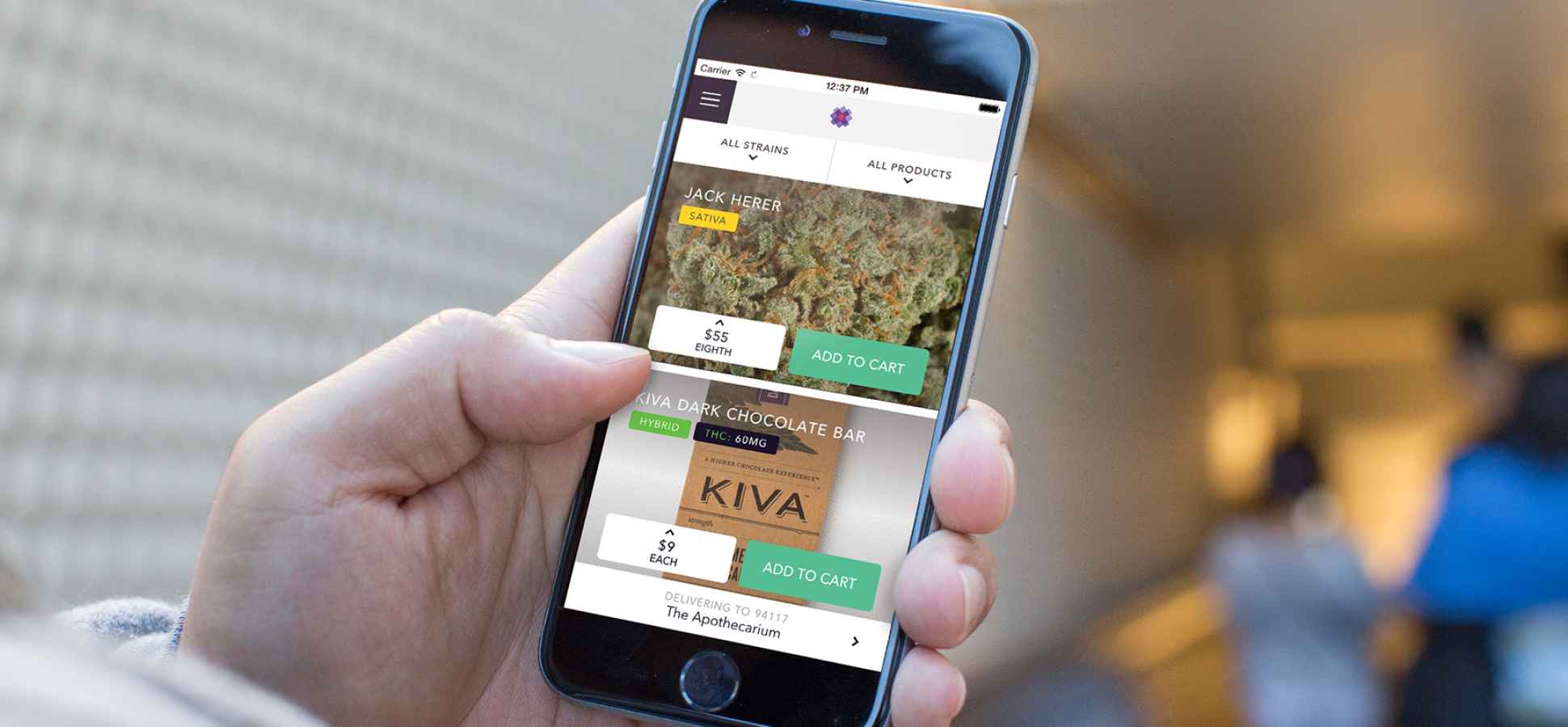
The ability to know you customer's customer is a big deal in the banking world. Once a Hypur customer gives a cannabis business an account, that business is encouraged to have its customers download Hypur's mobile payment app. The app, which is about to finish beta testing, hosts a direct bank-to-bank electronic transaction, meaning a customer pays directly from their bank account to the cannabis business's bank account. The bank can follow each transaction coming in and follow the product going out of the business.
"Our goal is to eliminate cash," Sinnwell says.
Cash is not only a pain to deal with and keep safe; it also poses danger to the merchant and the merchant's employees. Money also walks. Cash businesses tend to lose 10 percent due to theft. Lastly, businesses that are cash only are inconvenient to customers.
While 30 percent of cannabis companies have a bank account, no cannabis company can accept debit or credit cards because companies like Visa and Mastercard will not give the industry merchant accounts until federal law changes. For this reason, an entire cottage industry of armed cash pick-up and delivery companies has emerged in states like California, Colorado, Oregon, and Washington to bring millions in cash to entrepreneur's homes, private vaults, or banks or local federal reserve branches (some banks prefer to bring the cash straight to their federal account) for the ones with bank accounts.
 Hypur's platform and app allows banks to see each dollar come into a business's account and match with a customer and product. When a cannabis client's armored truck pulls up to a bank, the bank knows exactly how much is coming and where each bill came from.
According to Hypur, it monitors hundreds of millions of dollars of transactions a month. The company, which raised $6 million from investors, doesn't serve only the cannabis industry. It also serves any cash-intensive business, like gun and ammunition shops, payday lenders, off-track betting parlors, and pawn shops. Sinnwell says that the Hypur platform provides effective tools to companies that are struggling for credibility and acceptance by financial institutions.
"Once the data and information starts to flow and banks can know a business isn't laundering funds, that's when the industry blooms," he says. "The biggest thing for regulators is to know that all of this cash is accounted for."
Banking for Cannabis Companies Is About to Get Easier Thanks to This Startup
Enter Hypur, a startup in Scottsdale, Arizona, that for the past year has been quietly convincing banks that it is safe and profitable to work with cannabis businesses.
Hypur, which was founded by a team of banking compliance and software entrepreneurs in 2014, has successfully helped about five banks in Colorado serve a number of cannabis businesses in the state. Hypur would not reveal which banks, citing nondisclosure agreements.
The startup's secret sauce is a software platform that audits a cannabis company in its entirety, shifting through documents and state licenses, financial statements, tax returns, property leases, and more, to ensure it is legal and legitimate. The software connects to the cannabis company's point-of-sale system as well as the state's seed-to-sale system, which follows marijuana plants from the grow house until they're sold to a customer, to monitor the business and ensure compliance.
Automated compliance.
One of the greatest hurdles for banks that do want to do work with this lucrative market is to make sure businesses are compliant under state law. It can take up to 20 hours for a banker to do a single marijuana business's paperwork, while other businesses can get a bank account set up within an hour, says Andre Herrera, executive vice president and co-founder of Hypur.
Michael Sinnwell, chief operating officer and co-founder of Hypur, adds, "That's one of the biggest things--banks spend a lot of time chasing paper and we're eliminating the paper-chasing."
Banks using Hypur are granted access to granular financial information coming from each dispensary's point-of-sale system. (Hypur is integrated into POS software likeFlowhub and BioTrack THC and marketplace platforms like Tradiv.) Not only can banks on the platform assure bank regulators like the FDIC that everything is above board, Hypur breaks down the provenance of every dollar coming into a cannabis bank account, says Sinnwell.
"Here's where the money came from and here's how much cash you should expect coming through your door at any given point. We allow banks to know a given transaction is a legitimate transaction between a consumer and that merchant," Sinnwell says. "We call it Know Your Customer's Customer. Banks know their customer but now they have an idea of their customer's customer to make sure it's not laundered funds."
Follow the money.
The ability to know you customer's customer is a big deal in the banking world. Once a Hypur customer gives a cannabis business an account, that business is encouraged to have its customers download Hypur's mobile payment app. The app, which is about to finish beta testing, hosts a direct bank-to-bank electronic transaction, meaning a customer pays directly from their bank account to the cannabis business's bank account. The bank can follow each transaction coming in and follow the product going out of the business.
"Our goal is to eliminate cash," Sinnwell says.
Cash is not only a pain to deal with and keep safe; it also poses danger to the merchant and the merchant's employees. Money also walks. Cash businesses tend to lose 10 percent due to theft. Lastly, businesses that are cash only are inconvenient to customers.
While 30 percent of cannabis companies have a bank account, no cannabis company can accept debit or credit cards because companies like Visa and Mastercard will not give the industry merchant accounts until federal law changes. For this reason, an entire cottage industry of armed cash pick-up and delivery companies has emerged in states like California, Colorado, Oregon, and Washington to bring millions in cash to entrepreneur's homes, private vaults, or banks or local federal reserve branches (some banks prefer to bring the cash straight to their federal account) for the ones with bank accounts.
According to Hypur, it monitors hundreds of millions of dollars of transactions a month. The company, which raised $6 million from investors, doesn't serve only the cannabis industry. It also serves any cash-intensive business, like gun and ammunition shops, payday lenders, off-track betting parlors, and pawn shops. Sinnwell says that the Hypur platform provides effective tools to companies that are struggling for credibility and acceptance by financial institutions.
"Once the data and information starts to flow and banks can know a business isn't laundering funds, that's when the industry blooms," he says. "The biggest thing for regulators is to know that all of this cash is accounted for."
Banking for Cannabis Companies Is About to Get Easier Thanks to This Startup
Iscriviti a:
Post (Atom)