Visualizzazione post con etichetta Washington DC. Mostra tutti i post
Visualizzazione post con etichetta Washington DC. Mostra tutti i post
giovedì 9 febbraio 2017


lunedì 6 aprile 2015
martedì 10 marzo 2015
Sen. Rand Paul and others to introduce federal medical marijuana bill
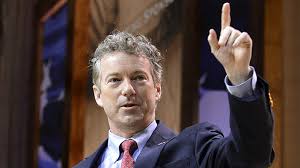 It is the first time a bill like this has been introduced.
By Thor Benson March 9, 2015 at 6:28 PM
WASHINGTON, March 9 (UPI) -- Senators Rand Paul (R-Ky.), Cory Booker (D-N.J.) and Kirsten Gillibrand (D-N.Y.) will introduce a federal medical marijuana bill on Tuesday.
The Compassionate Access, Research Expansion and Respect States (CARERS) Act would end the federal ban on medical marijuana. According to Vox, it would also change marijuana's classification to Schedule 2, instead of its current Schedule 1 status. Schedule 1 means there is no medical benefit to the substance and it is considered dangerous.
Rand Paul, a likely presidential candidate, has spoken out about marijuana in the past. He hasn't quite said it should be legal, but he has said people shouldn't be serving long jail terms for smoking it.
A recent Pew poll found 63 percent of Republican Millennials favor marijuana legalization.
Read more: Sen. Rand Paul and others to introduce federal medical marijuana bill
giovedì 15 gennaio 2015
USA - Cannabis legalizzata. Washington DC invia testo al Congresso

USA - Cannabis legalizzata. Washington DC invia testo al Congresso
mercoledì 17 dicembre 2014
Congress Quietly Puff, Puff, Passes on the Feds’ Medical Marijuana Ban

Basically, a measure to end the federal government’s ban on medical MJ was included in a 1,603-page spending bill passed by Congress the weekend of December 13th. According to the new rules, which Obama will sign into law this week, the government can no longer use their funding to mess with marijuana pharmacies.
Unfortunately for the states where even recreational weed is legal, the new law won’t have an effect on nonmedical marijuana shops. Sorry, Colorado/Washington/Oregon/Alaska/Washington, D.C. Your time will come.
While Obama’s been proceeding this way for a while now, the new strategy wasn’t yet written into law. By making it official, the government’s making a permanent move away from old rules that many saw as oppressive.
Medical marijuana is currently legal in 32 states, although the DEA continues to classify it among the most dangerous narcotics, saying it has no medical use. However, cannabis has gained quite a reputation for treating kids with seizure disorders, helping cancer patients retain their appetites, and even decreasing suicide rates among young male smokers.
 According to the ACLU, 52 percent of all drug arrests in 2010 had to do with marijuana — and black people are almost four times as likely as Caucasians to be arrested for pot. In other words, this new bill has the potential to save the United States a whole lot of money while ending a few seriously harmful policing practices along the way.
Could this be the beginning of the end for marijuana prohibition?
ryot.org: Congress Quietly Puff, Puff, Passes on the Feds’ Medical Marijuana Ban
venerdì 12 dicembre 2014
Marijuana Plant Legalization News: President Obama in Favor of Legalizing Recreational Use in DC

On Nov. 4, voters in D.C. passed legislation that would permit adults over 21 years old to possess up to two ounces of marijuana for personal use and grow up to six cannabis plants within their home. People would also be allowed to transfer up to one ounce of marijuana to another person, although they would be restricted from actually selling it. D.C. voters approved the referendum by a nearly 2-to-1 margin.
According to White House spokesman Josh Earnest, the Obama administration is in support of the referendum legalizing marijuana use, however he will reluctantly sign a government funding bill that includes a provision blocking the measure. The provision, which was injected into the $1.1 trillion spending deal by Republicans in Congress, will prohibit the district from spending money to implement the new policy.
"This administration has been a strong supporter of the District of Columbia getting statehood. We do not believe that Congress should spend a lot of time interfering with the ability of the citizens of the District of Columbia to make decisions related to how they should govern their community," Earnest said, according to ABC News.
Nevertheless, "the president supports the passage of this compromise proposal and would sign it if it arrives on his desk," he added.
The $1.1 trillion spending plan was approved by the House of Representatives during a late vote on Thursday. Now it must be passed by the Senate before it can be signed by the president, reports USA Today.
White House officials announced that Obama will sign the bill because it includes more good provisions than bad ones and can prevent another government shutdown.
Marijuana Plant Legalization News: President Obama in Favor of Legalizing Recreational Use in DC
giovedì 6 marzo 2014
mercoledì 31 luglio 2013
Congress takes passive stance as D.C. fires up medicinal pot program

By Tom Howell Jr.
The Washington Times Tuesday, July 30, 2013
Congress, which for years has needled the District of Columbia from atop Capitol Hill, watched from the sidelines this week as the city launched its medicinal pot program.
Its passivity to this point is significant, since the federal government still considers the production and use of marijuana illegal and Congress is vested with legislative oversight of the nation’s capital.
“It’s highly symbolic that medical marijuana is being sold to patients at the doorstep of the same federal legislature that has refused to change a very outdated policy,” said Kris Hermes, spokesman for Americans for Safe Access, an organization that promotes patients’ legal access to cannabis.
Despite efforts to implement D.C. home rule in the 1970s through a city mayor and council, Congress at times has banned left-leaning initiatives that Republican lawmakers object to, such as public funding for abortions. Some of the prohibitions, such as one that thwarted the city’s needle exchange program to fight HIV infections, were lifted in later years.
City health officials said the District’s nascent program hasn’t raised the ire of federal lawmakers or Attorney General Eric H. Holder Jr.’s Justice Department so far, although only nine D.C. patients have registered to obtain the drug and two dispensaries, Capital City Care and Takoma Wellness Center, have been cleared by city inspectors to sell it.
 Rep. Darrell E. Issa, the California Republican with oversight of the District, has not raised any public objections to the program to date. A spokesman for the congressman could not be reached Tuesday.
And Justice Department spokeswoman Allison Price said the department has advised U.S. attorneys that prosecution of significant drug traffickers, including marijuana, remains a core priority, but that focusing enforcement efforts on those with cancer and other serious illnesses who use marijuana as part of a recommended treatment regimen likely is not an efficient use of federal resources.
She noted that the department is continuing to review ballot initiatives in Colorado and Washington, both of which have legalized the possession of small amounts of marijuana for recreational use.
But the legalization of marijuana in various forms remains a lightning rod from coast to coast, as states introduce a patchwork of medical-cannabis programs and grapple with the Obama administration’s unpredictable enforcement of federal laws that prohibit the drug’s cultivation and use in all cases.
D.C. voters supported a medical marijuana program in 1998, only to see it held up by a congressional rider known as the Barr Amendment until 2009.
After four more years of rule-making, a 51-year-old D.C. resident who is HIV positive kicked off the city’s program Monday by purchasing a half-ounce of three strains of marijuana from Capital City Care on North Capitol Street, according to The Washington Post.
Nineteen states have medicinal marijuana programs, yet only Colorado and Washington adopted recreational use laws.
Both states legalized the use of marijuana by adults through ballot initiatives in November, yet Colorado Attorney General John W. Suthers still doesn’t know how the federal government will treat the state’s efforts to legalize and regulate the drug’s market.
“We are still waiting for the imminent guidance promised in February,” spokeswoman Carolyn A. Tyler said Tuesday, referring to a prior pledge by Mr. Holder at the National Association of Attorneys General in the District.

A 2009 memo, issued by U.S. Deputy Attorney General David W. Ogden, reminded federal prosecutors that “no state can authorize violations of federal law” while also advising U.S. attorneys not to target individuals acting in compliance “with existing state laws providing for the medical use of marijuana.”
Federal prosecutors basically looked the other way in states that legalized medical marijuana, but a letter sent from the Justice Department to U.S. attorneys across the country in mid-2011 signaled that law enforcement — despite what the Ogden memo said — would not acquiesce to those who cultivate or sell marijuana.
All the while, the District was taking pains to roll out its medical marijuana program in a tightly regulated fashion. Its been more than two years since the city began to collect notices of intent from entrepreneurs looking to enter the D.C. pot business.
But before they could, applicants had to a sign waiver. The document released the city from liability if the federal government prosecutes the program’s participants.
Congress takes passive stance as D.C. fires up medicinal pot program
Iscriviti a:
Post (Atom)