Visualizzazione post con etichetta science. Mostra tutti i post
Visualizzazione post con etichetta science. Mostra tutti i post
venerdì 11 ottobre 2019


domenica 29 settembre 2019
sabato 14 settembre 2019
martedì 27 marzo 2018
lunedì 23 ottobre 2017
lunedì 29 maggio 2017
Cannabis Science, Inc. Receives U.S. Federal Government Clearance to Receive U.S. Federal Government Contracts
IRVINE, CA--(Marketwired - May 26, 2017) - Cannabis Science, Inc. (OTC PINK : CBIS), a U.S. company specializing in the development of cannabinoid-based medicines, has received U.S. Federal Government clearance to receive U.S. Federal Government contracts. As the world's largest customer, the U.S. Federal Government issues over $192 billion in contracts and over $450 billion in grants annually.
Cannabis Science has completed its registration in the U.S. Government's System for Award Management (SAM), and has applied for and received a Commercial and Government Entity (CAGE) Code from the Defense Logistics Agency's CAGE Program Office at the U.S. Department of Defense. Cannabis Science is now listed with all U.S. companies eligible for Federal Government Contracts. "Achieving eligibility to access contracting opportunities with the U.S. Federal Government is a significant step for Cannabis Science," stated Mr. Raymond C. Dabney, Cannabis Science's President, CEO, and Co-founder. "I believe we can leverage the unique experience and expertise of our company to win new business and grow Cannabis Science's revenue base. We also plan to work closely with our strategic partners and collaborators to access Federal contracting and grant opportunities."
Cannabis Science is registered in SAM with three North American Industry Classification System (NAICS) Codes:
§ 541711 - Research and Development In Biotechnology
§ 621511 - Medical Laboratories
§ 624230 - Emergency and Other Relief Services
§ 621511 - Medical Laboratories
§ 624230 - Emergency and Other Relief Services
SAM is the primary vendor database for the U.S. Federal Government. Having vendor information immediately available allows the U.S. Government to rapidly find the companies with the right capabilities to offer services for required government contracts, government initiatives, research & development projects, and particular supply needs, as well as for pandemic alert and other emergency requirements.
Cannabis Science intends to explore funding opportunities, individually and with its collaborators, with institutions such as the National Institutes of Health (NIH), institutes within NIH, such as the National Institute on Drug Abuse (NIDA), and others.
As part of its mandate to study drug abuse and addiction and other health effects of both legal and illegal drugs, NIDA funds a wide range of research on marijuana (cannabis); its main psychotropic ingredient, delta-9-tetrahydrocannabinol (THC); and chemicals related to THC (cannabinoids). Research suggests that THC and other cannabinoids may have potential in the treatment of pain, nausea, epilepsy, obesity, wasting disease, addiction, autoimmune disorders, and other conditions. NIDA has provided and continues to provide funding for research related to therapeutic uses of cannabinoids as it pertains to its mission, including studies on the use of THC and cannabidiol (CBD), another chemical constituent of marijuana, for the treatment of pain (as an alternative to opioid pain relievers), addiction, and other disorders. Research on therapeutic uses of marijuana or of specific chemicals in the marijuana plant for other diseases and conditions is supported by other components of NIH as is appropriate to their mission. For a complete listing of all projects funded by NIH examining the potential therapeutic benefits of cannabinoids, see the Therapeutic Cannabinoid Research category in the NIH Report database.
The vast majority of research proposals received and funded by NIH on therapeutic benefits of cannabinoids have examined individual cannabinoid chemicals or, in a few cases, marijuana leaves delivered through some means other than smoking. Research proposals submitted to any NIH Institute of Center (IC) to study therapeutic benefits of marijuana or one of its ingredients must meet the same accepted standards of scientific design as any other proposal and, on the basis of peer review, should meet public health significance and IC priorities to be competitive with other applications that qualify for funding. NIDA is a scientific, not a policy-making agency. The same is true for the NIH as a whole. NIDA's role is to conduct and support scientific research on drugs and drug abuse and to advise the public and policy-makers, such as Congress, the White House Office of the National Drug Control Policy, and the U.S. Drug Enforcement Administration on the results of that research -- with the goal of ensuring that the nation's drug policies are informed by science. That said, NIDA does closely watch legislative changes both nationally and at the state level and supports research that studies how changing drug policies -- for instance laws around recreational or therapeutic use of marijuana -- affect rates of substance use and related public health issues.
About Cannabis Science, Inc. Cannabis Science, Inc. takes advantage of its unique understanding of metabolic processes to provide novel treatment approaches to a number of illnesses for which current treatments and understanding remain unsatisfactory. Cannabinoids have an extensive history dating back thousands of years, and currently, there are a growing number of peer-reviewed scientific publications that document the underlying biochemical pathways that cannabinoids modulate. The Company works with leading experts in drug development, medicinal characterization, and clinical research to develop, produce, and commercialize novel therapeutic approaches for the treatment for illnesses caused by infections as well as for age-related illness. Our initial focus is on skin cancers, HIV/AIDS, and neurological conditions. The Company is proceeding with the research and development of its proprietary drugs as a part of this initial focus: CS-S/BCC-1, CS-TATI-1, and CS-NEURO-1, respectively.
Forward-Looking Statements This Press Release includes forward-looking statements within the meaning of Section 27A of the Securities Act of 1933 and Section 21E of the Securities Act of 1934. A statement containing words such as "anticipate," "seek," intend," "believe," "estimate," "expect," "project," "plan," or similar phrases may be deemed "forward-looking statements" within the meaning of the Private Securities Litigation Reform Act of 1995. Some or all of the events or results anticipated by these forward-looking statements may not occur. Factors that could cause or contribute to such differences include the future U.S. and global economies, the impact of competition, and the Company's reliance on existing regulations regarding the use and development of cannabis-based drugs. Cannabis Science, Inc., does not undertake any duty nor does it intend to update the results of these forward-looking statements. Safe Harbor Statement. The Private Securities Litigation Reform Act of 1995 provides a 'safe harbor' for forward looking statements. Certain of the statements contained herein, which are not historical facts are forward looking statements with respect to events, the occurrence of which involved risks and uncertainties. These forward-looking statements may be impacted, either positively or negatively, by various factors. Information concerning potential factors that could affect the company is detailed from time to time in the company's reports filed with the Securities and Exchange Commission.
Cannabis Science, Inc. Receives U.S. Federal Government Clearance to Receive U.S. Federal Government Contracts
venerdì 12 maggio 2017
Daily Dose Of Cannabis May Protect And Heal The Brain From Effects Of Aging
Janet Burns,
Opinions expressed by Forbes Contributors are their own.
Opinions expressed by Forbes Contributors are their own.
Despite your average Shaggy and Scooby-style stereotypes, researchers believe that cannabis could actually help to sharpen our minds later in life.
Researchers at the University of Bonn and Hebrew University have discovered that low, regular doses of tetrahydrocannabinol (THC), one of the main active ingredients or cannabinoids found in marijuana, may help to keep our brains from 'slowing down' as we get older. Published today in the journal Nature Medicine, the German study revealed that while younger mice suffered a performance drop under the influence of THC, the psychoactive chemical gave older mice a considerable performance boost, even putting them on par with younger mice who'd abstained.
To test the chemical's effect on brains of different ages, researchers put mice that were two months, one year, and 18 months old on a daily regimen of THC over the course of a month. The mice were then tested on their abilities to recognize familiar objects, and to navigate a water maze in known and new configurations.
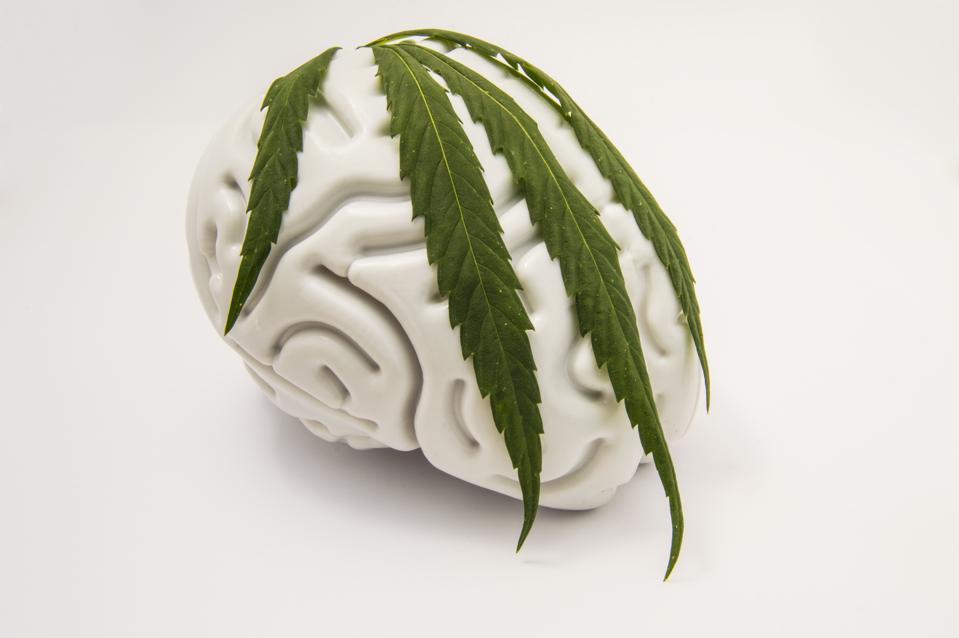 As has been similarly observed with humans, younger animals excelled at the tests when 'sober' but tended to struggle significantly under the influence of THC. "Mature" and "old" mice, on the other hand, struggled with tasks consistent to their brain age at first, but saw a huge increase in performance with THC infusions that brought their skill level up to young-mouse standards and continued for weeks afterward. Meanwhile, The Guardian reported, "None of the mice displayed the strange effects one might expect from doses of THC."
Overall, the results seem to support researchers' belief that the benefits for older mice are a result of stimulating the brain's endocannabinoid system, a biochemical pathway in both mice and human that grows less active over time. The scientists noted, "Together, these results reveal a profound,long-lasting improvement of cognitive performanceresulting from a low dose of THC treatment in mature andold animals."
The team plans to explore the potential impact of THC on older human brains with a clinical trial later this year, being one of few to focus on more aged subjects so far. Previous research with mice by the Universities of Bonn and Mainz also suggested that the brain's main cannabis receptor and neural pathways are closely related to brain health in later life, and seem to play a role in preventing brain degeneration when active.
Co-author Andras Bilkei-Gorzo told the Guardian, “If we can rejuvenate the brain so that everybody gets five to 10 more years without needing extra care then that is more than we could have imagined.”
Janet Burns covers tech, culture, and other fun stuff from Brooklyn, NY. She also hosts the cannabis news podcast The Toke.
Daily Dose Of Cannabis May Protect And Heal The Brain From Effects Of Aging
Researchers at the University of Bonn and Hebrew University have discovered that low, regular doses of tetrahydrocannabinol (THC), one of the main active ingredients or cannabinoids found in marijuana, may help to keep our brains from 'slowing down' as we get older. Published today in the journal Nature Medicine, the German study revealed that while younger mice suffered a performance drop under the influence of THC, the psychoactive chemical gave older mice a considerable performance boost, even putting them on par with younger mice who'd abstained.
To test the chemical's effect on brains of different ages, researchers put mice that were two months, one year, and 18 months old on a daily regimen of THC over the course of a month. The mice were then tested on their abilities to recognize familiar objects, and to navigate a water maze in known and new configurations.
Overall, the results seem to support researchers' belief that the benefits for older mice are a result of stimulating the brain's endocannabinoid system, a biochemical pathway in both mice and human that grows less active over time. The scientists noted, "Together, these results reveal a profound,long-lasting improvement of cognitive performanceresulting from a low dose of THC treatment in mature andold animals."
The team plans to explore the potential impact of THC on older human brains with a clinical trial later this year, being one of few to focus on more aged subjects so far. Previous research with mice by the Universities of Bonn and Mainz also suggested that the brain's main cannabis receptor and neural pathways are closely related to brain health in later life, and seem to play a role in preventing brain degeneration when active.
Co-author Andras Bilkei-Gorzo told the Guardian, “If we can rejuvenate the brain so that everybody gets five to 10 more years without needing extra care then that is more than we could have imagined.”
Janet Burns covers tech, culture, and other fun stuff from Brooklyn, NY. She also hosts the cannabis news podcast The Toke.
Daily Dose Of Cannabis May Protect And Heal The Brain From Effects Of Aging
giovedì 17 novembre 2016
U.S. Patent Allowance Granted to Medical Marijuana, Inc.'s Investment AXIM(R) Biotech for Use of All Cannabinoids in Its Controlled Release Chewing Gum

SAN DIEGO, CA--(Marketwired - November 16, 2016) - Medical Marijuana, Inc. (OTC PINK: MJNA) announced today that its major investment AXIM® Biotechnologies, Inc. (AXIM® Biotech) (AXIM), a world leader in hemp cannabinoid research and development, today announced that the United States Patent and Trademark Office (USPTO) has issued a Notice of Allowance for U.S. Application Serial Number 9,433,601, a patent that claims the use of all cannabinoids in cannabinoid-containing controlled-release chewing gum products. A Notice of Allowance is issued after the USPTO makes a determination that a patent can be granted from the application, filed in April 2015. This patent covers the inclusion of all cannabinoids (both natural and synthetic) in a chewing gum delivery system, including Tetrahydrocannabinol (THC), all of which may be incorporated in the Company's chewing gum products.
This new patent is an extension of AXIM® Biotech's patent for chewing gum as delivery methods for cannabidiol (Chewing Gum Compositions Comprising Cannabinoids). Prior to this new allowance, Patent 9,023,322 only claimed gum products as a delivery mechanism for cannabidiol (CBD), a well-known cannabinoid.
"We congratulate the AXIM team on receiving this new patent, another major milestone in the Company's continued efforts to research new solutions using cannabinoid-based drugs," said Dr. Stuart Titus, CEO of Medical Marijuana, Inc.
"This patent will enable AXIM to include any of the at least 85 different cannabinoid compounds found in the cannabis plant, including CBD and THC, into its multiple cannabinoid controlled-release chewing gum products," added Dr. Titus. "As investors in AXIM, we are enthusiastic about how the Company continues to move forward as a leader in cannabinoid research and development."

AXIM® Biotech developed the patents it now owns for chewing gum as a delivery method for cannabinoids into two separate products. Its CBD-only Canchew® gum is marketed and is legal to purchase wherever CBD hemp oil products are sold. AXIM® Biotech holds the exclusive rights to market and distribute CanChew® Gum globally. CanChew® is a botanical hemp-derived CBD chewing gum with a unique oral mucosal absorbance delivery system. Features listed on the CanChew® website include:
- Non-habit forming
- No prescription needed
- Available in all 50 states
- Great-tasting mint gum has no artificial sweeteners or preservatives
- Non-GMO, gluten free, vegan and kosher
In addition, AXIM® will start clinical trials for its combination CBD/THC gum, MedChew® Rx, for the treatment of pain and spasticity associated with multiple sclerosis. Directly compared to a sublingually delivered cannabis-based product currently on the market for MS, the estimated market size for MedChew® Rx is $4.8 billion USD. MedChew® Rx is on track to be fully registered by the EMA and FDA.
AXIM has also developed CanChew Plus™ CBD containing gum with improved delivery system and doses of 10 mg of CBD and 30mg of CBD which is set to begin clinical trials in the EU. Besides these, AXIM has developed CanChew Rx™, which is based on pharmaceutical-grade, 99.9% pure CBD crystals, extracted and manufactured based on company IPs and containing 10, 30, 50, 100 and 150 mg of CBD in microencapsulated form (AXIM IP) for significantly increased bioavailability of the Active Pharmaceutical Ingredient.
Another AXIM® Biotech patent-pending cannabis innovation in clinical trials is AX-1602. The first of its kind, AX-1602 contains CBG (cannabigerol) and other cannabinoids as a treatment for psoriasis and atopic dermatitis.
AXIM® Biotech's core belief is responsibility for environmental stewardship combined with development of innovative products to address conditions with no currently known effective treatment including: Parkinson's disease, Alzheimer's disease/dementia, ADHD(attention deficit hyperactivity disorder), PTSD, autism, MS, spasticity, pain, RLS (restless leg syndrome), glaucoma, IBD, IBS and Crohn's disease.
About Medical Marijuana, Inc.
Our mission is to be the premier cannabis and hemp industry innovators, leveraging our team of professionals to source, evaluate and purchase value-added companies and products, while allowing them to keep their integrity and entrepreneurial spirit. We strive to create awareness within our industry, develop environmentally-friendly, economically sustainable businesses, while increasing shareholder value. For details on Medical Marijuana, Inc.'s portfolio and investment companies, visit www.medicalmarijuanainc.com.
U.S. Patent Allowance Granted to Medical Marijuana, Inc.'s Investment AXIM(R) Biotech for Use of All Cannabinoids in Its Controlled Release Chewing Gum
martedì 7 giugno 2016
giovedì 19 febbraio 2015
Cannabis: Promise, risk and controversy
Cannabis is bad for you, cannabis is good for you - confused?
That's not surprising. Complicated and controversial, cannabis is revealed by recent science to have a dual personality, with a dark side and a more positive one. Radio 4's PM programme is this week running a whole series on cannabis, and the debate surrounding it.
Key to understanding this strange plant are two of the ingredients that make it up, known by their initials as THC and CBD.

I asked Professor Val Curran of University College London to describe how they work and she came up a memorable answer:
"In a way, THC and CBD are a bit like yin and yang. The THC makes you stoned, but it can also make you anxious. It can also make you feel a bit psychotic, and it will seriously impair your memory.
"The other side of the yin/yang is CBD, which has almost the opposite effects. CBD calms you down, it has anti-psychotic properties and it also offsets the effects on memory, so that on CBD-containing cannabis you're less likely to forget what's going on."
So the first step to understanding cannabis is to realise how it can vary, how different types contain very different quantities of these polar opposites, with dramatically different outcomes.
Changing risks
The weed so familiar to many of my generation was characterised by a relatively balanced amount of THC and CBD.
Today, the vast majority of cannabis on sale on the streets is unrecognisably stronger.
Known as skunk, it contains a far higher proportion of THC - as much as 15% - which produces a much more powerful high, making it more appealing for users.
But, at the same time, because it hardly contains any of the CBD that might lessen its effects, the risks are correspondingly greater.
Prof Curran is among those worried about its potency.
"What concerns me is that on this high-THC skunk, people will experience more memory problems, which could affect how well they do at school. And in terms of addiction, 10% of people who use it will become addicted to the drug."
According to a study by two researchers at UCL, Dr Tom Freeman and Dr Adam Winstock, the strongest cannabis increases the risk of addiction, along with memory loss and paranoia.
And in a trial to explore ways of helping addicts, they are giving drug users medication based on cannabis itself. The hope is that administering doses of CBD, the more benign ingredient of cannabis, might make it easier for habitual users to wean themselves off the lure of the more potent element, THC.
Dr Freeman told the BBC: "We think that CBD can reverse long-term changes which happen when you smoke cannabis repeatedly, and in people who smoke a lot of cannabis it'll help them quit.
 "It blocks the effects of THC and it reduces anxiety and paranoia. If this trial is successful, then we will have found the first effective drug treatment for cannabis dependence."
Meanwhile, new evidence has surfaced that will stir the long-running debate over whether - or to what extent - cannabis can trigger psychosis.
New research published this week in the Lancet Psychiatry suggests a connection, a finding which is most relevant to people already vulnerable to mental illness.
The study, conducted in south London, involved some 800 people - about half of them users, the rest not.
One of the authors, Prof Sir Robin Murray of King's College London, says it's clear that regular use of highly potent skunk has a real impact.
"We found that smoking cannabis, particularly of the high-potency forms, was associated with an increased risk.
"If you smoke high-potency skunk at all, then you are three times more likely to be psychotic. If you smoke high-potency cannabis every day, you are five times more likely to be psychotic."
Cautious optimism
And at this point we come back to that yin and yang of cannabis. While this new research finds that the strongest cannabis, laden with THC, can be linked to psychosis, it turns out that the gentler twin, CBD, might possibly be useful in treating it.
Prof Murray, though cautious, highlights recent studies.
"If you give THC to normal volunteers, you can make them psychotic, but if you pre-treat them with CBD, you can prevent that happening.
"So this made us think - would it be possible to actually treat psychosis with CBD? So there's one encouraging study, which suggests that CBD is useful in the treatment of psychosis, but it's still very early days yet."
So running in parallel with concerns about cannabis is another world of optimism about its uses.
 In Colorado, there is much excitement about a medication called Charlotte's Web, derived from cannabis and named after a girl who took it as a treatment for her epilepsy.
Such is the potential of what's seen as a wonder drug that the Mattison family sold up their business in Tennessee and moved to Colorado purely so that their daughter Millie, who's two years old and epileptic, could receive Charlotte's Web.
Her seizures, soon after birth, were so severe that she had been given very little chance of surviving.
But her mother Nicole told me that the drug proved immediately beneficial, transforming Millie's life almost at a stroke.
"It's miraculous. The first time we gave her oil, within 15 minutes her eyes were open, and I almost felt like I was in a movie.
"It was crazy, you wouldn't believe it unless you saw it."
Here in the UK, the only legal medicine derived from cannabis is for sufferers of multiple sclerosis (MS), a product called Sativex made by GW Pharma.
But now the company, the only one with a licence to grow cannabis in the UK, has developed another formulation which is being tested to treat epileptic conditions like Millie's.
Early days
The trial, with 80 patients, is now in its second stage and is being run by the University of Edinburgh.
The scientist in charge of the process, Dr Richard Chin, says that so far the results look promising, not just to control seizures but - remarkably - to prevent them as well.
"One of the interesting things about cannabidiol (CBD) is that it shows not just anti-seizure effects, but it also curiously seems to have an effect on cognitive and behavioural problems, which are very highly represented in people with epilepsy.
"So it doesn't seem, on preliminary data, as if it's just an anti-seizure medication. It may actually be an anti-epilepsy medication in its wider sense, and what I would hope is that it may open up a completely new avenue of treatment options for patients with epilepsy."
For thousands of years cannabis was used medically. But only now is research revealing why that's possible and how it can be put to best use.
These are relatively early days but, on the horizon, researchers see potential for the CBD in cannabis to help with everything from easing the pain of cancer to tackling autism.
At the same time, science is also unpicking the full implications of the potent stuff being dealt on our streets.
BBC: Cannabis: Promise, risk and controversy
That's not surprising. Complicated and controversial, cannabis is revealed by recent science to have a dual personality, with a dark side and a more positive one. Radio 4's PM programme is this week running a whole series on cannabis, and the debate surrounding it.
Key to understanding this strange plant are two of the ingredients that make it up, known by their initials as THC and CBD.

I asked Professor Val Curran of University College London to describe how they work and she came up a memorable answer:
"In a way, THC and CBD are a bit like yin and yang. The THC makes you stoned, but it can also make you anxious. It can also make you feel a bit psychotic, and it will seriously impair your memory.
"The other side of the yin/yang is CBD, which has almost the opposite effects. CBD calms you down, it has anti-psychotic properties and it also offsets the effects on memory, so that on CBD-containing cannabis you're less likely to forget what's going on."
So the first step to understanding cannabis is to realise how it can vary, how different types contain very different quantities of these polar opposites, with dramatically different outcomes.
Changing risks
The weed so familiar to many of my generation was characterised by a relatively balanced amount of THC and CBD.
Today, the vast majority of cannabis on sale on the streets is unrecognisably stronger.
Known as skunk, it contains a far higher proportion of THC - as much as 15% - which produces a much more powerful high, making it more appealing for users.
But, at the same time, because it hardly contains any of the CBD that might lessen its effects, the risks are correspondingly greater.
Prof Curran is among those worried about its potency.
"What concerns me is that on this high-THC skunk, people will experience more memory problems, which could affect how well they do at school. And in terms of addiction, 10% of people who use it will become addicted to the drug."
According to a study by two researchers at UCL, Dr Tom Freeman and Dr Adam Winstock, the strongest cannabis increases the risk of addiction, along with memory loss and paranoia.
And in a trial to explore ways of helping addicts, they are giving drug users medication based on cannabis itself. The hope is that administering doses of CBD, the more benign ingredient of cannabis, might make it easier for habitual users to wean themselves off the lure of the more potent element, THC.
Dr Freeman told the BBC: "We think that CBD can reverse long-term changes which happen when you smoke cannabis repeatedly, and in people who smoke a lot of cannabis it'll help them quit.
 "It blocks the effects of THC and it reduces anxiety and paranoia. If this trial is successful, then we will have found the first effective drug treatment for cannabis dependence."
Meanwhile, new evidence has surfaced that will stir the long-running debate over whether - or to what extent - cannabis can trigger psychosis.
New research published this week in the Lancet Psychiatry suggests a connection, a finding which is most relevant to people already vulnerable to mental illness.
The study, conducted in south London, involved some 800 people - about half of them users, the rest not.
One of the authors, Prof Sir Robin Murray of King's College London, says it's clear that regular use of highly potent skunk has a real impact.
"We found that smoking cannabis, particularly of the high-potency forms, was associated with an increased risk.
"If you smoke high-potency skunk at all, then you are three times more likely to be psychotic. If you smoke high-potency cannabis every day, you are five times more likely to be psychotic."
Cautious optimism
And at this point we come back to that yin and yang of cannabis. While this new research finds that the strongest cannabis, laden with THC, can be linked to psychosis, it turns out that the gentler twin, CBD, might possibly be useful in treating it.
Prof Murray, though cautious, highlights recent studies.
"If you give THC to normal volunteers, you can make them psychotic, but if you pre-treat them with CBD, you can prevent that happening.
"So this made us think - would it be possible to actually treat psychosis with CBD? So there's one encouraging study, which suggests that CBD is useful in the treatment of psychosis, but it's still very early days yet."
So running in parallel with concerns about cannabis is another world of optimism about its uses.

Such is the potential of what's seen as a wonder drug that the Mattison family sold up their business in Tennessee and moved to Colorado purely so that their daughter Millie, who's two years old and epileptic, could receive Charlotte's Web.
Her seizures, soon after birth, were so severe that she had been given very little chance of surviving.
But her mother Nicole told me that the drug proved immediately beneficial, transforming Millie's life almost at a stroke.
"It's miraculous. The first time we gave her oil, within 15 minutes her eyes were open, and I almost felt like I was in a movie.
"It was crazy, you wouldn't believe it unless you saw it."
Here in the UK, the only legal medicine derived from cannabis is for sufferers of multiple sclerosis (MS), a product called Sativex made by GW Pharma.
But now the company, the only one with a licence to grow cannabis in the UK, has developed another formulation which is being tested to treat epileptic conditions like Millie's.
Early days
The trial, with 80 patients, is now in its second stage and is being run by the University of Edinburgh.
The scientist in charge of the process, Dr Richard Chin, says that so far the results look promising, not just to control seizures but - remarkably - to prevent them as well.
"One of the interesting things about cannabidiol (CBD) is that it shows not just anti-seizure effects, but it also curiously seems to have an effect on cognitive and behavioural problems, which are very highly represented in people with epilepsy.
"So it doesn't seem, on preliminary data, as if it's just an anti-seizure medication. It may actually be an anti-epilepsy medication in its wider sense, and what I would hope is that it may open up a completely new avenue of treatment options for patients with epilepsy."
For thousands of years cannabis was used medically. But only now is research revealing why that's possible and how it can be put to best use.
These are relatively early days but, on the horizon, researchers see potential for the CBD in cannabis to help with everything from easing the pain of cancer to tackling autism.
At the same time, science is also unpicking the full implications of the potent stuff being dealt on our streets.
BBC: Cannabis: Promise, risk and controversy
Iscriviti a:
Post (Atom)