cookie

Translate

lunedì 20 maggio 2013

How Much Will a Legal Marijuana Habit Cost You?

If you’re an average pot smoker in Colorado—paying average prices for average-quality marijuana—you can expect to spend around $650 on weed next year.

A study conducted by the Colorado Futures Center at Colorado State University aimed to get to the bottom of how much the state can expect to collect in tax revenues now that marijuana is legal. By doing a little extra math, we can get a rough estimate for what the average marijuana enthusiast will spend annually as well.

Researchers estimate that in 2014, 642,772 Colorado residents, or about 12.5% of the state population, will take advantage of pot’s newly legal status. Analysts assumed each person would smoke or otherwise “use” 3.53 ounces of marijuana annually, for a total of 2,268,985 ounces (about 142,000 pounds) per year.

All of these numbers may be underestimated, because they’re based on data compiled when recreational marijuana was illegal. In fact, there are so many unknowns in the realm of legal non-medicinal pot that all of this math has a crude back-of-the-napkin quality to it. In any event, using the study’s numbers, the average marijuana enthusiast can expect to pay a retail price of $185 per ounce next year. Multiply that times 3.53 ounces—which no one can buy at once, mind you, because there’s a one-ounce purchase maximum for residents—and the total comes to $653 annually spent on pot.
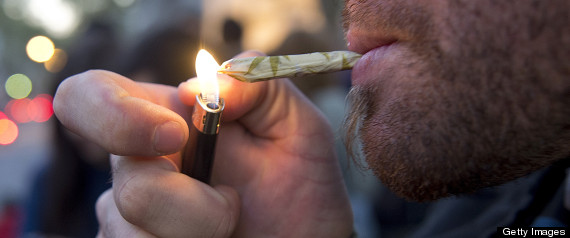
(MORE: This Exists: Medical Marijuana for Pets)

How much the individual actually winds up spending on marijuana will depend on several factors, most obviously the quality (and price) of the pot and how much one smokes. Researchers used the crowdsourcing site PriceofWeed.com to get the $185-per-ounce figure. As of early April, an ounce of marijuana was averaging $206 on the black market, and because the price is expected to drop once pot is legal, the study landed on $185. If the smoker is opting for higher-quality, $300-per-ounce marijuana, his annual pot bill would top $1,000. That’s for someone smoking the average of 3.53 ounces per year. A heavy smoker who goes with $300-per-ounce pot and uses, say, half-an-ounce monthly could expect to drop $1,800 annually on his habit.

That may sound like a lot. But a pot-smoking habit is probably cheaper than a cigarette-smoking habit. Colorado is one of the cheaper states for cigarettes, but a pack still goes for around $5.19, according to one state-by-state price check compilation. So a one-pack-per-day habit—purchased one pack at a time, not by the carton—comes to $1,894 for a year.

Health officials say that once medical expenses and things like lost productivity due to the effects of smoking are incorporated, an addiction to cigarettes is far more costly than that. For that matter, plenty of arguments have been made that legalizing marijuana will result in increased usage andaddiction, as well as higher rates of driving while stoned, so the costs to society outweigh any benefits that arise from approving the drug for recreational use.

(MORE: No One Has to Work as Little as an American to Afford Beer)

Oh, and about the point of the Colorado State study, regarding tax revenues for the state? Researchers estimate that the 15% excise tax on wholesale marijuana would yield $21.7 million annually, which is far short of the $40 million annual target. To hit the target, marijuana would have to cost a lot more than the prices that have been estimated, or people in Colorado would have to buy a lot more marijuana than the forecasts project. Neither is likely to occur, the study states. “As competition forces growers and sellers to be more efficient, margins will erode and both wholesale cost and retail prices are forecast to fall,” the report reads. And instead of usage rising year after year, the study’s authors foresee a “decline in the rate of growth of consumption as the ‘wow’ factor erodes overtime and any marijuana tourism begins to decline, particularly if other states follow Colorado and Washington and legalize marijuana.”

Read more: http://business.time.com/2013/05/20/how-much-will-a-legal-marijuana-habit-cost-you/#ixzz2Trqdafln

sabato 11 maggio 2013

Let's Push to Legalize Marijuana


ITALIA - Delega tossicodipendenze alle politiche sociali. Corleone invita Letta

Un invito al premier Letta ad assegnare la delega per le tossicodipendenze nel segno della discontinuita' per evitare il sovraffollamento delle carceri, e' venuto oggi dal coordinatore nazionale dei Garanti dei diritti Franco Corleone. ''La delega alle tossicodipendenze - ha detto - deve rientrare tra le politiche sociali e di integrazione e non di ordine pubblico''. Annunciata anche la richiesta di un incontro con i presidenti di Camera e Senato e una raccolta di firme per modificare l'attuale legge Fini-Giovanardi sulle droghe. ''La richiesta - ha detto - non viene da un'associazione di giovani scapestrati, ma si rifa' ad un documento del Csm del novembre scorso, che chiedeva al ministro Severino una modifica della vigente normativa''. Al 31 dicembre 2012, secondo il Dap - ha reso noto Corleone - su 65.701 detenuti, 25.269 erano in carcere violazione della legge n. 73 sulle detenzione di sostanze illecite e di questi circa il 30-40% reclusi per reati di lieve entita' e detenzione di cannabis. In totale negli istituti di pena si trovano 15.663 tossicodipendenti, il 23,84% della popolazione carceraria. ''Il sovraffollamento - ha concluso - non e' una calamita' naturale, ma il frutto di leggi criminogene, che hanno riempito le carceri e messo in crisi la giustizia''.

High Times Cannabis Cup 2013 Denver Colorado


lunedì 22 aprile 2013

Oggi succede che ...

PARAGUAY - Eletto il presidente Cartés, supericco accusato di narcotraffico
 
Alla fine e' stato eletto presidente il conservatore Horacio Cartès, in lizza per il Partito Colorado che aveva governato il Paese dal 1947 al 2008, anche durante la dittatura di Alfredo Stroessner. Cartés e' accusato dai suoi avversari politici di essere in combutta con il narcotraffico mentre nel 1985 era stato in [...]


Venezuela - Nuovo ministro Interno considerato narcotrafficante da Usa
 
Il neo-presidente venezuelano Nicolas Maduro ha nominato un ministro incluso in una lista nera degli Stati Uniti. Quarantotto ore dopo il suo giuramento, Maduro ha annunciato ieri sera i membri del governo. Ha colpito la nomina del capo della polizia politica (Sebin - Servizio di Intelligence bolivariano), il generale [...]
 

domenica 21 aprile 2013

Marijuana Regulation Bills Introduced On The Eve Of 4/20


DENVER (CBS4) – State lawmakers are discussing two bills on how recreational marijuana might be bought and sold in Colorado.
One bill would regulate recreational pot and the other addresses taxing the sales. Ironically, the measures were introduced in the House on the eve of the 4/20 pot festival. Thousands of people flooded Civic Center Park to champion the passage of Amendment 64 on Saturday.
Legislators took the recommendations given to them by the Amendment 64 Task Force and tweaked them accordingly. One bill would create a 15 percent sales tax on recreational pot and a 15 percent excise tax on pot transfers. The other creates a regulatory framework for retail marijuana.
House Bill 1317 would include:
- Converting the Medical Marijuana Enforcement Division to the “Marijuana Enforcement Division.”
- Giving medical marijuana dispensary owners a three-month head start to apply for retail licenses.
- Only allowing Colorado residents to own, manage or work in a retail marijuana business.
- Limiting out-of-state patrons from buying more than a quarter of an ounce at a time.
Rep. Dan Pabon, D-Denver, introduced the regulation bill. He says it’s about balancing what the voters wanted with public safety.
“It’s been a long process, it’s been bipartisan process. We have a lot of folks who looked at this issue and we just want to make sure we do this right,” Pabon said. “Colorado deserves to have a well-regulated market, protect the public safety, and make sure our children are safe.”
There is a third bill in the Senate which will address the bulk of the recommendations, including keeping pot out of the hands of children. That bill will be introduced early next week.

Photos: Denver 420 Pot Rally


Gearing up for the 420 Rally at Denver's Civic Center Park. (Joe Amon/The Denver Post)


domenica 14 aprile 2013

Respect State Marijuana Laws Act Introduced In Congress


Bill introduced in Congress would spare marijuana users from federal prosecution in states where pot is legal

Rep. Dana Rohrabacher (R-Calif.), the bipartisan bill’s main sponsor, called the measure a ‘common-sense approach’ that respects individual states’ marijuana laws. Eighteen states and Washington, D.C. have laws legalizing the use of medical marijuana, while Colorado and Washington state voted in 2012 to legalize it for recreational use.

A bill introduced Friday would give immunity from prosecution of federal marijuana laws in states where voters have passed laws legalizing the drug.

These are high times for states rights.
A bill was introduced in the U.S. House of Representatives Friday that would effectively tell the U.S. Justice Department to stop going after marijuana users in states where the drug has been made legal for either medical or recreational use.
Dubbed the Respect State Marijuana Laws Act, H.R. 1523 would modify the federal Controlled Substances Act and grant immunity from federal prosecution to any person acting in accordance with state marijuana laws.

Eighteen states have legalized medical marijuana, while Colorado and Washington voters passed measures legalizing the recreational use of pot. 

"This bipartisan bill represents a common-sense approach that establishes federal government respect for all states’ marijuana laws,” Rep. Dana Rohrabacher (R-Calif.), the bill’s main sponsor, said in a press release. “It does so by keeping the federal government out of the business of criminalizing marijuana activities in states that don’t want it to be criminal."
So far, 18 states and the District of Columbia have passed laws legalizing the use of medical marijuana, and in 2012 Washington and Colorado became the first two states to legalize the recreational use of the drug for people over the age of 21.
The bill’s bipartisan sponsors include Reps. Justin Amash (R-Mich.), Don Young (R-Alaska), Earl Blumenauer (D-Oregon), Steve Cohen (D-Tenn.) and Jared Polis (D-Colo.).

A record high 52% of Americans now favor legalizing marijuana.  


A survey released last week by the Pew Research Center found that, for the first time, more Americans now favor legalizing marijuana. Fifty-two percent of those asked said they thought pot should be legal, while 45% said the drug should be illegal.
As voters in more states have legalized marijuana, the drug is still classified as a Schedule I controlled substance under the Controlled Substances Act, and its possession, sale and use is subject to prosecution.
Public opinion, however, appears to be in staunch opposition to the enforcement federal marijuana laws over state measures.
Sixty percent of those surveyed told Pew that the federal government should not try to prosecute marijuana users in states where the drug has been made legal.

Bill introduced in Congress would spare marijuana users from federal prosecution in states where pot is legal

venerdì 5 aprile 2013

M5s: uscita dall'euro e cannabis legalizzata, ecco le prime proposte di legge dei 5 stelle

Laura Eduati, L'Huffington Post  |  Pubblicato: 04/03/2013 17:51 CET
Uscire dall'euro, legalizzare le droghe leggere e agevolare il passaggio di proprietà di macchine e motorini. Sono le tre proposte di legge che i senatori e deputati grillini dovranno obbligatoriamente portare per prime in Parlamento se vorranno tenere fede al regolamento che hanno sottoscritto nei giorni scorsi. Il codice di comportamento a 5 stelle infatti prevede che i neo-eletti debbano costantemente dialogare con i cittadini attraverso il portale nazionale del Movimento, dove la gente comune può scrivere e votare “richieste di legge”: le proposte che saranno apprezzate da almeno il 20% dei partecipanti saranno automaticamente portate in aula.
Finora dunque le richieste con maggiore consenso riguardano uno dei cavalli di battaglia del programma grillino ovvero l'immediata uscita dell'Italia dall'eurozona (1471 voti), seguita dalla depenalizzazione e dalla tassazione della cannabis (1343 voti) e dall'azzeramento dei costi del passaggio di proprietà per i veicoli (1191 voti). Ma le proposte sono molte e disparate: il ripristino del turn-over per i vigili del fuoco, la chiusura del museo di Cesare Lombroso a Torino, stabilire un tetto minimo e massimo per le pensioni, istituire un liceo a 5 stelle per gli adulti che non hanno ottenuto il diploma di maturità e via dicendo.
Soltanto gli iscritti al Forum possono scrivere e votare le proposte. E l'iscrizione al portale prevede non soltanto l'iscrizione automatica al Movimento 5 Stelle, ma anche la dichiarazione che era richiesta ai candidati grillini, ossia nessuna tessera di altri partiti. Condizioni che sicuramente ostacoleranno i semplici cittadini che non hanno voglia di iscriversi al “partito” di Grillo. Eppure secondo il regolamento messo a punto dall'ex comico e da GianRoberto Casaleggio, i neo-eletti dovranno rapportarsi quotidianamente con il forum e attingere da questo le proposte di legge. “È la vera democrazia diretta, senza deleghe”, ci spiega una neo-senatrice piemontese che preferisce rimanere anonima. “Sicuramente sarà faticoso e per certi versi siamo spaventati dalla difficoltà di comunicare continuamente con i nostri elettori. Finché gestivamo un forum nelle nostre piccole comunità locali andava bene, oggi non so cosa aspettarmi”.
In realtà i nuovi senatori e deputati a 5 stelle attendono un software che Casaleggio starebbe mettendo a punto per migliorare il dialogo virtuale tra Parlamento e cittadini, sul modello del liquid feedbak utilizzato dal Partito pirata in Germania. Una piattaforma digitale interattiva che sostituirà il Forum nazionale. Secondo alcuni attivisti del Movimento, questo software sarà presentato entro il 15 marzo ovvero poco prima dell'insediamento delle Camere. Attraverso questo strumento, i simpatizzanti dei 5 stelle potranno intervenire e votare direttamente le leggi che vorrebbero fossero approvate. Un po' come sta succedendo nel Forum nazionale, ma in maniera sofisticata e attendibile. Secondo alcuni militanti della prima ora, sarà un luogo accessibile a tutti anche se non è ancora chiaro come verranno tenuti lontani “troll” e disturbatori. Per Grillo, naturalmente, è il modo per neutralizzare l'art.67 della Costituzione contro il quale si è scagliato ieri: gli eletti devono avere un preciso vincolo di mandato con gli elettori. In questo caso, sono obbligati a essere d'accordo con le proposte che vengono dal basso.
Nel frattempo ai parlamentari grillini è stato consigliato di pubblicare il proprio indirizzo mail per aprire le orecchie alle esigenze della gente comune, mentre il canale di YouTube “La Cosa” - dove oggi è andata in diretta streaming la presentazione degli eletti – “sarà lo strumento con cui i nostri dipendenti e portavoce eletti in Parlamento, ogni volta che usciranno da una Commissione parlamentare o da una riunione, comunicheranno quello che si è deciso".

Archivio blog